To Every Teacher and Classroom Aide: Back to School Tools for an Easier Year
Back to school season is a whirlwind for everyone. Kids are picking out notebooks, and families are relearning morning routines. But teachers and classroom aides are just as busy, if not busier, learning new rosters, reading new IEPs and 504 plans, and figuring out how to meet a room full of students with different needs from day one.
As occupational and physical therapists with over 40 years of combined experience, Celine Skertich, PT, and Linda Merry, OT, have spent their careers watching teachers and paraprofessionals go above and beyond for students with grasp and hand mobility challenges, often with very little recognition. This season, we want to celebrate that work, and share a few of the ways the right adaptive tool can make a teacher’s or classroom aide’s day a little lighter, without taking away from the heart they already bring to the classroom.
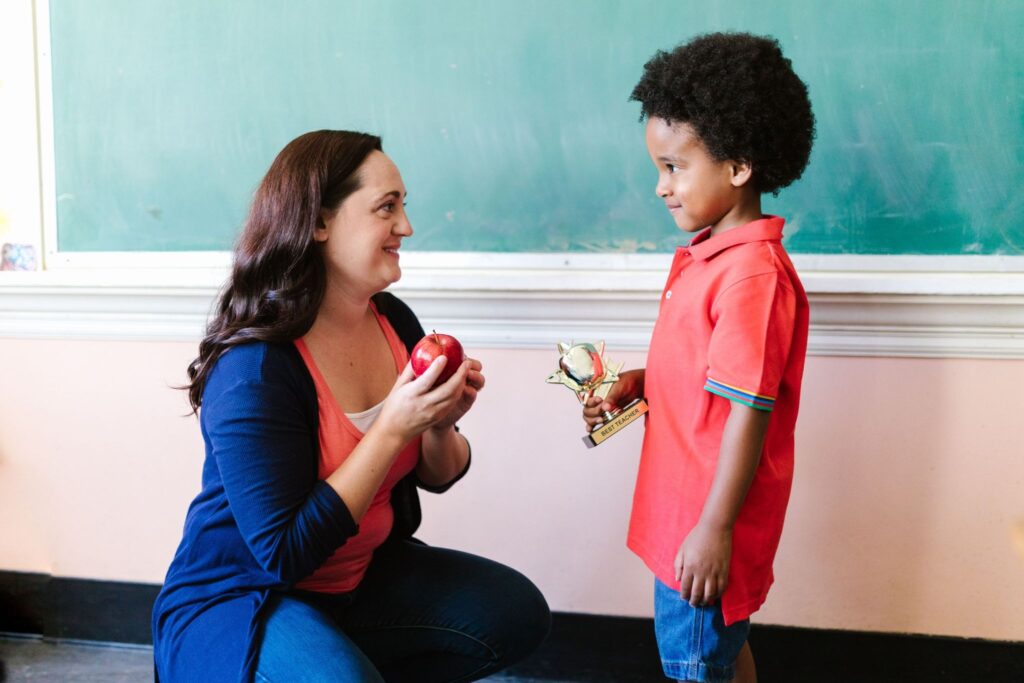
Why Do Teachers and Classroom Aides Deserve to Be Celebrated This School Year?
Every teacher managing an inclusive classroom is doing something genuinely difficult: differentiating instruction for a wide range of needs, all at the same time, for an entire room of students. Classroom aides and paraprofessionals do this alongside them, often providing the individualized, hands-on support that makes inclusion possible in the first place.
The Council for Exceptional Children notes that paraeducators are critically important to schools, teachers, and students, and that they face unique challenges in the classrooms they work in every day. That reality is easy to overlook until you have spent a day in a life-skills or special education classroom and seen firsthand how much coordination it takes to give every student the support they need.
Back to school season is an easy time to focus on supply lists and logistics. It is also worth taking a moment to say thank you to the adults who make an inclusive classroom actually work.
How Can the Right Classroom Tool Give Teachers Time Back?
A tool that does not hold up is its own kind of time drain. We have heard from teachers who tried grip aids that worked for a few weeks and then started slipping mid-task, turning a simple art project or snack time into an unplanned cleanup. When a tool needs to be readjusted, replaced, or supervised constantly, it adds up across a school day.
According to Understood.org, classroom accommodations are meant to remove barriers so students can access the same materials and activities as their peers, without adding a new barrier of their own, like a tool that requires constant adult attention to function.
A durable, versatile adaptive device is one small way to give some of that time back. When one tool can securely hold a pencil, a paintbrush, a spoon, or a stylus without slipping or needing to be swapped out for a different aid, teachers and aides spend less time troubleshooting equipment and more time teaching.
For a deeper look at adaptive classroom equipment, see our guide on adaptive equipment and teaching tools for students with disabilities.
PRO TIP: Loop in the student’s OT or PT before deciding a tool ‘doesn’t work.’ Small adjustments to grip size, positioning, or the object being held often solve issues that look like a bigger problem at first.
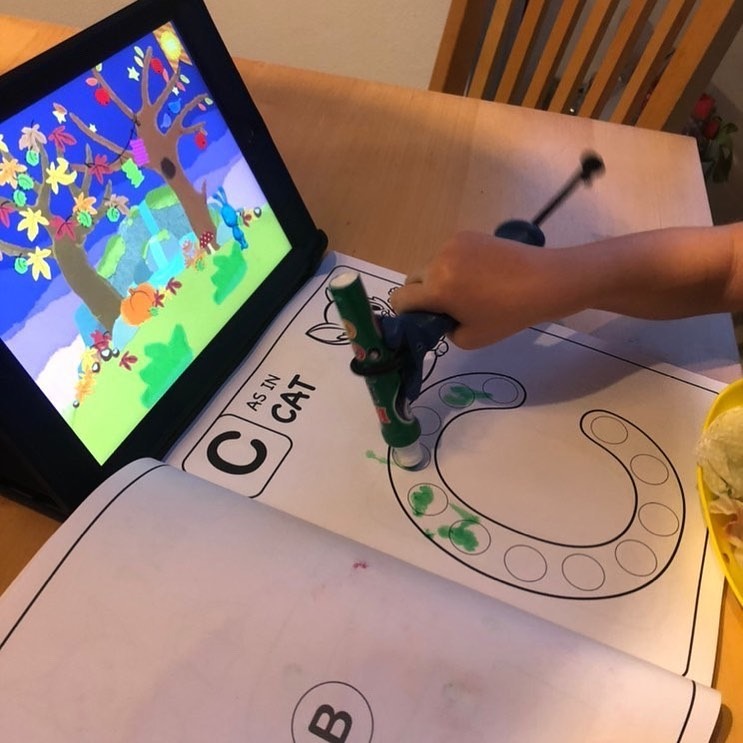
How Can Adaptive Tools Support Student Independence Instead of Hand-Over-Hand Help?
Many teachers and paraprofessionals describe a similar instinct: they want to help, but they also do not want to be the reason a student cannot do something on their own. Hand-over-hand assistance, physically guiding a student’s hand through a task, is sometimes necessary. But when it becomes the default, it risks teaching learned helplessness instead of independence.
We have heard from a high school life-skills teacher whose student, who has a degenerative condition, had never brought home a piece of artwork his family felt was truly his own, until an adaptive grip aid let him hold the brush and finish the piece himself. His mother said it was one of the first times she felt confident hanging his work on the fridge, because she knew he had made it.
Reducing how often an adult needs to physically guide a student’s hands is not just about efficiency. It gives the student a chance to own their work, and it provides teachers and aides a way to step back without stepping away.
How Can Adaptive Tools Give Teaching Aides More Freedom to Support the Whole Classroom?
Classroom aides are often assigned to support one student closely, which can mean being physically anchored to that student for much of the day. When a student can hold and use classroom materials with less direct physical assistance, an aide has more freedom to help set up an activity, support a different student who needs a moment of attention, or step back and let a task unfold with a lighter touch, like a hand resting on a shoulder instead of a hand guiding a pencil.
That shift matters for an entire classroom, not just one student. An aide who is not tied up in constant hand-over-hand support has more capacity to notice what else is happening in the room.
What Should Teachers and Aides Know About Introducing a New Adaptive Tool?
Here is a quick look at how a few common classroom moments can shift when students have a reliable adaptive tool available.
| Classroom Moment | Without an Adaptive Tool | With an Adaptive Tool |
|---|---|---|
| Art & creative projects | An adult guides the student’s hand from start to finish | The student creates independently, and the family gets work they know is truly their child’s own |
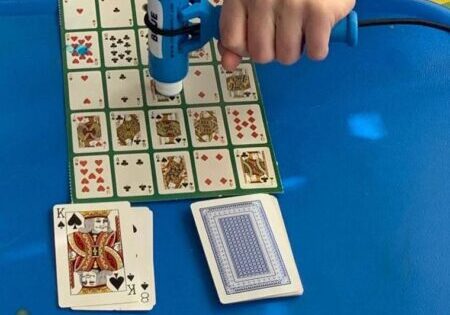
| Games & group activities | A student is often left out, or an adult completes their turn for them | The student takes their own turn, from marking a bingo card to spinning a game piece |
| Life-skills & work tasks | A paraprofessional finishes the task while the student watches | The student completes the task themselves, building real transferable work skills |
| Snack & mealtime | An adult opens, holds, or steadies items for the student | The student holds and manages their own items with less hands-on help |
PRO TIP: Introduce a new adaptive tool during a low-stakes activity first, like a game or a craft, before using it for something higher stakes like an assignment. It gives the student a chance to get comfortable with it without added pressure.
Where Does the functionalhand® Fit Into a Classroom?
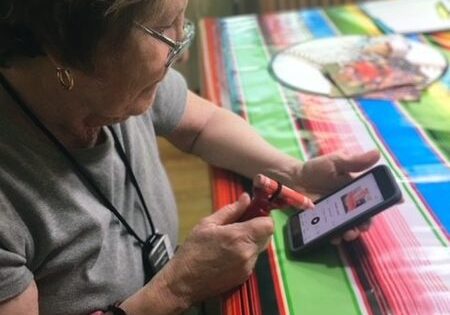
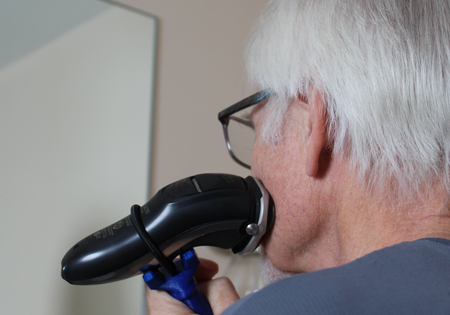
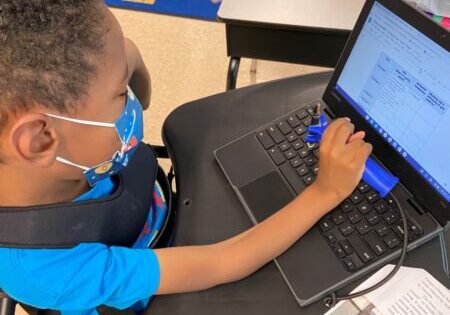
The functionalhand® universal cuff is one adaptive device that can help with several of the moments above. It securely holds objects from a pencil to a water bottle, in either a horizontal or vertical grip, without the constant readjusting that some grip aids require. For students with weak grip, tremors, or grasp deficits, that stability can mean less hand-over-hand assistance and more independent participation in art, writing, games, technology access, and life-skills tasks.
You can see how it works alongside broader classroom strategies in our universal cuff guide, or explore back-to-school tips for parents if families are asking what they can do at home to support the same transition.
Frequently Asked Questions
Why is teacher appreciation back to school season important for special education classrooms?
It is a natural time to recognize the extra planning, differentiation, and hands-on support that inclusive classrooms require, work that often goes unseen once the school year settles into routine.
How can teachers reduce hand-over-hand assistance safely?
Start by identifying which tasks currently require the most physical guidance, then try a stable adaptive tool for one of those tasks at a time. Involving the student’s OT or PT helps make sure the tool and technique fit the student’s specific needs.
Can classroom aides use one adaptive tool with multiple students?
Many adaptive devices, including the functionalhand®, are designed to be shared across students with different needs, since they adjust to hold a range of object sizes rather than being built for one specific tool.
Are adaptive classroom tools affordable for schools with limited budgets?
Costs vary by device, but tools that replace several single-purpose aids, rather than requiring a separate aid for every task, tend to offer more value for a school’s budget over time.
Order Your functionalhand® Today
If you’re interested in purchasing a universal cuff for yourself or someone you care about, we hope you’ll consider investing in the functionalhand® universal cuff.
You won’t just be purchasing a product; you’ll be investing in a person’s ability to lead a more independent and fulfilling life.
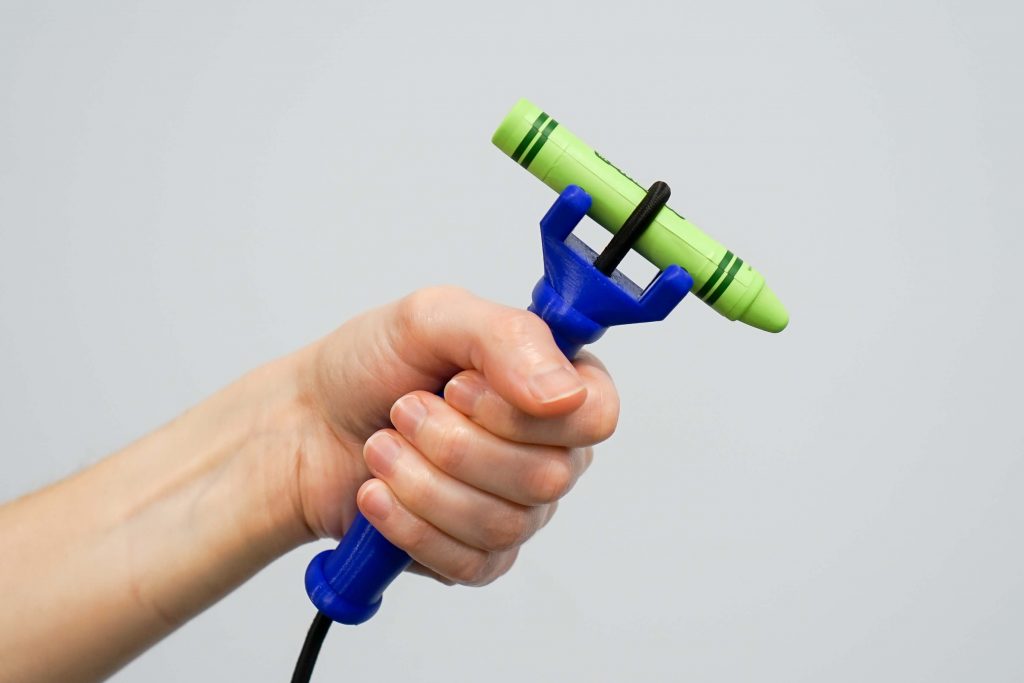
“Just want to say thank you so much for making these! As someone who’s lost a lot of movement in my hands and can no longer write, it’s allowed me to not only write for the first time in ages but also draw! Along with using a knife to spread jam! Thank you so much”