When Tremor Makes Holding On Difficult: A Practical 2026 Guide
Adaptive equipment for hand tremor refers to tools and strategies that change how a person holds and controls an object, rather than treating the tremor itself. If shaking makes it hard to eat with a fork, hold a pen, or bring a cup to your mouth, medication and other medical treatments are the first line of defense. They do not always eliminate the tremor completely, and that gap is where adaptive equipment does its work.
Here’s the key insight worth understanding before anything else: adaptive equipment is not trying to stop the tremor. It changes the demands of the task, so the tremor has less room to interfere. This guide covers what causes disabling hand tremor, what current research says about grip and stabilization, and how adaptive equipment fits into a realistic daily routine.

What Conditions Cause Disabling Hand Tremor?
Hand tremor is not one condition. It is a symptom that shows up across several distinct neurological disorders, each with its own pattern and its own treatment options. Four conditions account for most of the disabling hand tremor seen in adults: essential tremor, Parkinson’s disease, dystonia, and multiple sclerosis.
Essential Tremor
Essential tremor is one of the most common adult movement disorders. It typically produces an action or postural tremor, meaning the shaking becomes noticeable when the arms are held out or the hands attempt a task. The American Academy of Neurology specifically notes interference with writing and eating as hallmark functional effects (Zesiewicz et al., Neurology, 2011).
Propranolol and primidone are the traditional first-line medications, and topiramate can help some patients, but roughly 30 to 50 percent of people do not respond adequately or cannot tolerate these drugs. A 2026 evidence review from the International Parkinson and Movement Disorder Society found that while multiple randomized trials show improvement with these medications and with botulinum toxin, the overall quality and duration of the available studies are not strong enough to support high-confidence conclusions about long-term effectiveness (Dash et al., Movement Disorders, 2026). For severe, medication-resistant essential tremor, deep brain stimulation and MRI-guided focused ultrasound thalamotomy can produce substantial reduction in appropriately selected patients (Ferreira et al., Movement Disorders, 2019).
Parkinson’s Disease Tremor
Parkinsonian tremor often begins as a resting tremor, but many people with Parkinson’s also experience postural and action tremor that interferes with drinking, eating, holding a phone, and writing.
Levodopa is generally the most effective medication for troublesome Parkinson’s tremor. A systematic review and meta-analysis covering 114 studies and more than 8,000 patients found meaningful tremor reduction with levodopa, dopamine agonists, and monoamine oxidase inhibitors (Pirker et al., Journal of Parkinson’s Disease, 2023). Even so, response varies considerably. Older research estimated an average 30 to 50 percent improvement in resting tremor with levodopa or dopamine agonists, with some people responding far better than others and some remaining resistant to medication (Elble, Neurology, 2002). When tremor stays disabling despite optimized medication, deep brain stimulation or focused ultrasound may be considered.
Dystonic Tremor
Dystonia causes involuntary muscle contractions and abnormal positioning. When tremor occurs in a body part affected by dystonia, clinicians often call it dystonic tremor, and in the hand and arm, the combination of tremor and abnormal muscle activation can make grasping, writing, and manipulating tools especially difficult.
Oral medications generally have limited and inconsistent effectiveness for dystonic tremor. Botulinum toxin injections are among the better-supported treatments, particularly when the injections are individualized to the specific muscles driving the abnormal movement (Fasano et al., Journal of Neurology, Neurosurgery & Psychiatry, 2014). A broader systematic review of tremor treatment found clinically meaningful improvement with customized botulinum toxin across several tremor disorders, though temporary weakness can occur and the evidence base is still developing (Mittal et al., Parkinsonism & Related Disorders, 2019). For severe, refractory cases, deep brain stimulation has produced substantial improvement in published case series, though the research base is smaller than for essential tremor or Parkinson’s disease.
Multiple Sclerosis Tremor
Upper-limb tremor also occurs in multiple sclerosis, often as an intention tremor, meaning the shaking worsens as the hand approaches its target. That pattern can make bringing a spoon to the mouth, drinking, touching a screen, or placing an object accurately particularly hard.
MS-related tremor is unfortunately one of the more difficult tremor types to treat. A systematic review found the evidence supporting medications to be limited and inconsistent, though botulinum toxin has shown benefit in some studies, with weakness and injection-site selection limiting its usefulness (Pourmohammadi et al., Multiple Sclerosis and Related Disorders, 2022). Rehabilitation strategies, including mechanical loading of the limb, have shown temporary reductions in tremor or improved function, and thalamic deep brain stimulation can reduce severe tremor in selected patients (McCreary et al., International Journal of MS Care, 2019).
| Tremor Type | Common Pattern | Tasks Most Affected | Common/Typical First-Line Treatment |
|---|---|---|---|
| Essential tremor | Action or postural | Writing, eating, drinking | Propranolol, primidone |
| Parkinson’s tremor | Resting, plus action | Drinking, phone use, writing | Levodopa |
| Dystonic tremor | Tremor with abnormal posturing | Grasping, writing, tool use | Pharmacologic management or medication management, Botulinum toxin, |
| MS tremor | Intention (worsens near target) | Feeding, drinking, touchscreens | Rehabilitation, limited medication options |
Can a Firm Gross Grasp Help Control Hand Tremor?
Tremor does not behave the same way across every type of movement. Research suggests that changing how the arm and hand are stabilized can sometimes reduce how much shaking is visible, even though the underlying neurological cause has not changed.
Three mechanisms show up repeatedly in the research. The first is mechanical loading. In one study of 23 people with essential tremor, adding moderate inertial load to the wrist reduced postural tremor in every participant, with the largest reductions coming from moderate rather than heavy loading (Héroux et al., Clinical Neurophysiology, 2009). Loading is not universally beneficial, though. Biomechanical modeling shows that adding inertia in the wrong way can actually increase tremor, so more weight is not automatically better (Corie and Charles, Journal of Biomechanical Engineering, 2019).
The second mechanism is muscle co-contraction, meaning opposing muscles fire together to increase joint stiffness. A small experimental study using electrical stimulation to increase co-contraction reduced tremor amplitude by as much as 52 percent on average under some test conditions in six people with essential or Parkinsonian tremor (Gallego et al., Journal of NeuroEngineering and Rehabilitation, 2013). The sample was tiny, so it should not be read as a treatment recommendation, but the underlying mechanism, that increasing limb stiffness filters out some of the oscillatory movement, is well supported.
The third is simple stabilization. A study of ten people with essential tremor found that tremor decreased, measured by both accelerometry and muscle activity, when the hands were brought together during tasks like holding a cup (McGurrin et al., Movement Disorders Clinical Practice, 2021). Separately, research on precision-grip control shows that people with essential tremor often have measurable impairment in fine fingertip control, which supports the idea that reducing the demand for precise grasping can be functionally useful, independent of whatever is happening to the tremor itself (Solbach et al., The Cerebellum, 2016).
None of this supports the claim that gripping harder simply stops tremor. It is more accurate, and more honest, to describe it as stabilization and a change in task mechanics. A firm gross grasp brings more of the hand into contact with an object and lets the muscles around the hand and wrist work together to hold it steady. Research on grip force in unimpaired hands shows that increasing grip changes the hand’s mechanical stiffness and damping in ways that stabilize an object (White et al., Neuroscience, 2011). For someone with tremor, creating a more stable connection between the hand and the object, rather than relying on the fingertips, may make the same activity easier to perform. The effect varies from person to person, and it does not treat the underlying tremor.
Treat the tremor when you can. Adapt the task when you need to. Keep participating.
Pro Tip: If fine motor tasks like writing or using utensils are the hardest part of your day, try a gross grasp version of the same task before assuming it is impossible. Wrapping the whole hand around a wider handle, rather than pinching with the fingertips, changes the mechanical demands of the movement and is worth testing on its own before adding equipment.
How Adaptive Equipment Like functionalhand® Fits In
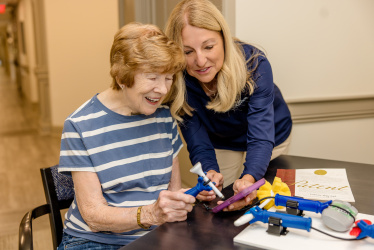
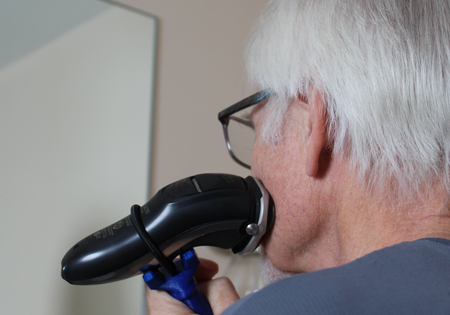
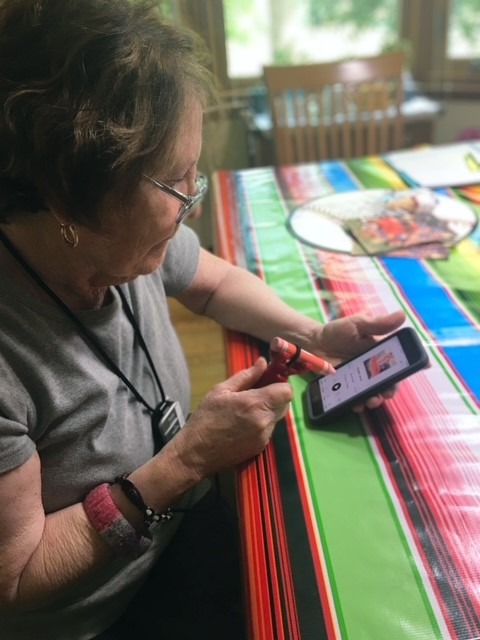
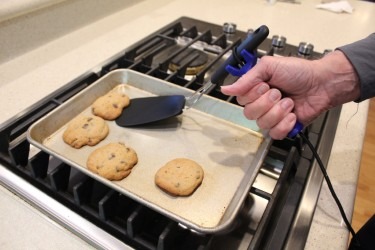
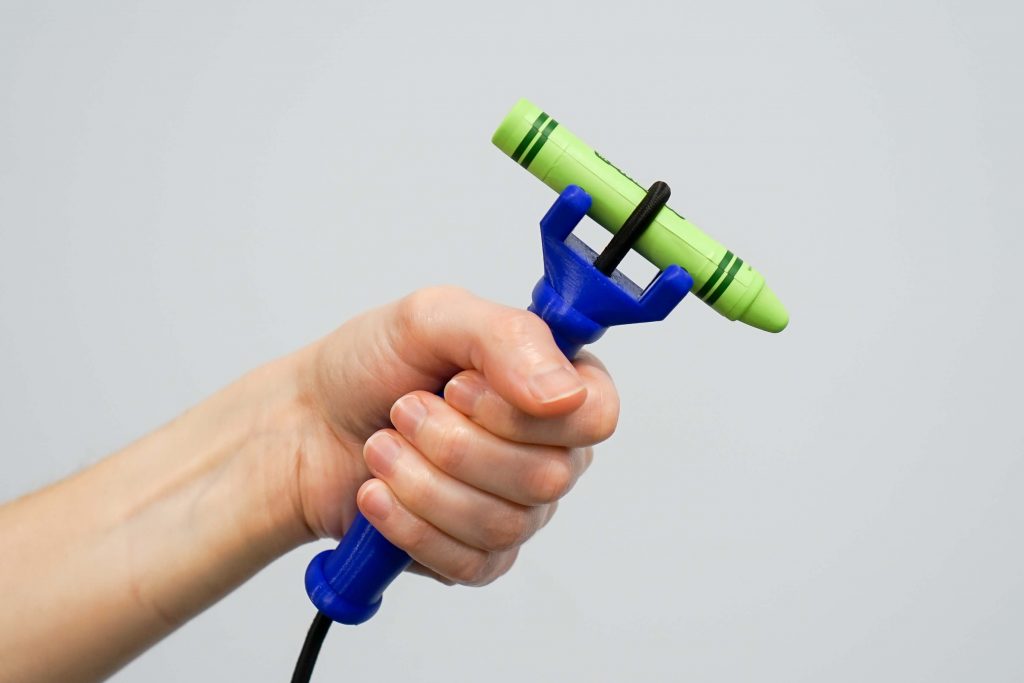
This is where adaptive equipment enters the conversation, not as a treatment for tremor, but as a way to change what a task requires. The functionalhand® is a multifunctional handle that holds a variety of everyday tools, utensils, and devices in either a vertical or horizontal position. It requires only a gross grasp to use, so the fingers are not responsible for fine control of the object it is holding.
Two of the mechanisms discussed above are relevant here. Placing an object in the functionalhand® increases the load being held, which is one of the strategies research has associated with reduced tremor amplitude in some people. Holding the functionalhand® itself also relies on a sustained gross grasp rather than a precision grip, which shifts the physical demand away from the fingertips and toward the muscles that co-contract to stabilize the wrist and hand. Neither of these effects treats the tremor. Both change the mechanics of the task in ways the research above suggests can help.
It matters to be precise about what this equipment does and does not do. Medical treatment, medication, injections, rehabilitation, or surgery when appropriate, can decrease tremor severity. Even with effective treatment, though, many people continue to have difficulty holding or controlling everyday objects. Adaptive equipment does not compete with that treatment. It answers a different question: can the way a person interacts with an object change so that less precise grasping is required? Positioning, forearm stabilization, using both hands, changing the size or weight of an object, and switching from a precision grip to a gross grasp are all strategies that can enter the conversation alongside medical care, and adaptive tools like the functionalhand® are one way to put those strategies into practice.
Pro Tip: Before committing to any adaptive tool, identify the single task that tremor interferes with most, whether that is eating, writing, or using a phone, and test a gross-grasp approach to that one task first. Solving the hardest task usually reveals whether stabilization is going to help before you invest in equipment for everything else.
Building a Simple Approach: Treat, Adapt, Participate
A practical routine for disabling hand tremor usually combines three layers, and none of them require choosing just one:
- Pursue appropriate medical treatment for the underlying condition, whether that is medication, injections, rehabilitation, or surgical options when indicated.
- Adapt the task itself through positioning, forearm stabilization, using both hands together, or switching to a gross grasp instead of a precision grip.
- Use adaptive equipment, such as a multifunctional grip aid, to make the adapted version of the task easier to repeat every day.
This is not a linear sequence. Many people use all three layers at once, adjusting the balance as their condition or their daily needs change. The goal at every layer is the same: keep participating in the activities that matter, even on days when the tremor itself has not changed.
Pro Tip: Want a quick, informal way to see if this applies to you or someone you’re working with? Hand the person a round object about 3.5 inches across, a screwdriver or hairbrush handle works well, and have them grasp it firmly, the way you’d grip someone’s hand for a handshake. Some people notice the shaking calms almost immediately once the hand is closed firmly around something substantial. It’s not a diagnostic test, but it’s a fast way to see whether a gross-grasp tool is worth trying before you commit to one.
FAQ
What is the best way to hold objects with a hand tremor?
There is no single best way, since the right approach depends on the underlying condition and the specific task. In general, a firm gross grasp that brings more of the hand into contact with an object tends to offer more mechanical stability than a small, precision fingertip grip.
Does gripping something firmly stop tremor?
No. Research shows that stabilization strategies, including gross grasp, mechanical loading, and muscle co-contraction, can reduce how much shaking shows up during a task, but they do not treat or eliminate the underlying neurological tremor.
Can adaptive equipment for hand tremor replace medication?
No. Adaptive equipment changes the mechanics of a task so it requires less precise control. It works alongside medical treatment, not as a substitute for it, and it is worth discussing both approaches with a neurologist or occupational therapist.
What conditions commonly cause disabling hand tremor?
Essential tremor, Parkinson’s disease, dystonia, and multiple sclerosis are among the most common causes of disabling hand tremor in adults, each with a different typical pattern and different first-line treatments.
Is essential tremor the same as Parkinson’s tremor?
No. Essential tremor is usually an action or postural tremor that appears when the arms are extended or in use, while classic Parkinsonian tremor typically appears at rest, though many people with Parkinson’s also experience action tremor.
Order Your functionalhand® Today
If you’re interested in purchasing a universal cuff for yourself or someone you care about, we hope you’ll consider investing in the functionalhand® universal cuff.
You won’t just be purchasing a product; you’ll be investing in a person’s ability to lead a more independent and fulfilling life.
“Just want to say thank you so much for making these! As someone who’s lost a lot of movement in my hands and can no longer write, it’s allowed me to not only write for the first time in ages but also draw! Along with using a knife to spread jam! Thank you so much”
About the Authors, Owners, and Inventors of the functionalhand®

Celine Rosati Skertich, PT, and Linda Merry, OT, each have over 40 years of experience empowering individuals with motor impairments improve postural control and functional independence. Linda specializes in creating custom tools for grasp deficits, inspiring their collaboration on the functionalhand®, an adaptive tool designed to support diverse grasp needs. Follow them for therapeutic tips on YouTube, Instagram, and Facebook.
Recommended read:
- Sarcopenia Symptoms: How Muscle Weakness Affects Hand Strength
- Chronic Pain in Older Adults: How Adaptive Equipment Helps
- Best ADL Grip Tools for Seniors with Hand and Wrist Weakness from Parkinson’s, Essential Tremors, and Hand Arthritis
- How the functionalhand® ADL Universal Cuff Transforms Lives for People with a Weak Grip