Home Exercise Program for Kids: Strength Through Daily Life
A home exercise program can help children build strength, improve movement, and practice functional skills without making every activity feel like an exercise. Dressing, playing, preparing food, completing chores, creating art, and getting ready for school can all provide meaningful opportunities to learn and move.
For many families, the challenge is not understanding that practice is important. The challenge is fitting that practice into an already busy day.
A home exercise program does not have to add a separate therapy session to every evening. With guidance from a child’s occupational or physical therapist, families can learn how to use familiar routines to reinforce alignment, stability, reaching, bilateral hand use, grasp, and other individualized goals.
These activities do not replace skilled therapy or specifically prescribed exercises. Instead, they help children practice developing abilities in the environments where they will use them.
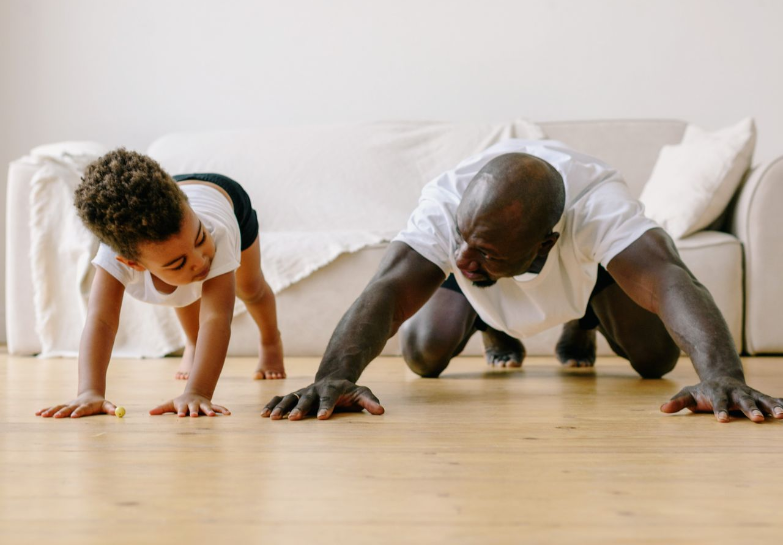
What Is a Pediatric Home Exercise Program?
A pediatric home exercise program is an individualized plan developed by a child’s therapist to support progress between therapy sessions. It may include exercises, positioning recommendations, play activities, self-care tasks, environmental changes, or ways to practice a skill during daily routines.
The purpose depends on the child’s goals. A home exercise program might address:
- Strength
- Range of motion
- Postural control
- Endurance
- Balance
- Reaching
- Grasp and release
- Bilateral coordination
- Self-care skills
- Participation in school, play, and family activities
A home program should reflect what the child and family want to accomplish. For one child, the goal may be bringing a spoon to the mouth. For another, it may be holding a marker, helping prepare a snack, accessing technology, or participating in a family game.
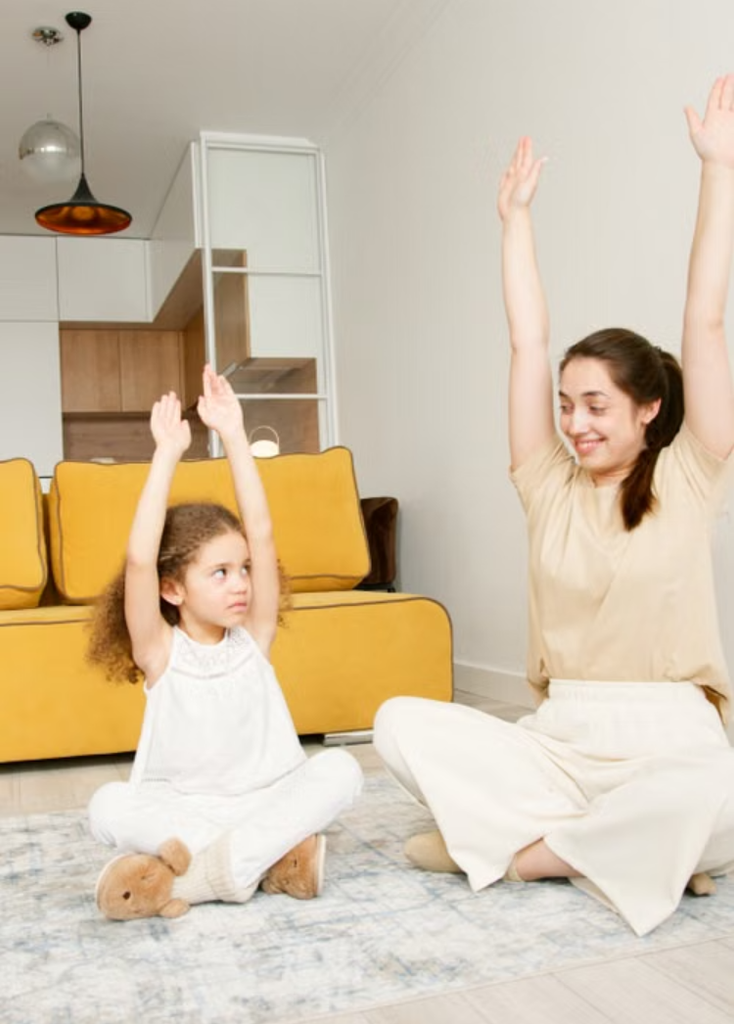
The American Occupational Therapy Association’s pediatric practice guideline recommends collaboration with families and therapeutic practice within the natural context of valued activities. It also supports skills-based practice within meaningful occupations rather than relying only on isolated sensorimotor activities. Read the pediatric occupational therapy practice guideline on PubMed.
Why Should Everyday Activities Be Part of a Home Exercise Program?
Children learn through active practice. When a task is meaningful, a child has a reason to initiate movement, solve a problem, and try again.
Consider the difference between lifting an object simply because an adult says, “Lift this ten times,” and lifting blocks to build a tower. Both may involve reaching and lifting, but the tower gives the movement a purpose.
Everyday activities also make repetition easier to include. A child may reach for clothing several times while getting dressed, carry objects while cleaning up, or repeatedly grasp and release items while setting the table. These small opportunities can add up across the day.
Research examining pediatric home therapy recommendations identified routine, caregiver education, a positive therapist relationship, and the family’s perception of benefit as important factors supporting follow-through. Lack of time, confidence, and caregiver stress were common barriers. Review the 2024 occupational therapy scoping review on PubMed.
Pro Tip: Start with one activity that already happens every day. It is usually easier to adjust an existing routine than to add a completely new therapy task.
A home exercise program does not always need more exercises. Sometimes it needs more meaningful opportunities to participate.
How Do Everyday Activities Reinforce Biomechanical Principles?
Biomechanics describes how the body is positioned and how its parts work together to create movement. In a pediatric home exercise program, biomechanical principles can guide how an activity is set up.
For example, a therapist may consider:
- Whether the child has adequate support at the pelvis, trunk, feet, and forearms
- Where an object is placed in relation to the child
- How far or in which direction the child reaches
- Whether the task requires pushing, pulling, lifting, or carrying
- How much resistance the activity provides
- Whether the child uses one hand or both hands
- How the wrist and hand are positioned around an object
The table below shows how familiar activities may reinforce different movement principles. Activities must be selected and adapted for the individual child.
| Everyday activity | Biomechanical principle | What the child may practice | Possible adjustment |
| Drawing on a vertical surface | Proximal stability | Trunk control, shoulder stability, reaching, and wrist positioning | Change the height or location of the paper Give a visual target |
| Wiping a table | Upper-extremity loading | Shoulder stability, elbow movement, and controlled weight bearing | Use a dry or damp cloth to change resistance Point in the direction to move the arm |
| Pushing a laundry basket | Resistance | Whole-body strength and sustained effort | Adjust the basket weight and floor surface Increase or decrease the weight |
| Stirring batter | Bilateral coordination | One hand stabilizes while the other moves | Change the bowl position or batter thickness |
| Putting toys on a shelf | Reaching | Controlled reach, lifting, and release | Place items at therapist-recommended heights |
| Setting the table | Functional repetition Sustained attention | Carrying, grasp and release | Begin with light, easy-to-hold objects |
| Brushing teeth or hair | Repeated purposeful movement | Shoulder and elbow movement during an ADL | Adjust the handle or use an assistive device |
How Can Families Build Strength During Daily Routines?
Strength develops when muscles work against an appropriate challenge. For children, that challenge can sometimes come from body weight, gravity, resistance, or the weight of an object used during a familiar activity.
A therapist might incorporate tasks such as:
- Pushing a toy stroller or lightweight container
- Pulling open an accessible drawer
- Carrying toys during cleanup
- Moving clothing into a laundry basket
- Reaching for items during dressing
- Stirring or pouring while preparing food
- Using a sponge to wipe a table
- Digging in sand or soil
- Drawing on an easel or other vertical surface
The goal is not to make every chore harder. The goal is to select an activity that produces the type and amount of effort the therapist wants the child to practice.

Strengthening should be individualized. A child’s diagnosis, joint stability, muscle tone, pain, fatigue, surgical history, and movement patterns may affect which activities are appropriate. Families should not add weights, increase resistance, or force movement beyond a comfortable range without consulting the child’s occupational therapist, physical therapist, or physician.
For more play-based examples, see our guide to occupational therapy activities for kids.
Which Daily Routines Offer Natural Practice Opportunities?
How can morning routines support movement?
Getting dressed may involve following directions or a sequence, sitting, reaching, lifting the arms, pushing a limb through clothing, pulling up pants, managing fasteners, and using both hands together.
The therapist can help the family decide which part the child can complete independently and where positioning or assistance is needed. The adult might begin a step and allow the child to finish it, place clothing within an attainable reach, or give the child additional time to initiate movement.
How can mealtime support strength and coordination?
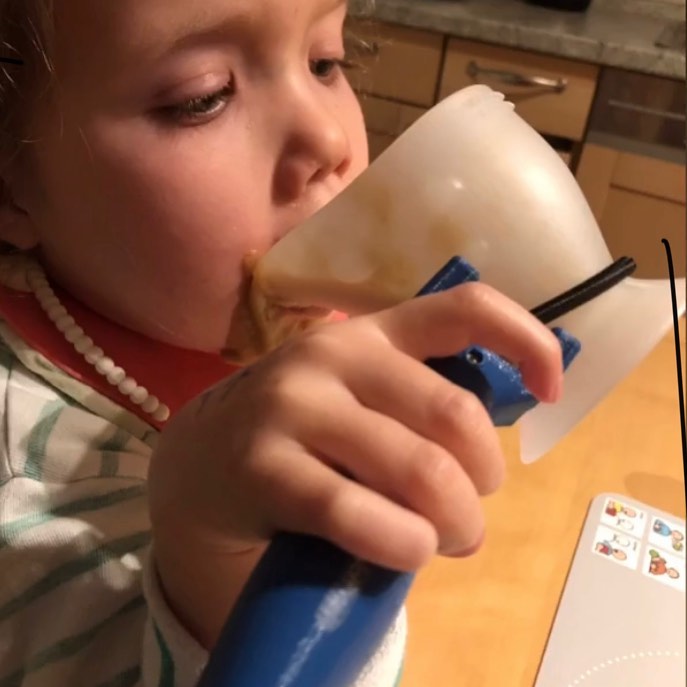
Food preparation and eating offer many opportunities for functional practice. A child may carry a lightweight cup, stabilize a bowl, stir, scoop, spread, pour, or bring a utensil to the mouth.
These tasks combine movement with a clear outcome. Stirring changes the food. Pouring fills the cup. Bringing the spoon to the mouth completes part of an ADL.
How can play reinforce a home exercise program?
Play encourages children to repeat movements because they are interested in what happens next. Building a tower, painting, playing an instrument, digging, dressing a doll, or rolling a ball may address several therapy goals at once.
Our guide to inclusive outdoor activities for children offers additional ideas for combining play, movement, and family routines.
Pro Tip: Follow the child’s motivation. If a child repeatedly reaches for a favorite toy, instrument, art supply, or cooking tool, that interest may create a natural opportunity for practice.
How Can ADLs Become Functional Strengthening Tasks?
Activities of daily living, or ADLs, include everyday self-care tasks such as eating, grooming, dressing, and personal hygiene. These tasks can reinforce strength and movement while also helping children become more active participants in their routines.
A therapist might break an ADL into smaller steps and identify:
- What the child can already do
- Which movement the child is beginning to learn
- What support is necessary
- Which step provides an appropriate challenge
- How the adult can reduce help as the child develops greater skill
This is different from completing the entire task for the child. It is also different from expecting independence before the child has the necessary support.
A child who cannot yet complete dressing independently may still reach for a sleeve, push an arm through, lift a foot, or pull on part of a garment. A child who needs help preparing a snack may still stabilize the bowl, stir, pour a premeasured ingredient, or carry an item to the table.
Participation can grow one step at a time.
Can Adaptive Equipment Support Active Movement?
Yes. Adaptation and strengthening are not opposites. An adaptive or assistive device may reduce one demand so the child can actively practice another part of the task.
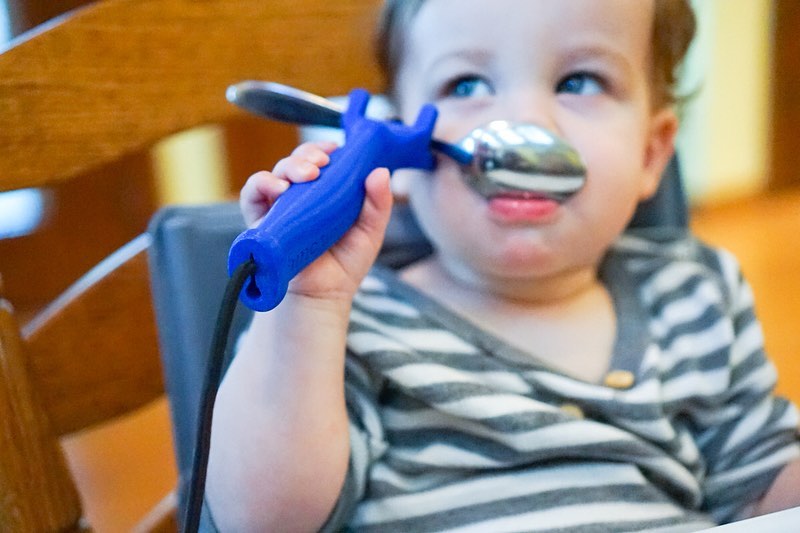
For example, a child may have the shoulder and elbow movement needed to paint but be unable to maintain grasp on the paintbrush. If an adult holds the brush and moves the child’s hand, the child has fewer opportunities to initiate and direct the action. If an appropriate assistive device secures the brush, the child may be able to practice reaching, shoulder control, elbow movement, visual guidance, and creative decision-making.
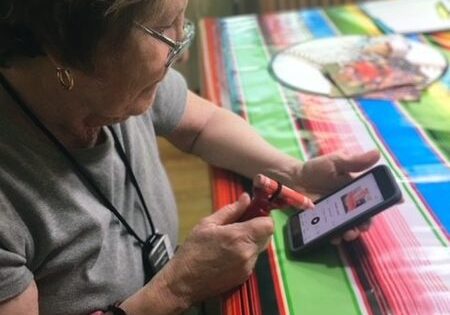
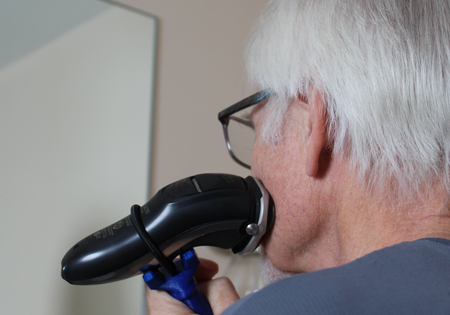
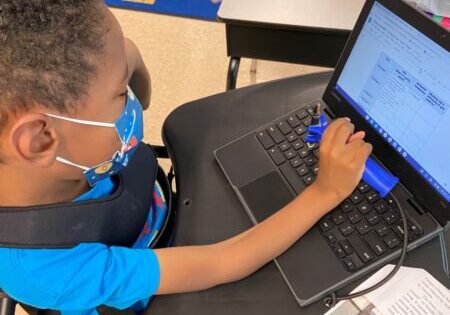
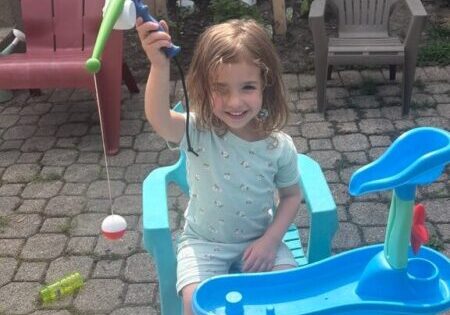
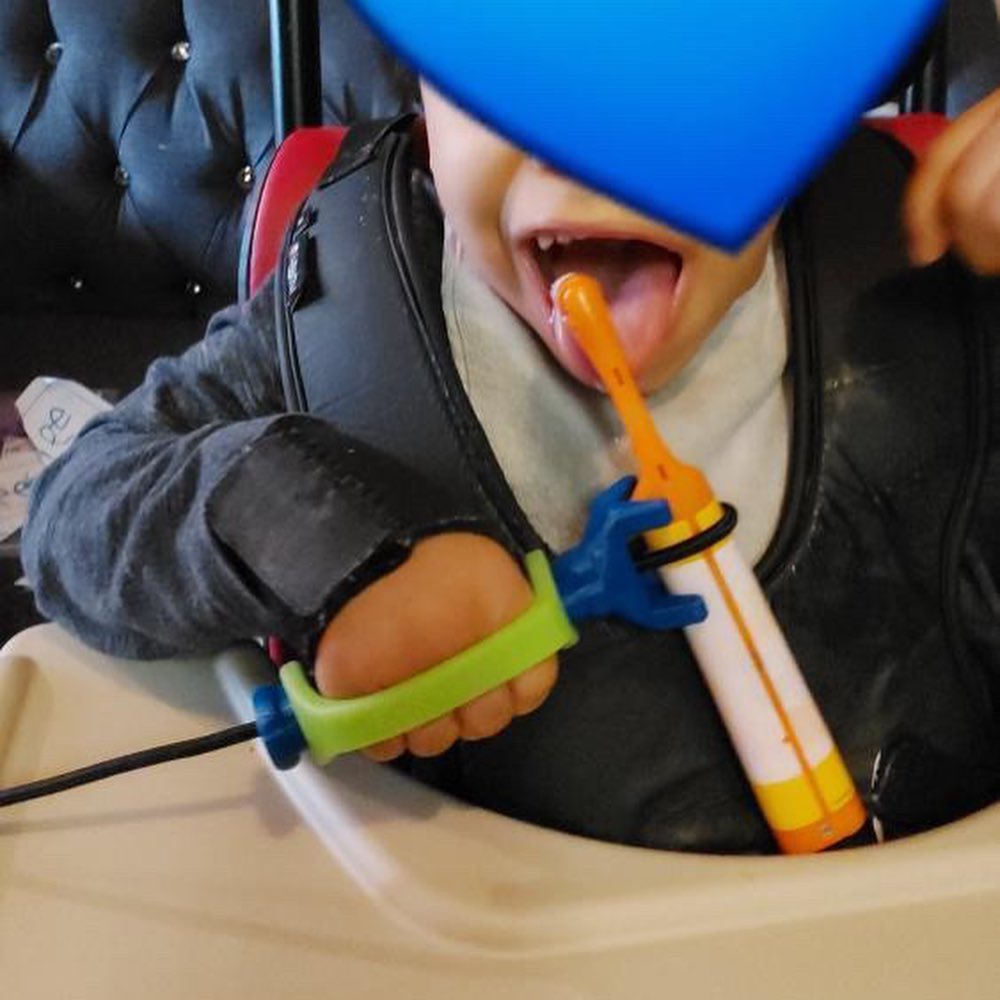
The functionalhand® repositionable universal cuff is designed for children and adults who have difficulty maintaining a grasp. It can hold tools in a horizontal or vertical position for activities such as:
- Drawing and painting
- Using an eating utensil
- Stirring
- Brushing teeth
- Accessing a tecnology with a stylus
- Playing with toys or musical instruments
The device supports access to the activity while allowing the child to use available movement. A therapist should determine whether it is appropriate for the child and help identify the safest position for the tool and activity.
Learn more about selecting pediatric occupational therapy tools by use.
How Do You Find the Just-Right Challenge?
The just-right challenge is demanding enough to encourage active effort but achievable enough for the child to remain engaged.
Watch how the child responds. An activity may need adjustment if the child:
- Stops initiating movement
- Becomes unusually frustrated
- Holds their breath
- Shows pain or significant fatigue
- Relies increasingly on compensatory movement
- Loses stable positioning
- Requires more assistance with each repetition
The solution may be to reduce the resistance, move the object closer, provide more body support, shorten the activity, use a lighter tool, or practice only one part of the task.
An activity may also be too easy. If the child completes it consistently with little effort, the therapist may recommend changing the object’s position, adding repetitions through play, increasing the movement range, or introducing safe resistance.
Progress does not always mean making an activity harder. It may mean using less adult assistance, initiating sooner, moving with better control, participating longer, or using the developing skill in a new setting.
How Can Parents and Therapists Make a Home Program More Manageable?
A home exercise program is more likely to fit family life when therapists and caregivers develop it together. A 2025 systematic review of home programs for young children with cerebral palsy identified adapted goals, activities incorporated into daily routines, caregiver training, and family-professional communication as facilitators. Read the systematic review on PubMed.
Families can ask the therapist:
- Which one or two goals are most important right now?
- Which daily activity already includes the movement we want to practice?
- What should successful movement look like?
- How much help should I provide?
- What signs indicate that we should stop or change the activity?
- How often should we practice?
- When should the program be updated?
Short videos can also help the therapist see how the child moves at home, if the family and provider have an approved, secure way to share them.
Pro Tip: Ask the therapist to demonstrate the activity, then practice it while the therapist watches. This gives the family an opportunity to ask questions and confirm positioning, assistance, and safety.
What Should Families Remember About Home Exercise Programs?
A successful pediatric home exercise program should support the child and fit the family. It should not leave parents feeling that every interaction must become therapy.
The strongest program may be the one that helps a child:
- Initiate a movement
- Complete one more step of an ADL
- Use both hands during play
- Reach for something meaningful
- Participate with less hands-on assistance
- Practice a developing ability during real life
Task-specific motor training is an important component of contemporary early intervention for infants with or at high risk for cerebral palsy, according to the American Academy for Cerebral Palsy and Developmental Medicine. Its care pathway emphasizes active, task-specific practice rather than passive movement alone. Review the AACPDM Early Detection of Cerebral Palsy Care Pathway.
The exact goals and methods will be different for every child. What remains consistent is the value of meaningful participation.
What Are Common Questions About a Home Exercise Program?
How often should a child complete a home exercise program?
Frequency depends on the child’s goals, health, tolerance, and therapist’s recommendations. Some activities may be practiced briefly throughout the day, while others may follow a specific schedule.
Can play count as part of a home exercise program?
Yes. When play includes the movement or skill identified by the child’s therapist, it can provide meaningful and motivating practice. The activity should still match the child’s individual goals and precautions.
Do daily activities replace prescribed exercises?
No. A therapist may recommend both specific exercises and functional activities. Daily routines can reinforce developing abilities, but they should not replace prescribed stretching, strengthening, positioning, or other interventions without the therapist’s approval.
What if my child refuses to do the activities?
First consider whether the activity is meaningful, understandable, and appropriately challenging. The child may also be tired, uncomfortable, not feel well, overwhelmed, or unsure what to do. Share what you observe with the therapist so the program can be adjusted.
Can a universal cuff be used during a home exercise program?
A universal cuff may help a child maintain contact with an object when grasp is limiting participation. A therapist can determine whether a cuff is appropriate and recommend the object position, activity setup, and amount of assistance.
How Can Everyday Movement Become Meaningful Practice?
A home exercise program does not have to compete with family life. It can become part of family life.
The spoon used at breakfast, the shirt selected for school, the toys placed on a shelf, and the paintbrush used during art can all create opportunities for a child to initiate movement and strengthen developing abilities.
Start with the child’s goals. Look at the routines already in place. Then work with the child’s occupational therapist or physical therapist to identify where meaningful practice can naturally occur.
Strengthen what can be strengthened. Adapt what needs to be adapted. Keep the child participating.
Author credentials
Linda Merry, OT, and Celine Skertich, PT, are the co-inventors of the functionalhand® repositionable universal cuff. Their clinical work has focused on helping children and adults participate more actively in daily activities when grasp differences make it difficult to hold and use objects.
This article provides general educational information and does not replace an individualized evaluation or home exercise program developed by a licensed healthcare professional.
About the Authors, Owners, and Inventors of the functionalhand®
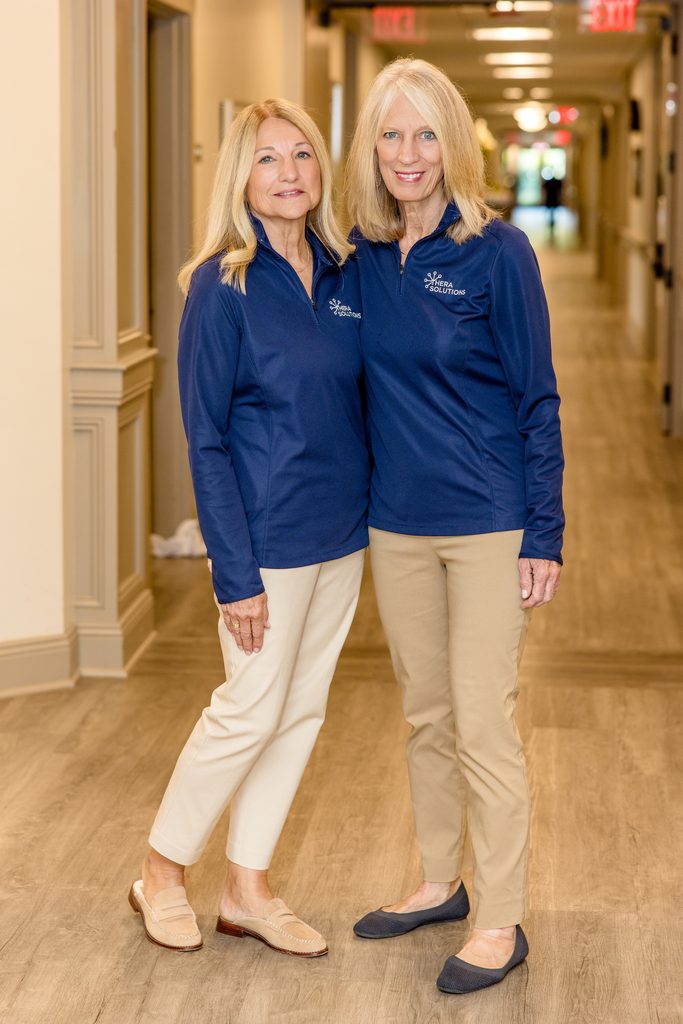
Celine Rosati Skertich, PT, and Linda Merry, OT, each have over 40 years of experience empowering individuals with motor impairments improve postural control and functional independence. Linda specializes in creating custom tools for grasp deficits, inspiring their collaboration on the functionalhand®, an adaptive tool designed to support diverse grasp needs. Follow them for therapeutic tips on YouTube, Instagram, and Facebook.
Order Your functionalhand® Today
If you’re interested in purchasing a universal cuff for yourself or someone you care about, we hope you’ll consider investing in the functionalhand® universal cuff.
You won’t just be purchasing a product; you’ll be investing in a person’s ability to lead a more independent and fulfilling life.
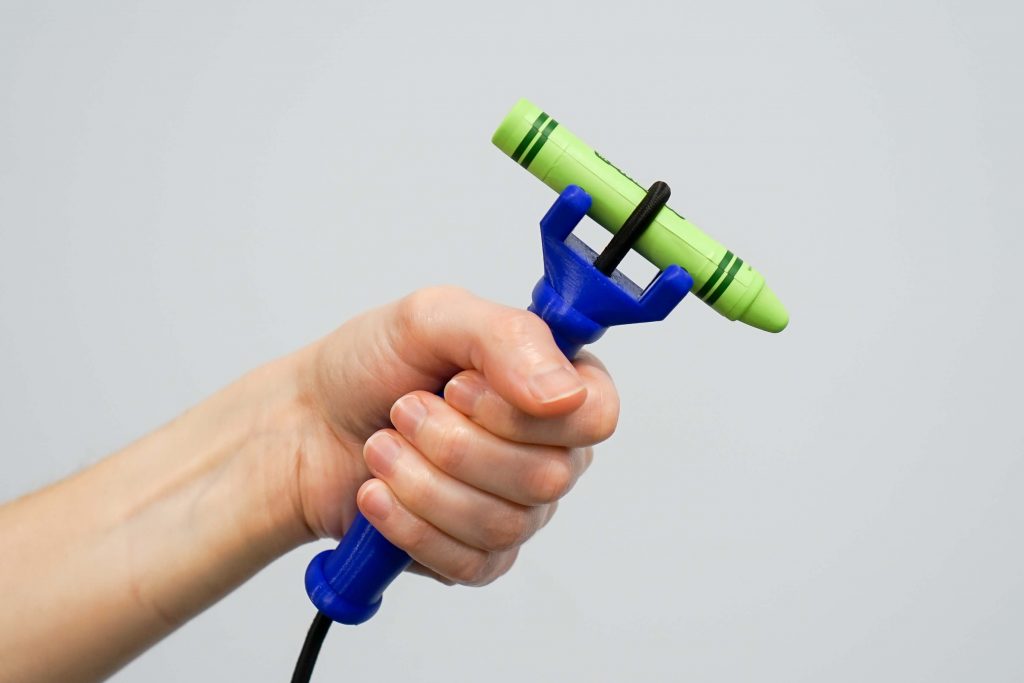
“Just want to say thank you so much for making these! As someone who’s lost a lot of movement in my hands and can no longer write, it’s allowed me to not only write for the first time in ages but also draw! Along with using a knife to spread jam! Thank you so much”
Recommended reads:
- Accessible Wellness Guide with Tips, and Education on the Importance of Supporting Healthy Independence and Daily Routines with the functionalhand®
- Adaptive Summer Activities: Making Recreation Accessible for All Abilities with the functionalhand®
- Best Adaptive Equipment & Teaching Tools for Students with Disabilities
- Adaptive Equipment for Students with Disabilities: A Guide by Diagnosis and Daily Need