Adaptive Equipment for Students with Disabilities: A Guide by Diagnosis and Daily Need
Adaptive equipment for students with disabilities works best when it matches both the student’s individual diagnosis including their postural control, motor abilities, and the specific tasks they need to perform throughout the day — and the right fit can mean the difference between a child sitting on the sidelines and a child fully participating in class. For students with cerebral palsy, muscular dystrophy, fine motor delays, or grasp deficits, generic tools often fall short. This guide breaks down which adaptive devices support common conditions and what to look for when choosing them for school environments.
Why Does Diagnosis Matter When Choosing Adaptive Equipment?
Not all grasp challenges are the same. A student with spastic cerebral palsy holds objects differently than a student with hypotonia or a traumatic hand injury — and the adaptive device needs to account for that. When schools rely on one-size-fits-all pencil grips or standard universal cuffs, they often miss the opportunity to support the student’s individual hand function and positioning needs. Because the brain learns through repetition and practice, adaptive tools should promote optimal hand posture and movement patterns. When a tool does not provide appropriate ergonomic support, students may repeatedly practice inefficient movement patterns, potentially contributing to increased deformity over time, reduced functional use of the hand, difficulty securely holding materials during activities, and less-than-optimal independence.
According to the American Occupational Therapy Association, assistive technology and adaptive equipment are among the most evidence-supported interventions for improving participation in school-based ADLs (Activities of Daily Living). The key is matching the tool’s mechanics to the student’s actual hand function — not just their diagnosis label.
What Adaptive Equipment Do Students with Cerebral Palsy Need in School?
Students with cerebral palsy (CP) often present with a combination of spasticity, weak grip, and hand deformities that make it difficult to hold tools in both vertical and horizontal orientations. A standard universal cuff that only holds a utensil in one direction forces the student’s wrist and arm into compensatory positions — which can worsen deformity over time.
For CP, look for adaptive equipment that:
- Supports the natural arch of the hand rather than flattening it while actively grasping the tool.
- Accommodates vertical and horizontal grip (writing and eating are different positions)
- Can hold items of varying sizes — from a pencil to a marker to a stylus — without needing to swap devices
- Is lightweight and easy for a student (or teacher) to put on independently
Which Adaptive Devices Help Students with Muscular Dystrophy Participate in Class?
Students with muscular dystrophy (MD) typically experience progressive proximal and then distal muscle weakness, meaning grip strength decreases over time and can fluctuate day to day. This makes durable, adjustable adaptive equipment especially important — tools that grow with the student’s changing needs rather than requiring replacement as function changes.
For MD, prioritize adaptive equipment that:
- Requires minimal hand strength to use (the device does the holding, not the student’s fingers), while at the same time supports the anatomy of the anatomy of the hand.
- Can be adjusted without complex setup — teachers don’t have time for lengthy prep between activities
- Is built for long-term durability to reduce replacement costs as needs evolve
How Can Adaptive Equipment Support Students with Fine Motor Delays?
Fine motor delays affect a significant share of students in both general and special education settings — often without a formal diagnosis like CP or MD. Students with developmental delays, sensory processing differences, or coordination difficulties may struggle to hold pencils, scissors, or classroom tools consistently, creating gaps in academic participation.
The challenge here isn’t just finding a tool that works — it’s finding one that doesn’t draw attention. Students with fine motor delays are already aware of their differences. Adaptive equipment that looks clinical or conspicuous can increase social anxiety and discourage use.
| Student Need | Common Challenge | Adaptive Solution |
|---|---|---|
| Writing/handwriting | Cannot maintain grip or orient on pencil | Universal cuff with vertical hold |
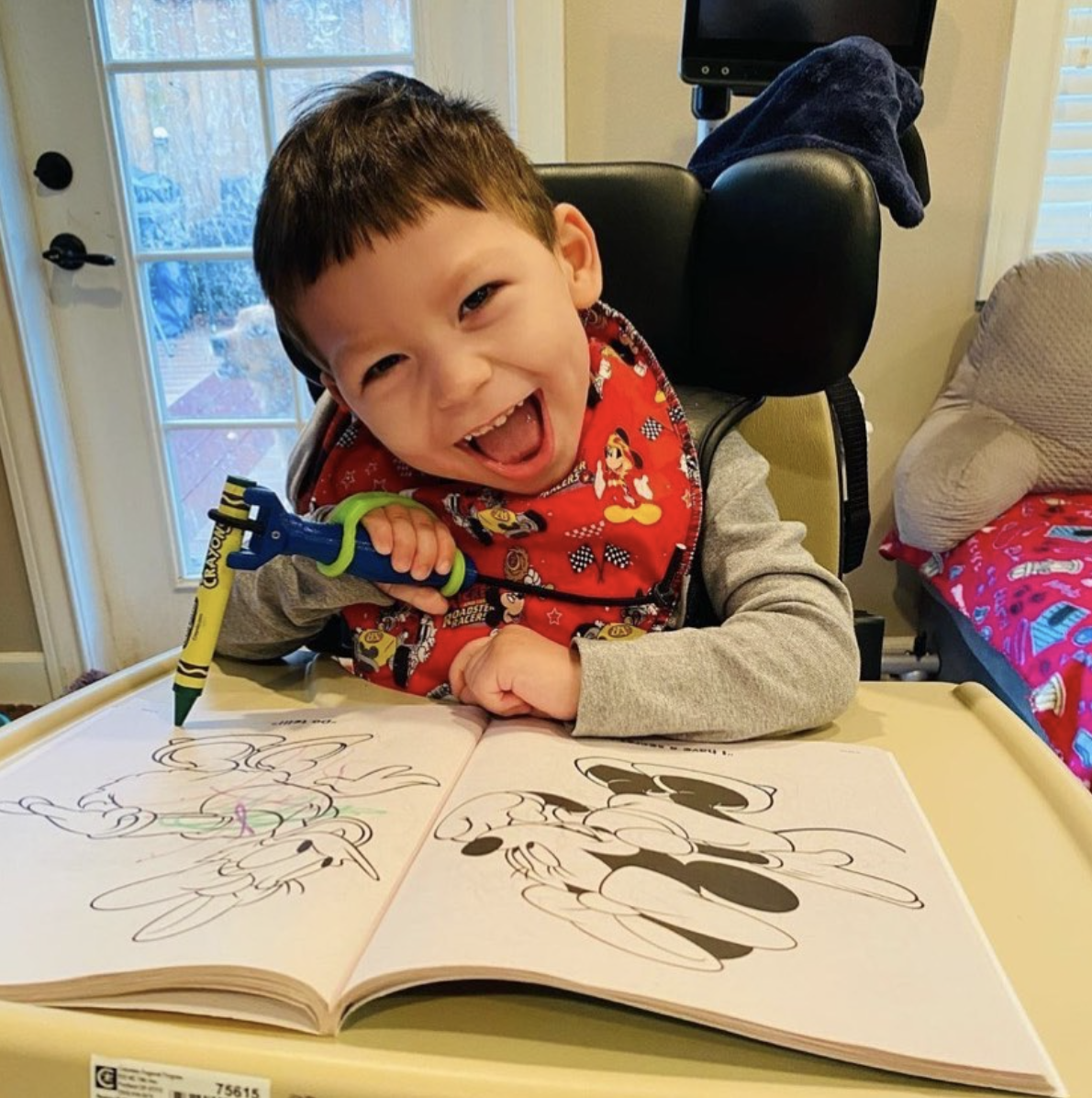
| Art class | Drops markers, brushes mid-activity | Adaptive aid holding items of varied sizes |
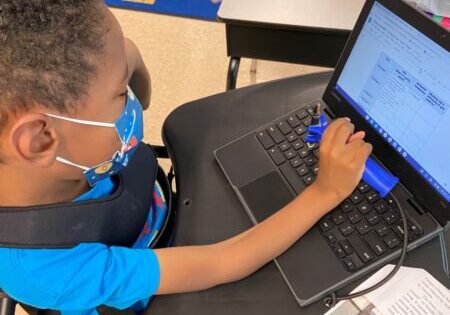
| Technology access | Lacks fine motor skills to access keyboard or hold a stylus | Universal cuff with stylus attachment |
| Lunchtime | Difficulty holding feeding utensils or drink containers | Horizontal-grip adaptive cuff |
| Group games | Excluded due to inability to hold game pieces | Versatile adaptive aid for various objects |
? Pro Tip: When trialing adaptive equipment with students who have fine motor delays, start with a high-motivation activity — art, a favorite game, or a preferred snack — before moving to writing tasks. Success in a preferred context builds confidence and carryover.
What Should Teachers and OTs Look for School?
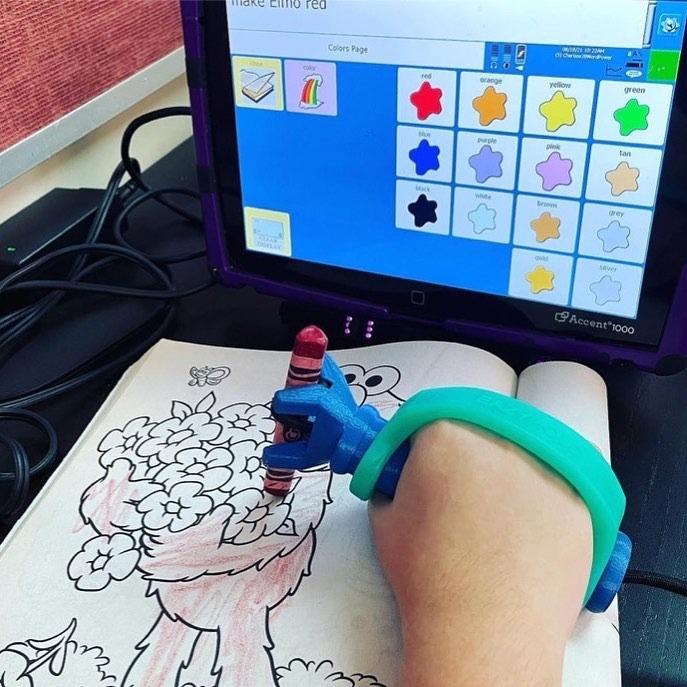
Whether you’re an occupational therapist building a classroom toolkit or a special education teacher trying to support a student mid-lesson, the criteria for good school-based adaptive equipment come down to four things:
- Versatility across tasks. A device that only works for writing leaves students without support during art, technology, or lunch. The fewer devices needed, the more consistently students will use them and time efficient for the teacher or paraprofessionals.
- Ease of use for both student and teacher. If a device takes three minutes to set up, a teacher managing 20+ students won’t use it. Look for tools that go on quickly and adjust easily.
- Support for healthy hand biomechanics. Adaptive equipment should support healthy hand positioning, not simply hold an object in place. When tools flatten the hand arch or promote poor grasp patterns, repeated use can reinforce movements that limit function and independence.
- Cost-effectiveness for schools. Budget constraints are real. A single adaptive aid that replaces multiple single-purpose devices is a smarter investment than a collection of narrowly functional tools.
? Pro Tip: OTs and PTs working in school settings: the functionalhand® can be trialed during therapy sessions before recommending it for classroom use. Its adjustable design accommodates items from a toothpick to a water bottle, which makes it easy to test across multiple functional tasks in a single session.
FAQs About Adaptive Equipment for Students with Disabilities
What is the difference between adaptive equipment and assistive technology for students?
Adaptive equipment refers to physical devices that modify how a student interacts with tools — like universal cuffs, pencil grips, or weighted utensils. Assistive technology is a broader category that includes software, communication devices, and hardware. Many students benefit from both: an adaptive aid to hold a stylus, paired with a communication app on a tablet.
Can students use adaptive equipment in general education classrooms?
Yes. Under IDEA and Section 504, students with disabilities are entitled to the accommodations they need to access the curriculum — which can include adaptive equipment. OTs typically recommend and document specific devices as part of a student’s IEP or 504 plan.
Is the functionalhand® appropriate for students with spastic hands?
The functionalhand® was designed by therapists who work with students with spasticity, including cerebral palsy. Its design supports the natural hand arch and accommodates varying grip patterns. Always consult your student’s OT or PT to determine fit for individual needs.
How do I clean adaptive equipment between students?
The functionalhand® is dishwasher-safe, which makes it practical for shared school use. Wipe-down with standard disinfecting wipes is also appropriate between uses during the school day.
Where can schools purchase adaptive equipment for students with disabilities?
The functionalhand® is available directly at functionalhand.com and through distributors (see the bottom of this page for full list), common channels for school-based purchasing.
Choosing Adaptive Equipment That Works Across the Full School Day
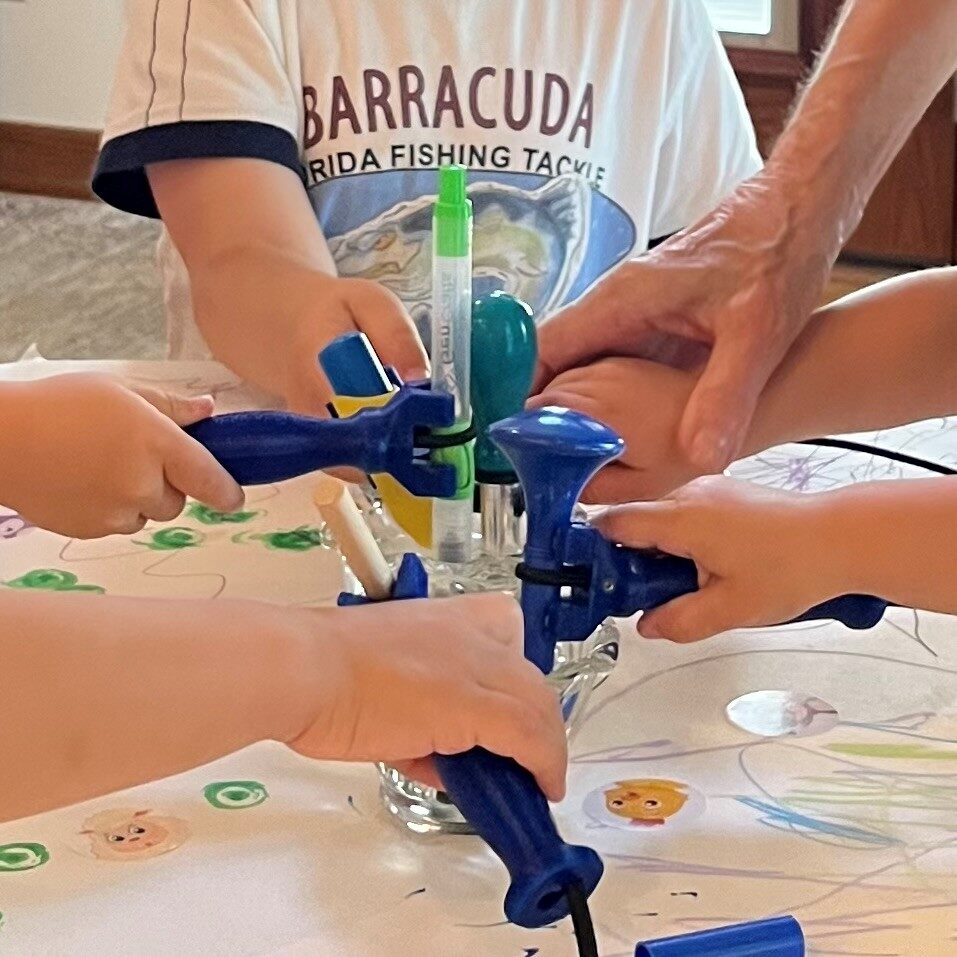
Students with disabilities don’t just need support during writing time. They need to hold a a stylus, a paint brush, a marker, and so on. Adaptive equipment for students with disabilities earns its place in a school when it travels with the student across all of those moments — not just during OT sessions or writing instruction.
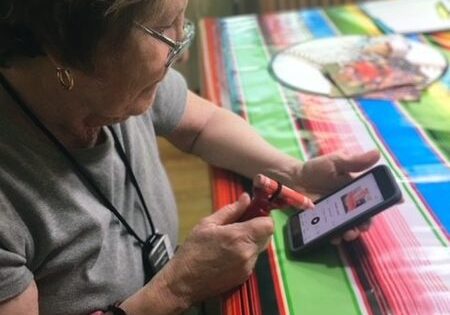
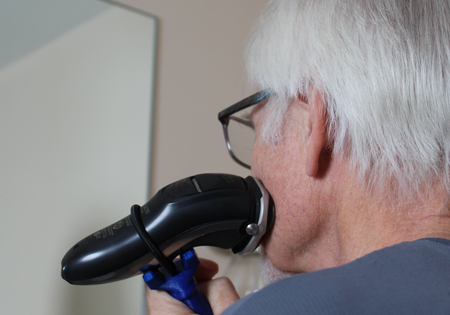
The functionalhand® universal cuff is built for exactly that: a therapist-designed adaptive aid that helps individuals with limited hand strength or fine motor challenges securely grip and use everyday items, ideal for children and adults with disabilities, supporting independent living by allowing users to hold utensils, pens, a stylus, paint brushes, markers, toothbrushes, toys, and more — both vertically and horizontally.
For students who cannot sustain their gross grasp on the functionalhand® universal cuff alone, it pairs nicely with the EaZyHold strap, maintaining the functionalhand® in their hands.
For more on how the functionalhand® supports classroom participation, visit our full guide to adaptive equipment and teaching tools for students with disabilities, or explore our learning support resources.
Order Your functionalhand® Today
If you’re interested in purchasing a universal cuff for yourself or someone you care about, we hope you’ll consider investing in the functionalhand® universal cuff.
You won’t just be purchasing a product; you’ll be investing in a person’s ability to lead a more independent and fulfilling life.
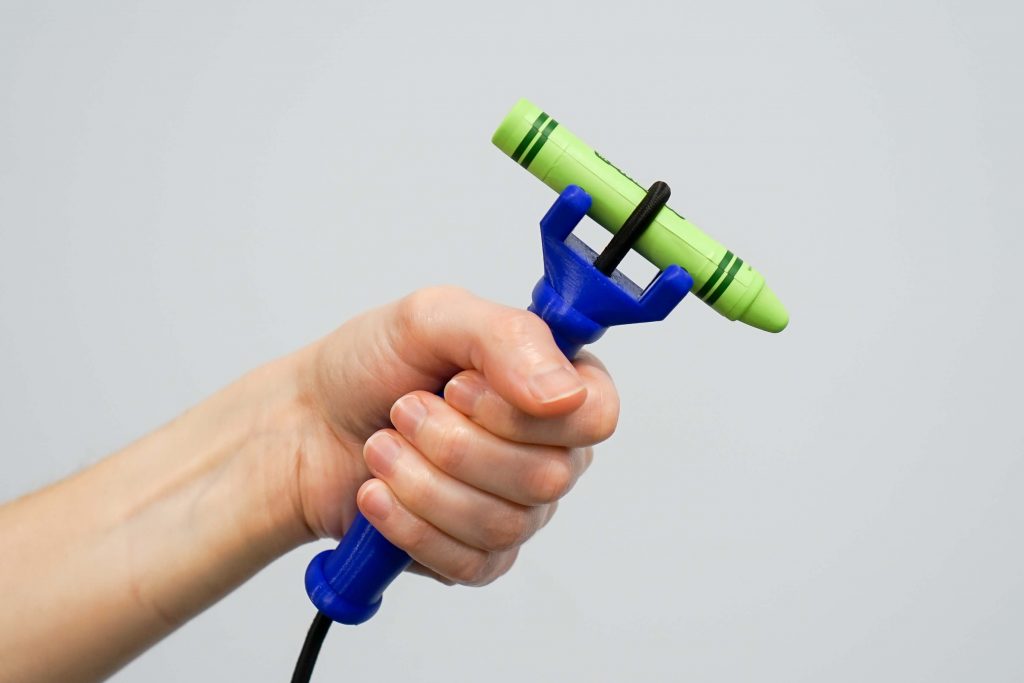
“Just want to say thank you so much for making these! As someone who’s lost a lot of movement in my hands and can no longer write, it’s allowed me to not only write for the first time in ages but also draw! Along with using a knife to spread jam! Thank you so much!” — functionalhand® customer
Recommended read:
- How the functionalhand® ADL Universal Cuff Transforms Lives for People with a Weak Grip
- Accessible Wellness Guide with Tips, and Education on the Importance of Supporting Healthy Independence and Daily Routines with the functionalhand®
- Support Literacy with Assistive Technology for Writing Disabilities