Best Adaptive Utensils for Cerebral Palsy: A Complete Guide in 2026
Children with CP often are identified by feeding (oral motor) issues impacted by postural control, not because of self feeding difficulties. Finding the right adaptive utensils for individuals who have cerebral palsy can be the difference between a challenging mealtime and increased independence and confidence at mealtime. Cerebral palsy is the most common motor disability in childhood, affecting approximately 1 in 345 children in the United States, and for many children, difficulties with postural control are among the earliest factors to affect upper-extremity movement, hand function, and self-feeding skills.
The issue isn’t just grip strength. It’s the way the hand approaches and interacts with an object. Spasticity, upper extremity control difficulties and reduced hand mobility affect the angle and posture a person uses when reaching for a fork or spoon. Most adaptive eating aids address grip strength. Fewer address positioning and object orientation — the ability to adjust how a utensil sits relative to the hand. This guide covers both, and explains why that distinction matters so much for people with cerebral palsy.
Why Is Mealtime Difficult with Cerebral Palsy?
Cerebral palsy affects motor control in ways that show up differently for every individual. For many, this means grasp deficits (difficulty closing or opening the hand to accept the utensil and maintaining hold), fine motor challenges (trouble with the small, precise movements needed to scoop, spear, or self-load food), and involuntary movement patterns that make it hard to keep a utensil stable.
Research published in the Journal of Hand Surgery found that 60% of children with CP aged 4 to 14 have more than minor problems with hand function — and that only 20% of children with dyskinetic CP (the type involving involuntary, uncontrolled movement) achieve independence in age-relevant daily manual activities. Physiopedia notes that individual characteristics like gross motor function classification and age most strongly affect self-care independence in children with CP.
According to the American Occupational Therapy Association (AOTA), feeding and self-feeding are central ADL (Activities of Daily Living) targets for occupational therapy — and adaptive equipment is one of the primary intervention tools. Being able to eat alongside family and peers, without assistance, matters deeply to both children and adults with CP. Standard utensils simply aren’t designed for the range of hand postures and movement patterns noted.
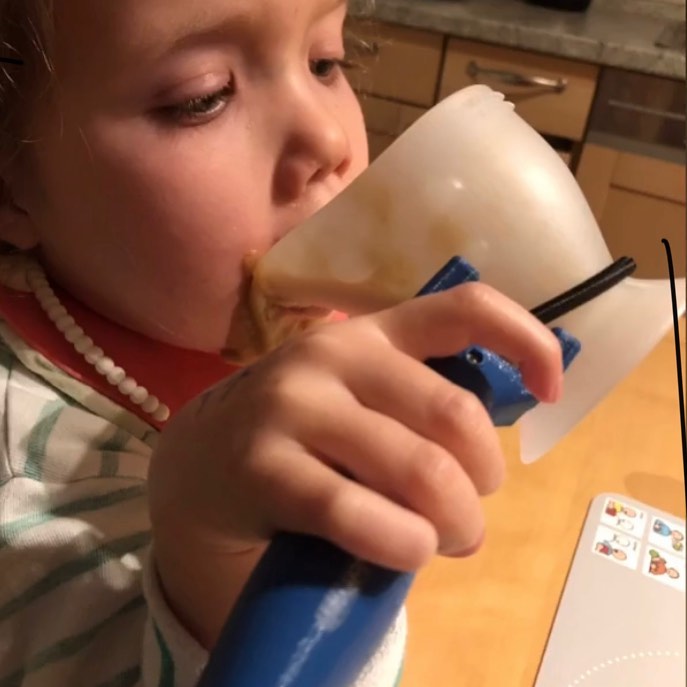
What Should You Look for in Adaptive Utensils for Cerebral Palsy?
Not all adaptive eating aids are built for the complexity of CP. When evaluating options, occupational therapists typically look for the following:
- Grip stability — does the aid securely hold the utensil so the person doesn’t have to maintain an active grip?
- Size flexibility — can it accommodate a variety of utensils of different size and shape?
- Object orientation — can the utensil be repositioned to match the person’s natural hand posture and approach angle? This is critical for CP, where muscle tone and positioning vary widely person to person.
- Ease of setup — can a caregiver or therapist adjust it quickly between tasks and meals?
- Versatility across the full day — does it work beyond the dinner table? A truly useful adaptive aid supports eating, grooming, writing, and more — not just one activity.
Object orientation is the criterion most often overlooked in standard product comparisons — and the one that matters most for cerebral palsy, where every individual’s hand posture is different.
What Types of Adaptive Eating Aids Are Available?
Here’s a comparison of the most common options and how they serve people with cerebral palsy:
| Type | How It Works | Best For | Limitations |
Built-up handle utensils (Image credit: Performance Health) | Larger grip diameter, fixed angle | Easier hold for weak grip; enlarged handle may help avoid the individual grasping too tight | Fixed position — no orientation adjustment |
Weighted utensils (Image credit: Performance Health) | Heavier handle dampens tremor | Helpful for tremor or athetoid movement | May fatigue hand; single-tool purpose;may be too heavy |
Angled / bent utensils (Image credit: Amazon) | Preset angle for wrist deviation | Good for limited wrist range | Preset angle may not match individual posture impacting hand to mouth control |
Standard universal cuff (Image credit: Performance Health) | Pocket holds utensil to palm | Frees fingers; works for weak grip | Limited object size range; fixed orientation |
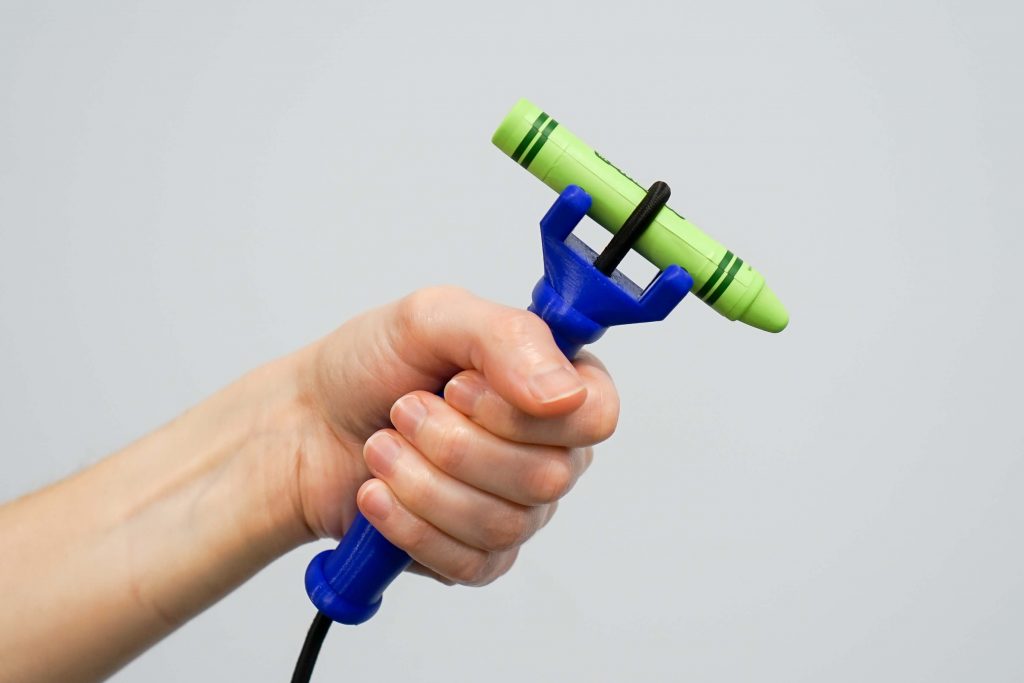
functionalhand® universal cuff | Adjustable cord holds any object size stable; the ergonomically designed handle supports biomechanical alignment | Adjustable orientation matches individual hand posture; works across all utensil sizes and daily objects90u | Requires brief orientation for optimal positioning |
The right choice depends on the individual’s hand function, postural alignment, muscle
tone, and daily routine. An occupational therapist is the best person to guide this decision. The American Academy for Cerebral Palsy and Developmental Medicine (AACPDM) recommends a multidisciplinary approach to CP management — which means trialing adaptive equipment with therapist guidance, not guessing alone.
| ? PRO TIP: Trial before you commit. Before purchasing any adaptive utensil for a child or adult with CP, ask their occupational therapist to trial a few options during a session. What works on paper may not match the individual’s actual hand posture, tone, or movement patterns. A short OT trial saves time, money, and frustration — and gives you a setup you know will actually work at home. |
How Does a Universal Cuff Support Self-Feeding for Cerebral Palsy?
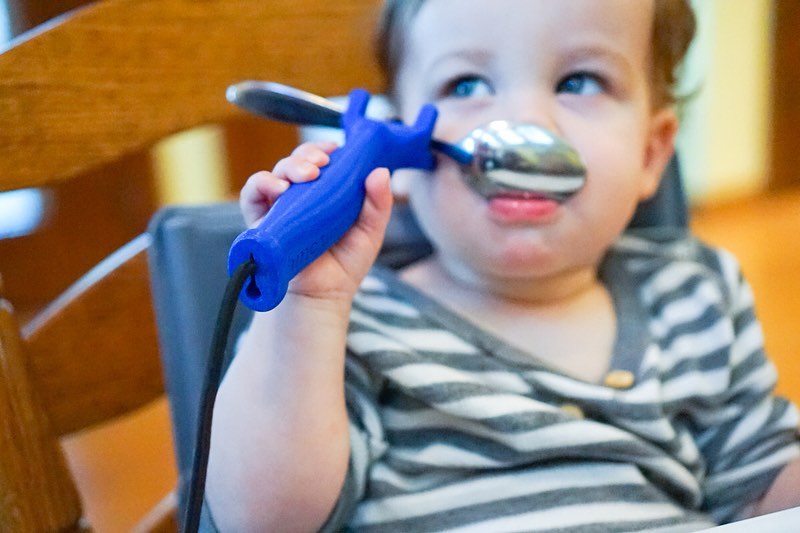
A universal cuff is an adaptive aid that holds a utensil — fork, spoon, toothbrush — against the hand, removing the need to maintain an active grip on the specific utensil. For someone with grasp deficits, this can be the tool that makes independent eating possible.
The functionalhand® was designed by Celine, a physical therapist, and Linda, an occupational therapist, who spent years fabricating individual tools for clients with grasp deficits — one mold per object, for every different utensil size. They created the functionalhand® because no single commercially available product could hold many different objects securely. That founding insight drives its core design: an adjustable cord that cinches around any object, from a teaspoon to a full-sized fork, from a cup to a water bottle, holding it firmly in place without requiring a separate tool for each size.
| The functionalhand® supports good biomechanical alignment — helping the hand approach objects in a posture that protects long-term hand health, rather than reinforcing movement patterns that can lead to deformity or discomfort over time. |
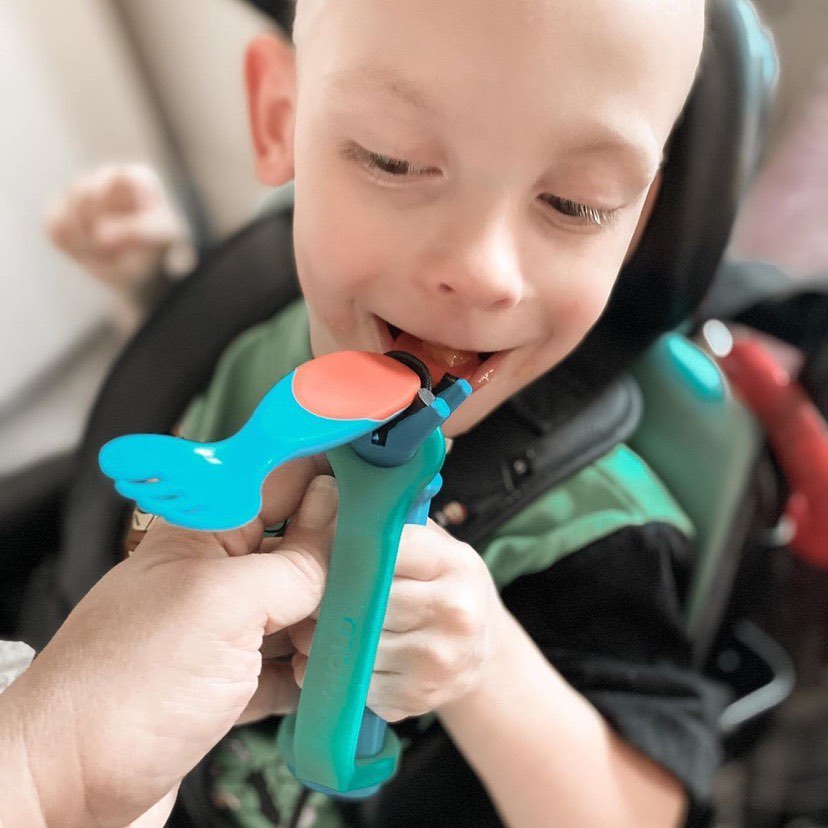
For people with CP specifically, the key differentiator is object orientation, stability and the ability to hold an object in the vertical and horizontal orientation (or plane). By repositioning the utensil within the functionalhand® users can adjust how close the spoon or fork sits to the mouth. This adaptability accommodates a wide range of needs and promotes successful participation in self-feeding. Because you can adjust the cord to position the utensil at different angles, you can use the functionalhand® to meet the hand where it actually is. A child with an asymmetrical tone who naturally approaches a spoon at a different angle doesn’t need to compensate. The tool compensates instead.
From Breakfast to Bedtime: Adaptive Aids That Work All Day
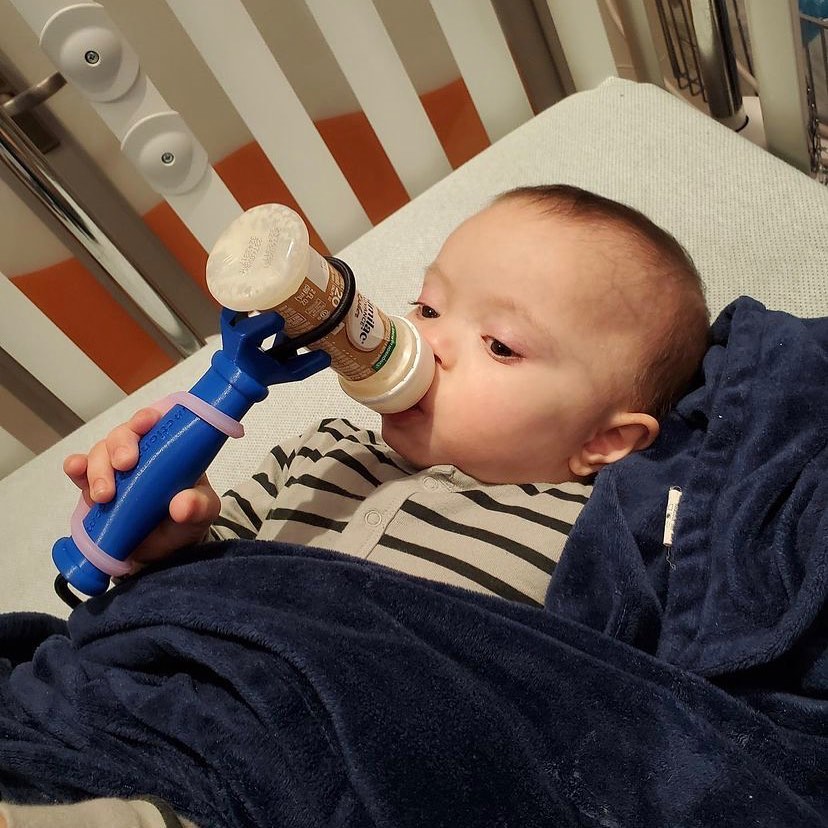
One of the most common frustrations families and therapists describe is investing in an adaptive aid that helps with one task and nothing else. This is why Linda and Celine built the functionalhand® around the opposite philosophy: one adaptive device that works across the full day.
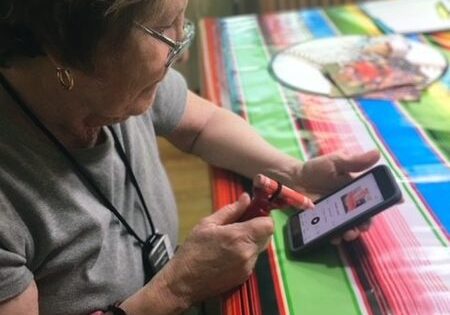
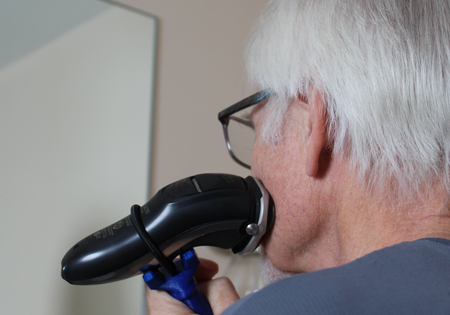
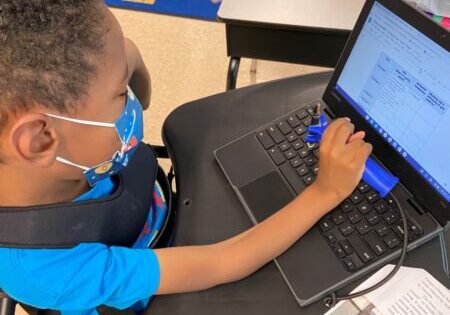
At mealtimes, it holds silverware for self-feeding. Afterward, it holds a toothbrush for oral hygiene — another ADL that requires the same type of grip assist. During school or therapy, it holds a pencil, marker, paintbrush or crayon for writing and art. It can even hold a stylus for tablet and device access — opening up communication tools, educational apps, and technology for individuals whose motor skills make direct device access difficult.
For students with disabilities in the classroom, this versatility matters especially. One tool, transitioned across activities — from morning circle time to lunch to afternoon art — means less setup, less disruption, and more time participating. One child was able to hold his milk carton at school independently alongside his classmates. Another used the functionalhand® to access an air hose for breathing support. From one task to the next, it adapts to whatever the day requires
For families managing the daily routines of a child or adult with CP, this isn’t a luxury. It’s practical. One tool that works from morning to night means one less thing to problem-solve — and one more moment of independence to build on.
Frequently Asked Questions About Adaptive Utensils for Cerebral Palsy
Will adaptive utensils work for my child’s specific type of CP?
Cerebral palsy presents differently in every individual — spastic, athetoid, ataxic, and mixed types each affect hand function in distinct ways. The most important step is consulting an occupational or physical therapist who can assess your child’s specific hand function, postural alignment , muscle tone, and movement patterns. The functionalhand® is adjustable enough to accommodate a wide range of presentations, but OT/PT guidance ensures the setup actually matches your child’s needs.
Can one adaptive aid hold utensils of different sizes?
Standard adaptive utensils are typically a fixed size. The functionalhand® uses an adjustable cord that cinches to hold objects of various sizes. This includes the full range of dining utensil sizes. The same aid works for a teaspoon at breakfast and a fork at dinner, without switching tools.
How do I introduce adaptive utensils to a child with CP?
Start in a low-pressure setting — ideally during an OT session or snacktime rather than at the family dinner table. Let the child explore the tool with a preferred food or snack first. Once they’re comfortable, carry the same setup home so they can practice in their natural environment. AOTA emphasizes that consistency between therapy and home environments is what builds lasting independence over time.
Where can I find support or funding for adaptive equipment?
United Cerebral Palsy (UCP) offers resources and financial assistance programs to help families access assistive technology and adaptive devices.
What’s the difference between a universal cuff and a built-up handle utensil?
Built-up handle utensils have a wider, easier-to-grip handle but are fixed in shape and angle. A universal cuff specifically, the functionalhand® holds any standard utensil and allows the position to be adjusted to suit individual hand posture. For someone with CP whose hand approach angle differs from the standard, that adjustability is a significant functional advantage — and supports better biomechanical alignment over time.
Finding the Right Adaptive Aid for Your Situation
Mealtime independence is one of the most meaningful goals in occupational and physical therapy — not just functionally, but emotionally. Being able to eat alongside family and friends, to participate in the full experience of a meal, matters at every age.
The right adaptive utensil for cerebral palsy isn’t the one with the most features. It’s the one that fits the individual’s hand, supports their natural posture, and works across enough of their daily life that it becomes second nature. The functionalhand® was designed by therapists who understood exactly what was missing — and built something that supports participation across multiple environments.
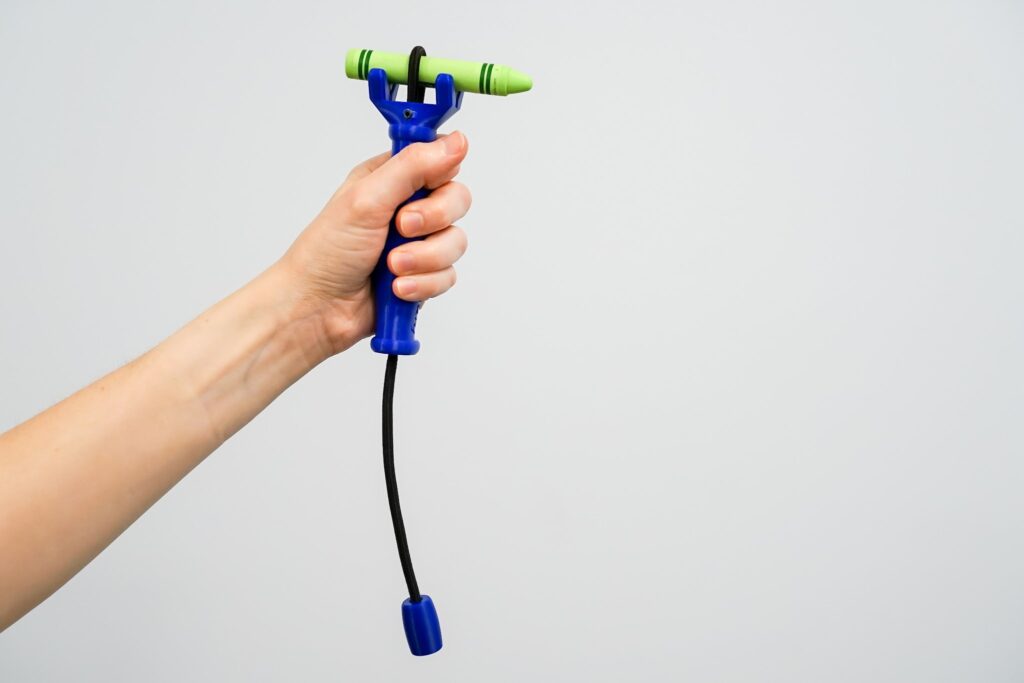
Ready to see how the functionalhand® works for eating and beyond? Visit functionalhand.com to learn more.
Order Your functionalhand® Today
If you’re interested in purchasing a universal cuff for yourself or someone you care about, we hope you’ll consider investing in the functionalhand® universal cuff.
You won’t just be purchasing a product; you’ll be investing in a person’s ability to lead a more independent and fulfilling life.
“Just want to say thank you so much for making these! As someone who’s lost a lot of movement in my hands and can no longer write, it’s allowed me to not only write for the first time in ages but also draw! Along with using a knife to spread jam! Thank you so much”
Recommended read
- Adaptive Equipment & Teaching Tools for Students with Disabilities
- How the functionalhand® Universal Cuff Transforms Lives for People with a Weak Grip
- Adaptive Equipment for Students with Disabilities: A Guide by Diagnosis and Daily Need
- Best ADL Grip Tools for Seniors
- Accessible Daily Routines Wellness Guide