Chronic Pain in Older Adults: How Adaptive Equipment Helps
Chronic pain in older adults is pain that occurs on most days for three months or longer, and its effects reach far beyond how someone feels physically. For someone living with arthritis or another painful condition, activities that once took little thought, preparing a meal, writing a note, gardening, getting dressed, can become exhausting enough to skip altogether.
The real barrier usually isn’t the pain score. It’s the quiet decision to stop doing something because participating no longer feels worth what it costs. This article looks at why pain leads people to do less, and how joint protection, energy conservation, and adaptive equipment can help preserve independence instead of taking activities away.
What Is Chronic Pain, and How Common Is It in Older Adults?
The CDC defines chronic pain as pain experienced on most days or every day over the past three months, and high-impact chronic pain as chronic pain that frequently limits life or work activities. Both become more common with age.
Recent national survey data shows a clear pattern: the older the age group, the higher the rate of chronic pain.
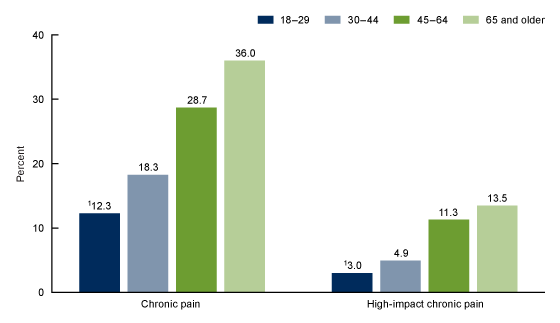
Source: CDC/National Center for Health Statistics, 2023 National Health Interview Survey
By age 65 and older, more than one in three adults lives with chronic pain, and roughly one in seven experiences the high-impact form that regularly limits daily activities. Research specifically involving older adults has also found an association between chronic pain and declines in activities of daily living.
That impact can show up in seemingly small ways. Someone may stop cooking because chopping and stirring hurt their hands. Another person may avoid handwriting because gripping a pen is uncomfortable. Dressing may take longer or the movement to reach body parts is painful. Household chores may be completed less frequently, or abandoned altogether.
This is why addressing chronic pain in older adults should involve more than asking, “How much does it hurt?” It also means asking: “What is pain keeping you from doing?”
Why Does Pain Lead to Doing Less?
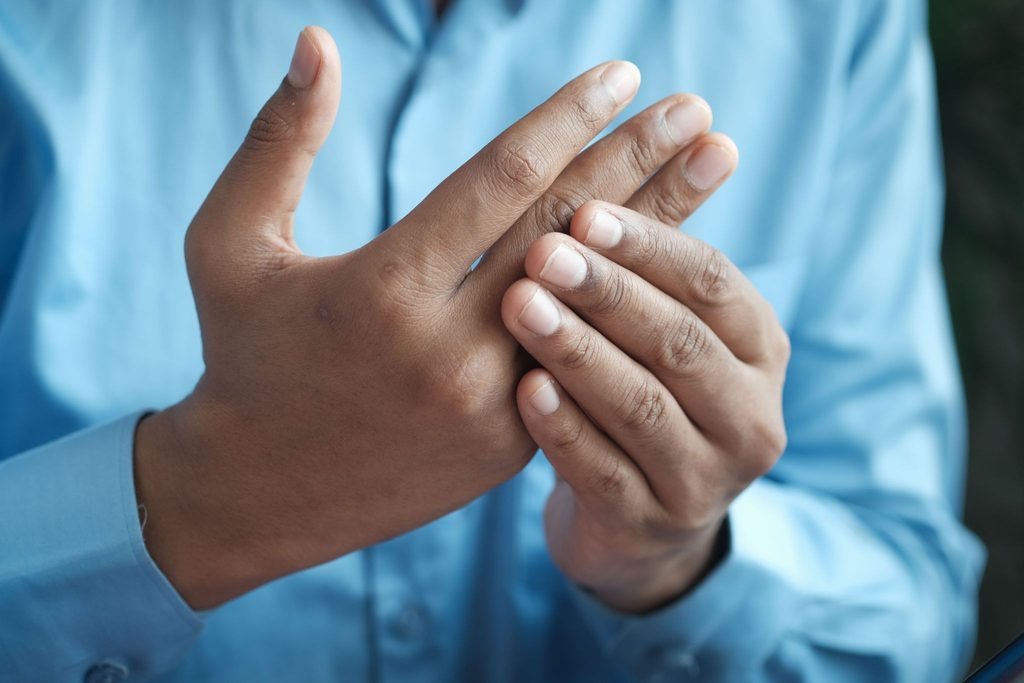
When movement hurts, avoiding movement can feel like the logical solution, and in the short term, rest may certainly be appropriate. But long-term avoidance can create another problem.
Occupational therapy research on productive aging, published in the American Journal of Occupational Therapy, describes how chronic pain can lead older adults to withdraw from daily activity, which in turn contributes to further pain and loss of function. Appropriate activity, rather than avoidance, is an important part of managing pain and maintaining independence.
The goal, therefore, isn’t simply to tell someone to push through the pain. A better goal is to find ways to keep the person participating while reducing unnecessary physical demands. That distinction matters.
How Can Joint Protection and Energy Conservation Reduce Pain?
Occupational therapists have long used principles such as energy conservation, work simplification, joint protection, pacing, and activity modification to help people continue doing meaningful activities despite chronic pain.
Instead of assuming an activity must be completed the way it has always been done, these principles ask:
- Can the task be completed in fewer steps?
- Can frequently used items be placed within easier reach?
- Can the person sit instead of stand for part of the activity?
- Can a task be divided into shorter periods with rest breaks?
- Can heavier work be distributed across larger, stronger joints?
- Can repeated gripping, pinching, twisting, or squeezing be reduced?
- Is there a tool that can make the activity easier?
These aren’t shortcuts. They are strategies for helping people use their available energy and movement more effectively.
Reduce Repetitive Stress on Painful Joints
Ordinary activities such as holding a toothbrush, gripping a fork, writing, stirring food, or gardening all require the hands to repeatedly grip or pinch. One task alone may not seem demanding, but the cumulative effect of repetitive hand use can become significant for someone whose joints are already painful.
Joint-protection techniques teach people to alter movements, reduce excessive joint stress, and use assistive devices when appropriate. Research has supported joint-protection education as part of occupational therapy intervention for conditions such as rheumatoid arthritis, with evidence of benefits related to function and pain.
Pro Tip: When a task involves repeated gripping, look for a way to spread the load across a larger joint instead. Carry an item with both arms rather than one tight grip, slide an object rather than lift it, or use the palm and forearm instead of the fingers alone.
Save Energy for What Matters
Pain itself can be exhausting. An activity doesn’t have to be physically strenuous to consume considerable energy when every movement requires extra effort or causes discomfort. Energy conservation is sometimes misunderstood as simply “doing less.” It is better described as using energy differently so there is more available for the activities that matter most.
That might mean sitting while preparing vegetables so there is enough energy to enjoy dinner with family, or breaking household chores into smaller tasks instead of completing everything in one afternoon. This is where work simplification can make an enormous difference: the task still gets done, the person still participates, and some of the unnecessary work is simply removed.
How Does Adaptive Equipment Support Independence?
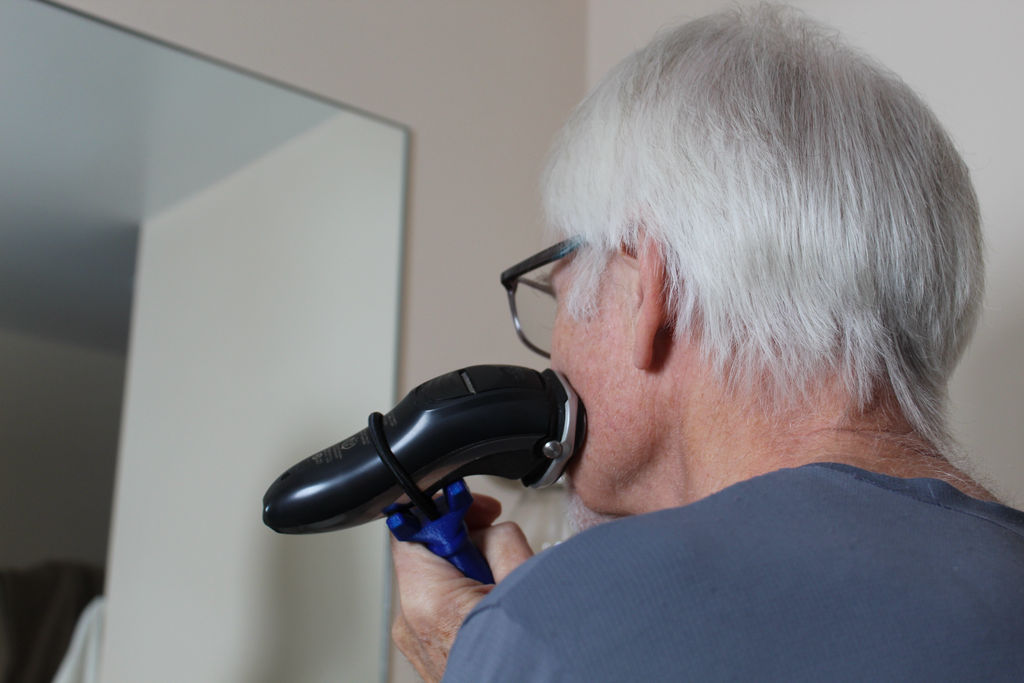
Sometimes a small change to the environment is enough. Other times, adaptive equipment can help bridge the gap between what a person wants to do and what pain or reduced hand function currently allows.
Adaptive equipment may enlarge a handle, reduce the amount of grip strength required, improve leverage, stabilize an object, or allow another part of the body to contribute to the task. The right equipment should not take an activity away from the individual. Ideally, it should help give the activity back.
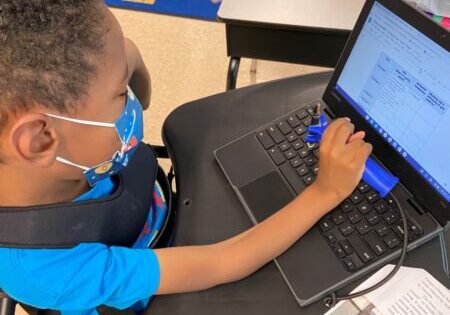
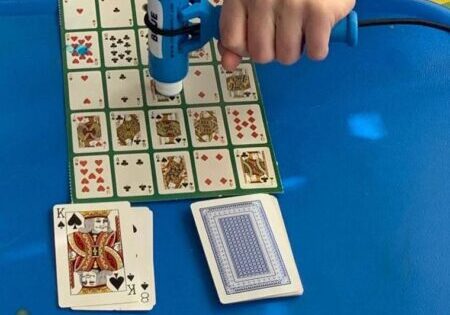
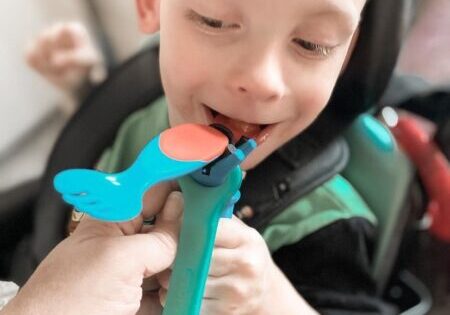
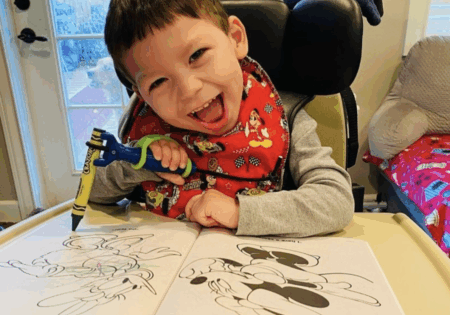
For a person who has difficulty maintaining a functional grasp because of pain, weakness, limited movement, or another condition affecting the hand, the functionalhand® is one example of an adaptive tool designed to help securely hold everyday objects such as utensils, toothbrushes, pens, markers, and paintbrushes. Rather than relying entirely on sustained finger gripping, an adaptive grasping tool offers another way to participate in the activity.
Independence doesn’t mean doing everything the hard way. It means protecting a person’s ability to keep participating in what matters to them.
There can be a strong emotional component to accepting help or using adaptive equipment, particularly for someone who has been independent throughout their life. But adaptation is not the same as giving up. In fact, adapting an activity can be exactly what allows someone to keep doing it.
Pain should always be appropriately evaluated, particularly when it is new, severe, worsening, or interfering significantly with daily life. Alongside medical management, it is also worth examining the activities themselves. Sometimes the best solution is not to stop the activity. It is to find a different way to do it.
Frequently Asked Questions About Chronic Pain in Older Adults
What is high-impact chronic pain?
High-impact chronic pain is chronic pain that frequently limits a person’s life or work activities. According to the CDC, 8.5% of U.S. adults experienced high-impact chronic pain in 2023, rising to 13.5% among adults age 65 and older.
Can occupational therapy help with chronic pain in older adults?
Yes. Occupational therapists use techniques such as joint protection, energy conservation, pacing, and activity modification to help people continue daily activities while reducing unnecessary physical strain.
What is a universal cuff used for?
A universal cuff is a piece of adaptive equipment that holds an object, such as a utensil, pen, or toothbrush, against the hand so the user doesn’t need a refined or pincer grasp to use it. It’s designed for people who can manage a sustained gross grasp but struggle with fine motor control. The functionalhand® is one example, designed to be repositioned across many different tools and tasks throughout the day, though it still requires a sustained gross grasp to hold in place. Pairing it with a strap like EazyHold can help those who can’t sustain that grasp on their own.
Does using adaptive equipment mean giving up independence?
No. Adaptive equipment is designed to preserve independence, not replace it. Using a tool that makes a task easier allows a person to keep participating in activities that pain or reduced hand function would otherwise make too difficult.
When should chronic pain be evaluated by a doctor?
Pain that is new, severe, worsening, or that significantly interferes with daily life should always be evaluated by a medical professional. Adaptive strategies and equipment work alongside medical care, not in place of it.
Order Your functionalhand® Today
If you’re interested in purchasing a universal cuff for yourself or someone you care about, we hope you’ll consider investing in the functionalhand® universal cuff.
You won’t just be purchasing a product; you’ll be investing in a person’s ability to lead a more independent and fulfilling life.
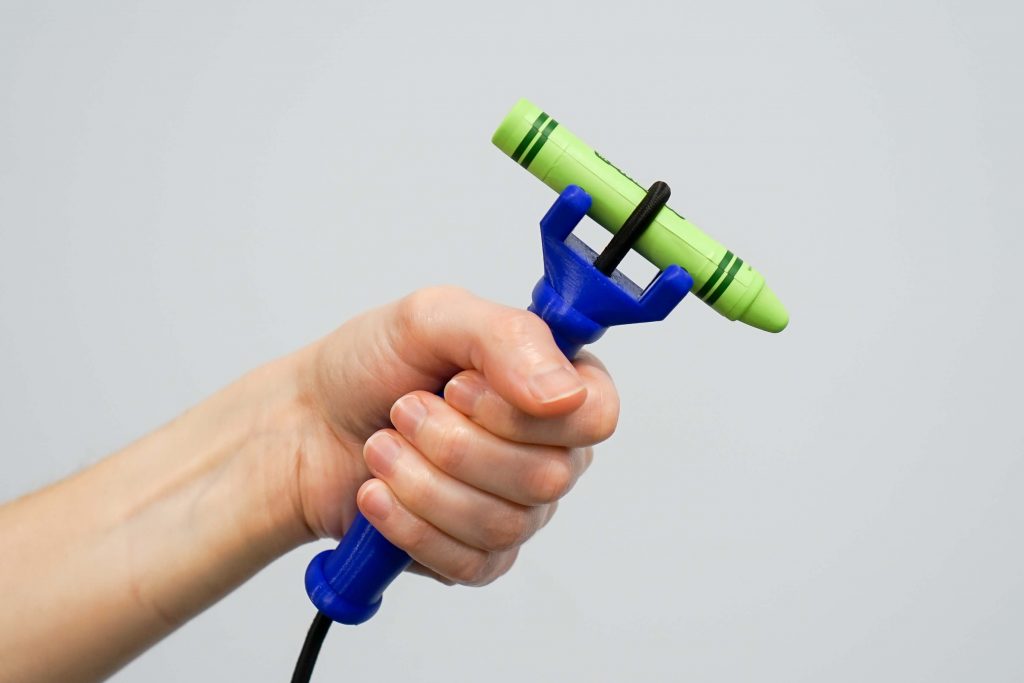
“Just want to say thank you so much for making these! As someone who’s lost a lot of movement in my hands and can no longer write, it’s allowed me to not only write for the first time in ages but also draw! Along with using a knife to spread jam! Thank you so much”
About the Authors, Owners, and Inventors of the functionalhand®
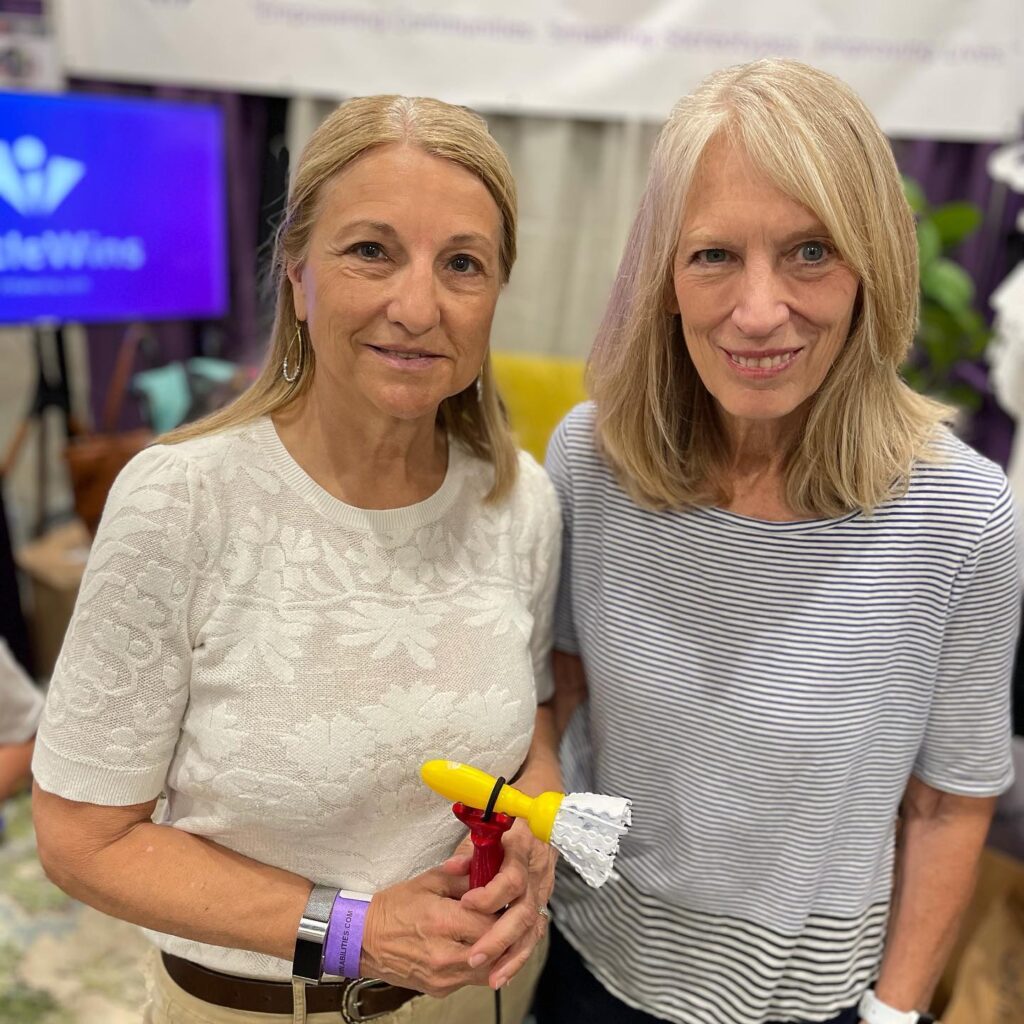
Celine Rosati Skertich, PT, and Linda Merry, OT, each have over 40 years of experience empowering individuals with motor impairments improve postural control and functional independence. Linda specializes in creating custom tools for grasp deficits, inspiring their collaboration on the functionalhand®, an adaptive tool designed to support diverse grasp needs. Follow them for therapeutic tips on YouTube, Instagram, and Facebook.
Recommended read:
- Best ADL Grip Tools for Seniors with Hand and Wrist Weakness from Parkinson’s, Essential Tremors, and Hand Arthritis
- How the functionalhand® ADL Universal Cuff Transforms Lives for People with a Weak Grip
- Accessible Wellness Guide with Tips, and Education on the Importance of Supporting Healthy Independence and Daily Routines with the functionalhand®