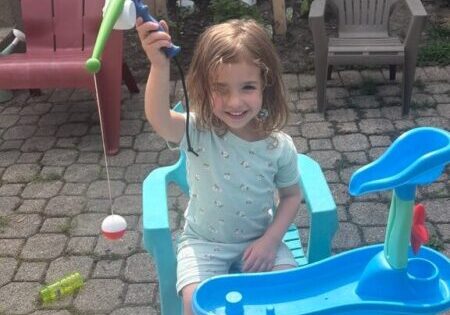
Hand Over Hand Prompting: Why Self-Initiation with Movement Matters
Why does self-initiated movement matter for children?
Self-initiated movement begins with intention: “I want to do something.” The movement may be small or supported, but it still connects the child’s intention with what happens next.
Developmental research illustrates this distinction. James and Swain studied self-generated action in young children and found stronger motor-system recruitment after children actively explored unfamiliar objects than after they only watched an adult act. The study supports a role for active experience in developing perception-action connections.
A child who moves a marker only a short distance has still made something happen through their own movement.
“Independence does not require perfect movement. It begins when the child’s intention has a way to become action.”
What is different about hand over hand prompting?
With full physical prompting, the adult supplies much of the movement. The key question is whether adult-directed movement is replacing an action the child could begin or direct with less assistance.
Researchers use the term prompt dependence when a learner continues to require a prompt for a response that could otherwise occur. Fisher, Kodak and Moore described this within a structured learning task. Their findings do not show that physical prompting automatically causes dependence, but they support choosing and fading prompts thoughtfully.
A small earlier study by Biederman and colleagues found passive modeling more effective overall than hand-over-hand modeling for the specific skills studied. The finding is task-specific, but more physical assistance did not produce better learning in that study.
A useful question is: “How much of this action could the child initiate and direct?”
| Support | Adult role | Child opportunity | Goal |
| Full physical | Moves the hand | Limited control | Reduce when appropriate |
| Partial physical | Assists one part | Completes more | Fade as control develops |
| Model or gesture | Demonstrates or points | Generates movement | Increase independent response |
| Adaptive setup | Positions task/equipment | Initiates and directs | Make participation possible |
Pro Tip: After setting up an activity, give the child time to respond before adding another prompt. A pause can reveal movement or problem-solving that adults may otherwise miss.
How does active movement support motor learning?
Motor learning develops through practice. The child attempts an action, experiences the result, adjusts and tries again. That cycle depends on active participation, even when the movement is incomplete or supported.
For children with cerebral palsy, active and goal-directed practice is prominent in the rehabilitation literature. A 2025 scoping review of goal-directed training synthesized 112 intervention studies and described active practice of meaningful goals across motor function, hand use, self-care, communication and participation.
A 2023 systematic review and meta-analysis of active motor-learning interventions in young children with bilateral cerebral palsy found a limited evidence base and outcomes generally comparable with usual care for gross motor function and mobility. The evidence supports opportunities for active practice without claiming one approach is superior for every child.
Support can make action possible without taking it over. Positioning, stabilization, adaptive equipment and extra time can help a child practice movement they generate.
How can adults reduce physical prompting without removing support?
Reducing hand over hand prompting does not mean removing all help. Match assistance to the barrier and preserve as much child-generated movement as possible.
- Position the child so the movement is easier.
- Model or gesture before moving the child’s hand.
- Stabilize the object instead of controlling the arm.
- Adapt the tool when grasp is the main barrier.
- Wait long enough for the child to initiate.
- Assist only the part the child cannot yet complete.
This keeps the focus on abilities. Instead of asking, “What can’t this child do?” ask, “What part can the child do, and what support would allow them to do more of it?”
Pro Tip: Separate setup assistance from movement assistance. Ask, “Can I prepare the activity and then remove my hands?”
How can functionalhand® help turn intention into action?
A child may know what they want to do and have useful movement at the shoulder, elbow, forearm or wrist, but still be unable to maintain grasp. When a child works very hard to hold an object, increased muscle tension can sometimes make movement less efficient.
An adaptive or assistive device, such as the functionalhand® universal cuff, can support an object so an adult can assist with setup and then remove their hands. The functionalhand® does not create the child’s movement. Instead, it reduces the grasping demands of the activity so the movement the child already has can be used for participation.
The cord used to secure the object can also provide a place for the adult to gently hold or cue while allowing the child to remain involved in initiating and directing the arm movement.
That shifts the question from “Can this child hold the tool?” to “What can this child do when holding the tool is no longer the main barrier?”
What can independence look like during everyday activities?
| Activity | Adult may help with | Child can initiate or direct |
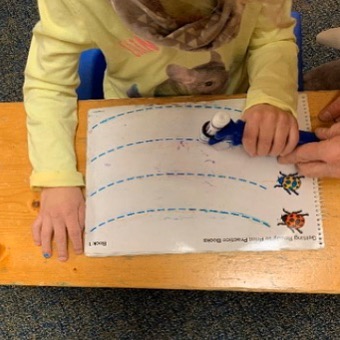
| Coloring/writing | Place marker, position paper | Make marks or change direction |
| Painting | Secure brush, position materials | Tap, swipe or brush |
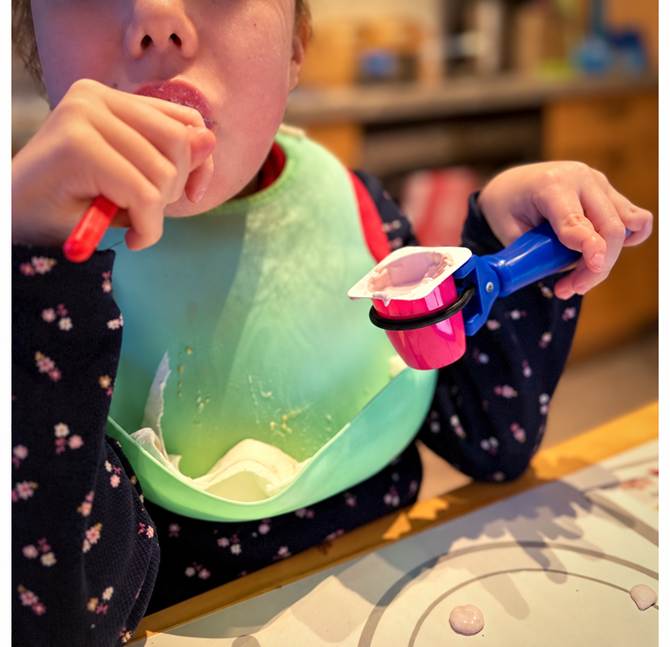
| Eating | Place utensil | Move toward food or mouth |
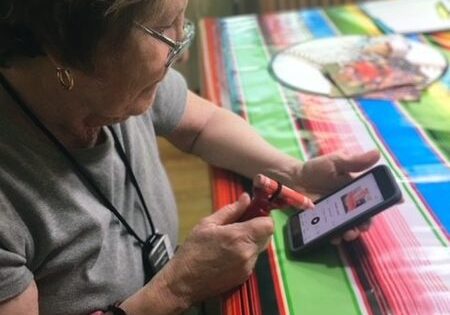
| AAC/touchscreen | Secure stylus, position device | Direct toward a communication choice |
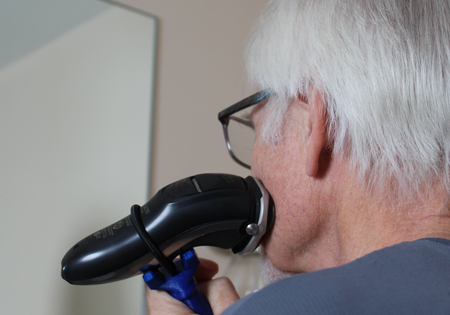
| Grooming | Place toothbrush | Move toward mouth, participate in brushing |
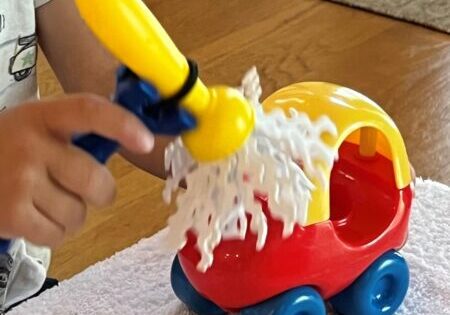
| Play/music | Secure mallet, wand or toy | Tap, bang, reach or repeat |
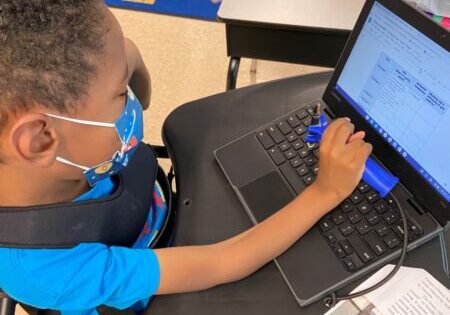
A child may still need setup. An adult can place a marker into the functionalhand®, position the arm and stabilize the paper, then pause. The child decides when to move and experiences the result.
The same principle applies to communication and feeding. Supporting a stylus can let the child direct it toward a touchscreen choice. Supporting a spoon can let the child participate in moving the utensil toward the mouth.
Related Functionalhand article: Occupational Therapy Activities for Kids: A Clinical Guide
Related Functionalhand article: Back-to-School AAC Checklist: Supporting Access with a Stylus
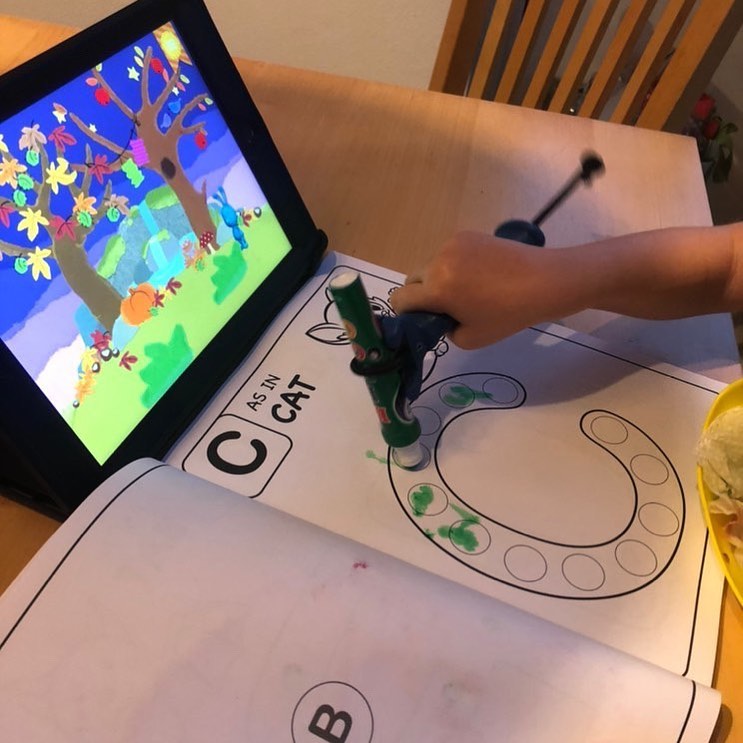
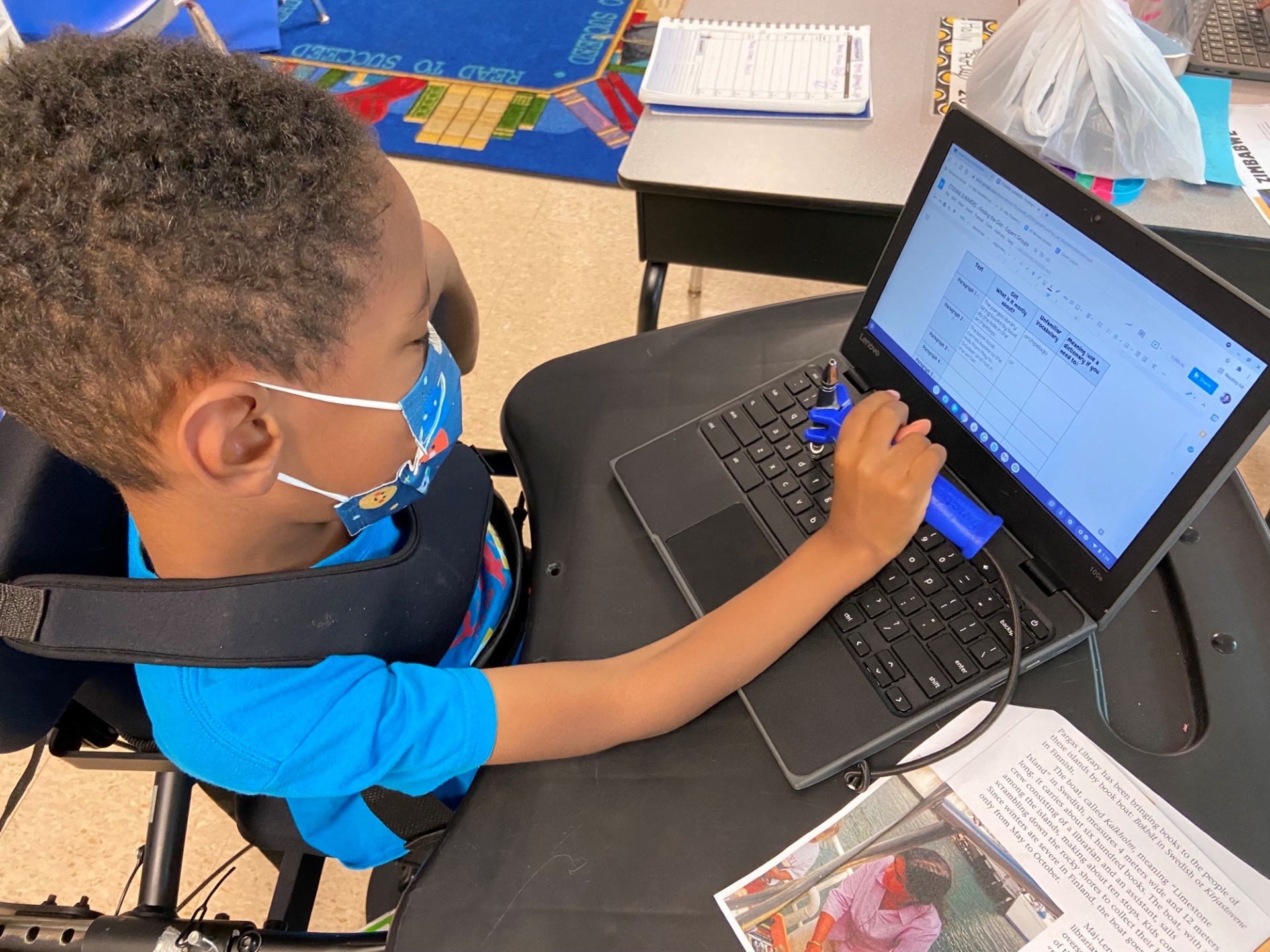
“Setup help doesn’t mean the activity isn’t theirs.”
How can parents, therapists and teachers support independence together?
Children benefit when adults share the same expectation: help enough to make participation possible, but do not automatically perform the movement. Share what the child can initiate and what setup helps.
Instead of saying, “She needs help with writing,” try: “Place the marker in the functionalhand® and position the paper. Then give her time. She can make the marks herself.” For a touchscreen: “Help position the stylus, then wait. He can direct it toward his choice.”
Independence may mean completing an activity alone, choosing when to begin or controlling the meaningful part while another person helps with setup.
The transition is from “I will move your hand for you” toward “I will help create the conditions that allow you to act.”
What do families and professionals ask about physical prompting?
Is hand over hand prompting always inappropriate?
No. It can be useful for safety, positioning or some unfamiliar tasks. Ask whether less intrusive support could work and whether assistance can be reduced when the child is ready.
What can I use instead of full physical assistance?
Options include wait time, modeling, gestures, cues, partial physical assistance, positioning changes and adaptive equipment. Match the support to the barrier.
Does self-initiated movement have to be accurate?
No. Initiation and accuracy are different. A child can initiate an action even when the movement is inefficient or needs support to reach the target.
Can adaptive equipment still count as independent participation?
Yes. Independence does not mean doing every step without equipment or setup help. An adaptive device can change the physical demands while allowing the child to supply the intention and movement.
A child’s movement begins with an idea: “I want to do that.” Adults can teach, position, adapt and assist. They can also create the opportunity, remove their hands and give the child time to act.
The movement does not have to be perfect to belong to the child. It has to have a chance to begin.
About the Authors, Owners, and Inventors of the functionalhand®
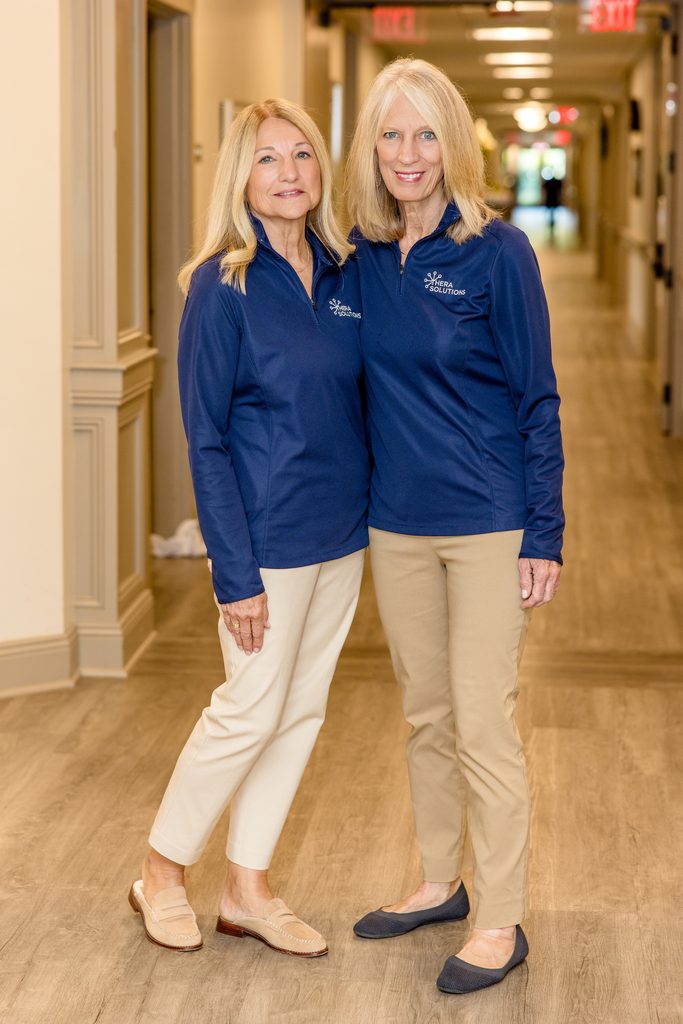
Celine Rosati Skertich, PT, and Linda Merry, OT, each have over 40 years of experience empowering individuals with motor impairments improve postural control and functional independence. Linda specializes in creating custom tools for grasp deficits, inspiring their collaboration on the functionalhand®, an adaptive tool designed to support diverse grasp needs. Follow them for therapeutic tips on YouTube, Instagram, and Facebook.
Order Your functionalhand® Today
If you’re interested in purchasing a universal cuff for yourself or someone you care about, we hope you’ll consider investing in the functionalhand® universal cuff.
You won’t just be purchasing a product; you’ll be investing in a person’s ability to lead a more independent and fulfilling life.
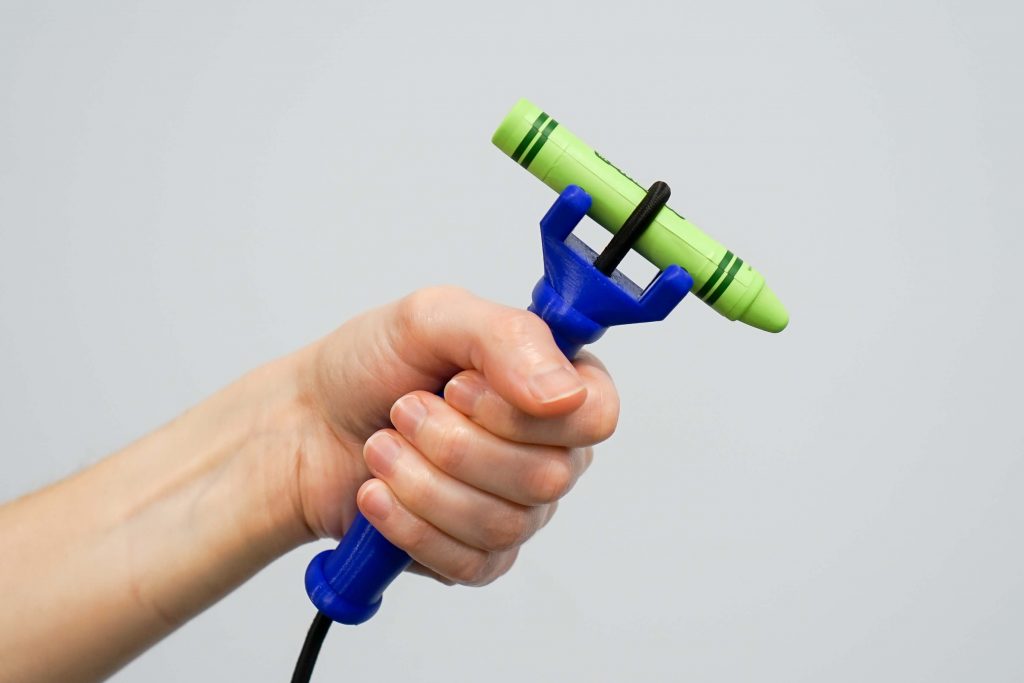
“Just want to say thank you so much for making these! As someone who’s lost a lot of movement in my hands and can no longer write, it’s allowed me to not only write for the first time in ages but also draw! Along with using a knife to spread jam! Thank you so much”