Inclusive Outdoor Activities for Kids: A Therapeutic Guide for Families
Inclusive outdoor activities for kids is the perfect way to have fun and reinforce skills. For families navigating a child’s developmental needs, they can be the therapy. The child blowing bubbles on the back porch is strengthening the muscles she uses to speak, swallow, and breathe.. The child dragging chalk across the driveway is building the shoulder strength, grip and wrist control she needs to hold a pencil. According to CDC data from the National Survey of Children’s Health, more than one in three preschool-aged children in the United States plays outdoors for one hour or less on a typical weekday, and for children with disabilities, that participation gap is even wider. This guide is for the families who want to close the gap, one backyard activity at a time.
How Does Playing Outside Help Your Child Develop?
When your child digs in the sandbox, runs across uneven ground, or squeezes water from a sponge, their nervous system is doing work that is surprisingly hard to replicate indoors. According to Physiopedia, sensory integration is the neurological process by which the brain receives, organizes, and interprets sensory information from both the environment and within the body, giving those sensations meaning and supporting a child’s ability to participate in daily life. Outdoor play delivers that input constantly: the weight of soil, the resistance of water, the unpredictability of wind. For children who find it difficult to process sensory input like touch, movement, or sound, this variety can be regulated in a way a controlled indoor space often cannot match.
The other gift of outdoor play is motivation. A child who will not practice a picking-up motion during a tabletop activity will often do it fifty times in a row when the goal is collecting pebbles, pulling flower petals, or filling a bucket with sand. Your child is having fun through achieving those goals, and their hands are learning without either of you noticing.
| ✦ Pro Tip: You do not need to turn outdoor time into a formal session. Pick activities your child genuinely wants to do, and let the goal pull them forward. When kids are excited about filling a bucket or catching a bubble, they will repeat the movements that build their skills without either of you thinking about it. |
Which Outdoor Activities Build Fine Motor Skills?
The activities below are ones your child’s occupational or physical therapist is likely already recommending, or will recognize immediately when you bring them up. Each one is doing more than it looks like. Use this as a starting point for your next session conversation.
| Activity | What It’s Building | Skills Developed | Tip for Families |
|---|---|---|---|
| Blowing bubbles | Oral motor and postural muscle strengthening, respiratory function | Lip closure, diaphragmatic breathing, visual tracking | Wide-handle wands are easier to grasp; bubble guns reduce oral motor demand |
| Sidewalk chalk drawing | Fine motor coordination, proprioceptive input | Tripod grasp, bilateral coordination, wrist stability | Broken chalk pieces naturally encourage a pincer grip |
| Sandbox play | Tactile processing, grasp development | Pinch-and-release, bilateral coordination, sensory modulation | Wet sand offers more proprioceptive feedback and resistance than dry |
| Spray bottle watering | Hand strength, finger isolation | Trigger squeeze, finger extension, grip-and-release | Start with low-resistance bottles; increase resistance as strength builds |
| Collecting rocks or leaves | Pinch grasp, visual attention | Lateral pinch, opposition, visual-motor integration | Vary object sizes to target different grasp patterns |
| Painting rocks or birdhouses | Fine motor skill, creative expression | Grasp of paintbrush or tool, wrist stability, visual attention | A universal cuff holds brushes for children with weak grip or grasp deficits |
| Blowing pinwheels | Oral motor, respiratory control, postural control | Breath grading, lip rounding, sustained exhalation | Useful warm-up activity before progressing to bubble blowing |
| Planting seeds | Bilateral coordination, fine motor | Two-hand coordination, pinch, in-hand manipulation | Paper seed packets add a pre-literacy sorting layer |
| Nature scavenger hunt | Attention, gross and fine motor integration | Walking, reaching, grasping, sorting, categorizing | Builds sustained attention and executive function alongside motor skills |
Can Blowing Bubbles Really Be Therapeutic?
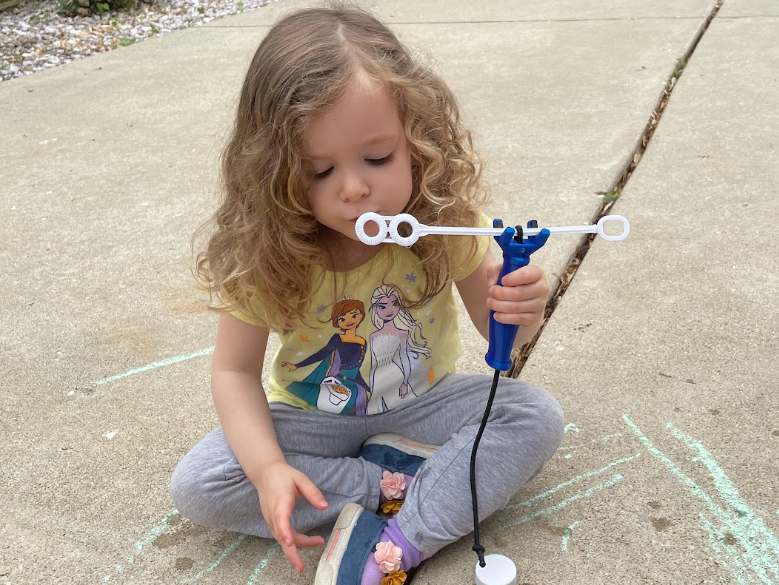
It looks like nothing more than play, and it is doing quite a lot. Every time your child pursues that perfect steady stream, they are rounding their lips, sustaining breath pressure, and learning to control the force of their exhale. These are the same foundations that support clear speech, voice strength, and oral motor development (the strength and coordination of the muscles involved in speaking, eating, and breathing). When a bubble forms and floats, your child’s eyes follow it naturally, which builds visual tracking (the ability to follow a moving object smoothly with the eyes), a skill that shows up later in reading and copying from a board.
For children with respiratory differences, including some with cerebral palsy or neuromuscular conditions, therapists have used bubble blowing for years as a gentle, enjoyable way to strengthen the muscles involved in voicing and breathing. The muscles we use to breathe are the same muscles that we use to control our posture. Bubble blowing is way more fun than doing core exercises! Breathing is a simple and powerful way for children to help calm their bodies and minds. Slow, deep breaths can support self-regulation by helping the nervous system settle, reducing feelings of stress or frustration, and giving children a tool they can use when they feel overwhelmed.
And here is something worth holding onto on harder days: your child does not have to blow a perfect bubble for this to count. A child who tries, watches you blow, and reaches out to pop the results is still building visual tracking, anticipatory reach, and hand-eye coordination. Every part of the interaction is working.
How Does Water Play Build Hand Strength and Coordination?
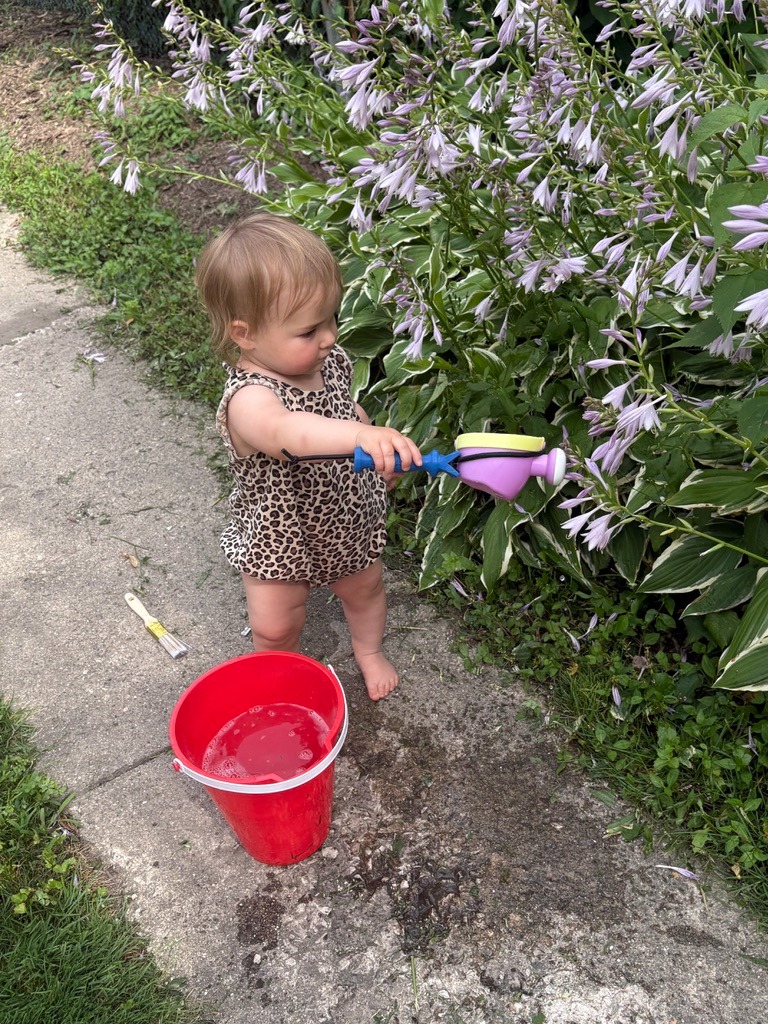
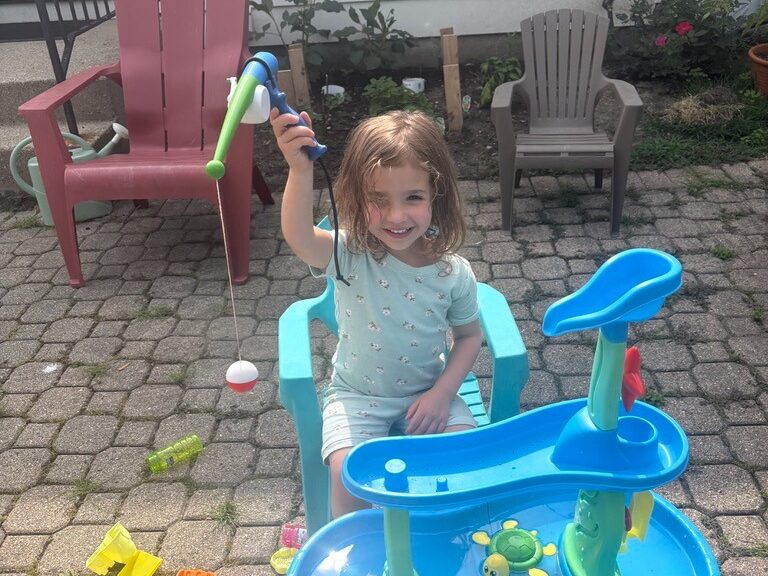
If there is one outdoor activity that almost any child can access at almost any ability level, it is water play. In fact, water provides 14 times the proprioceptive input that a child experiences as compared to air. For children who find certain textures or environments overwhelming, water is often a welcome exception: most children are drawn to it, and the gentle resistance it creates against the hands can be naturally regulating, helping to settle arousal levels (how calm or alert the nervous system feels at any given moment) so your child can focus and stay engaged.
For children building hand strength, the activities practically design themselves. Squeezing a sponge, triggering a spray bottle, pouring between containers: each one builds the grip and release patterns that show up in everyday tasks. Occupational therapists call what happens here bilateral coordination, using both hands together in a controlled and coordinated way. Pouring water from a pitcher into a cup, for example, requires one hand to stabilize and one to pour, the exact same movement behind self-care tasks like dressing and eating independently.
A water table set at wheelchair or seated height does not need any other adjustment. Your child is in the same activity as everyone else, which is exactly the point.
What Adaptive Equipment Helps Kids Participate Fully Outdoors?
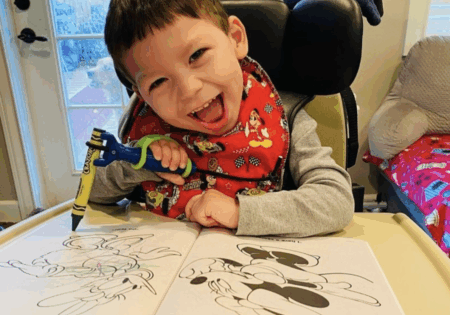
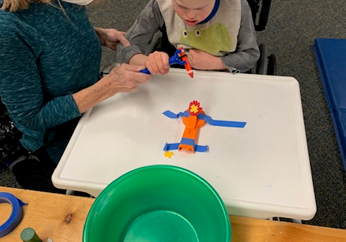
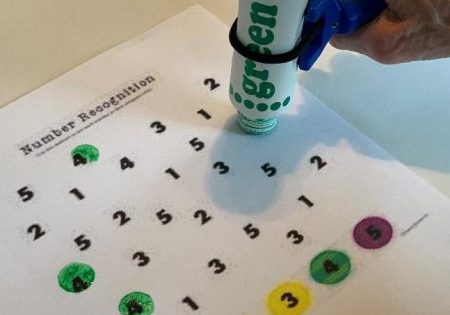
If your child has difficulty gripping a paintbrush, squeezing a spray bottle, or holding a piece of chalk, the answer is not to skip the activity. The right adaptive tool means the activity stays the same. Only the way your child accesses it changes.
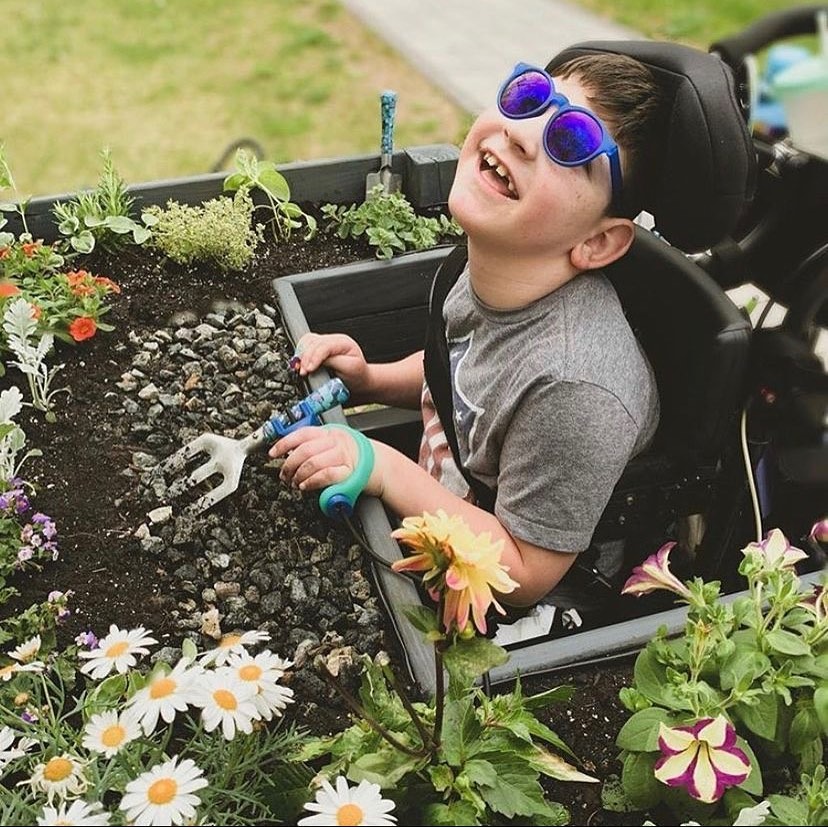
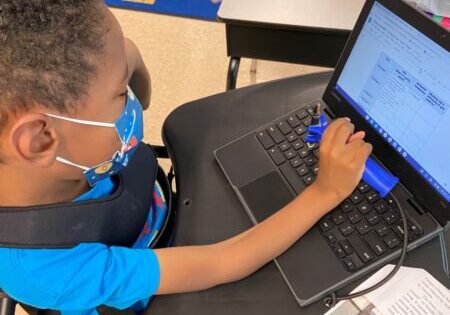
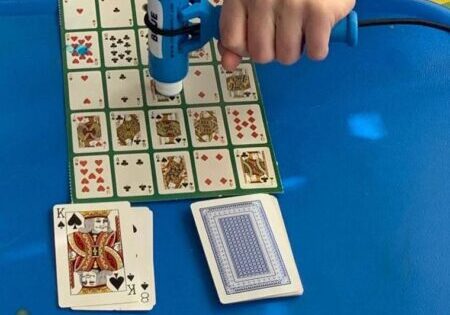
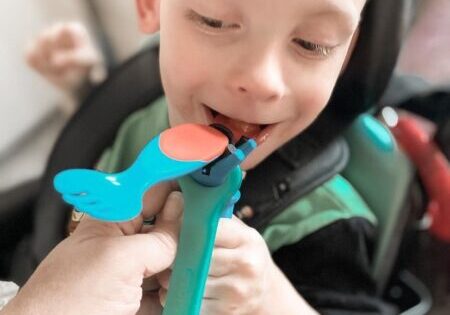
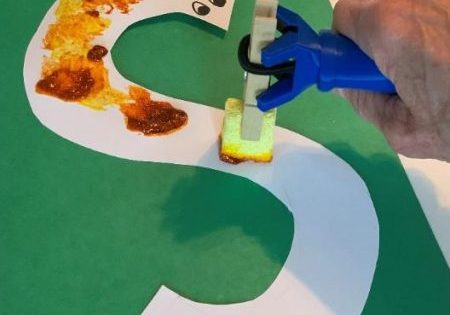
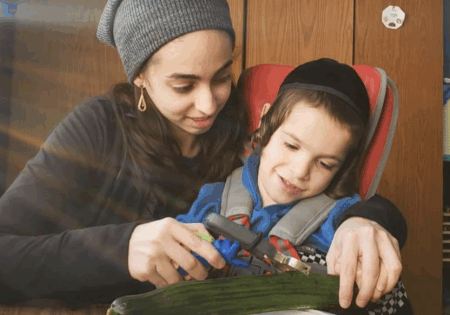
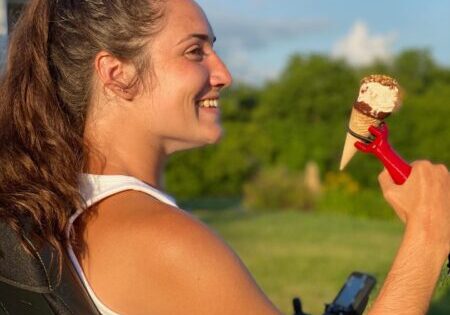
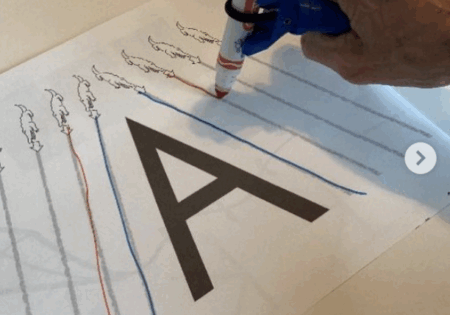
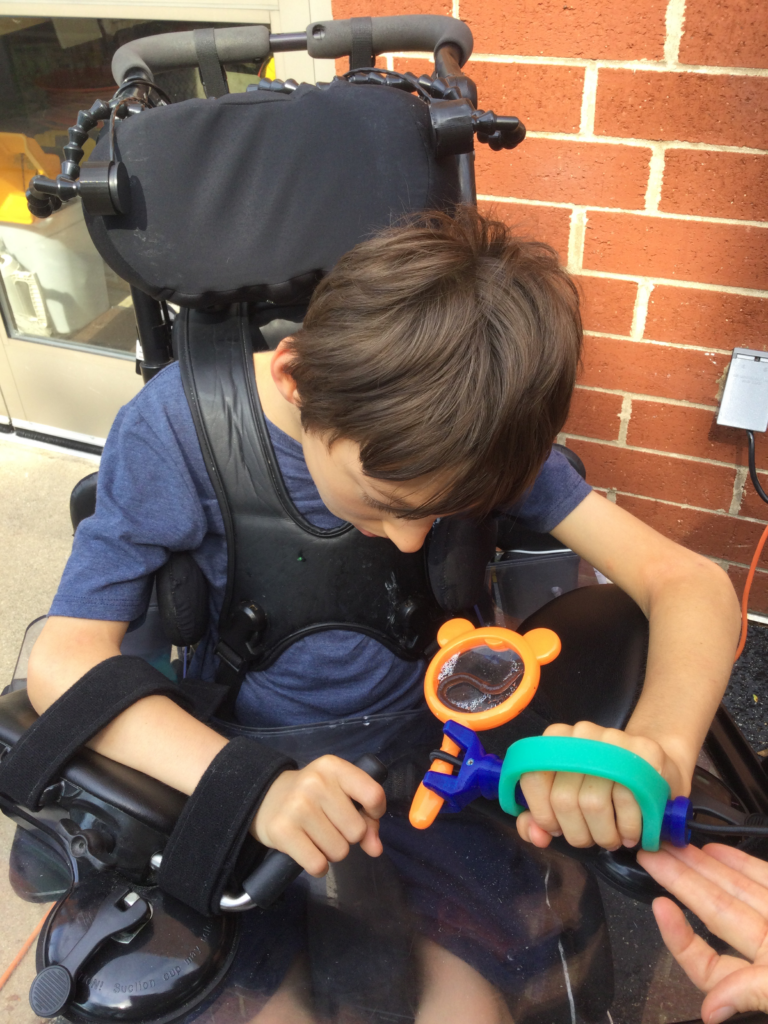
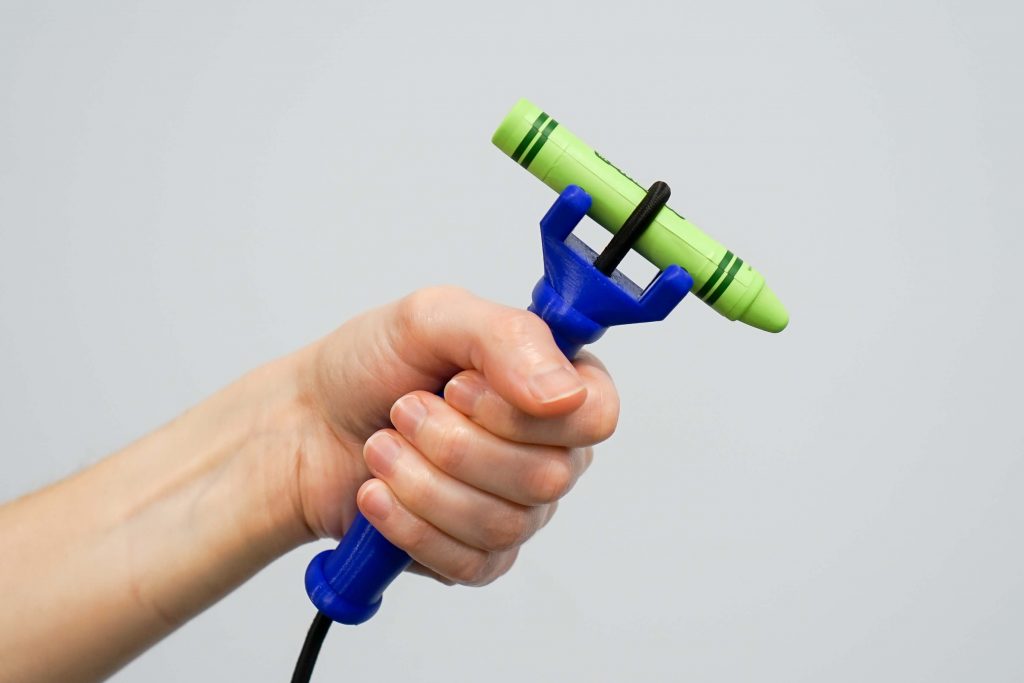
A universal cuff, such as the functionalhand® adaptive device, helps hold an object in the vertical or horizontal orientation, so a child who cannot rely on grip strength alone can still hold paintbrushes, chalk holders, and other art supplies, spray bottles, and garden tools. It also positions each tool to match your child’s natural hand posture, which matters more than it might seem. When a child has to reach or twist in an unusual way just to hold something, they are building compensatory movement patterns (habits the body develops to work around a limitation) that can lead to fatigue and discomfort over time.
Other things worth raising with your child’s OT: loop scissors with a spring release for nature art, non-slip mats under bins and containers, and weighted brush handles for children who have tremors or low muscle tone.
| ✦ Pro Tip: Before buying adaptive equipment, ask your child’s OT which outdoor activities align with their current therapy goals. The right tool matched to the right activity means your child builds skills faster, and you get more out of the time you already have together outside. |
How Can Families and OTs Partner to Make Outdoor Play Count?
Your child’s therapist has a clear picture of where their skills are heading. You have access to hours of daily life that no clinic visit ever will. When those two things connect, the results compound. Research from CanChild Centre for Childhood Disability Research shows that family and environmental factors are among the strongest influences on how fully children with disabilities participate in everyday activities. The backyard is not a lesser version of the therapy room. For the kind of repetition that actually transfers skills into real life, it may be the most important space you have.
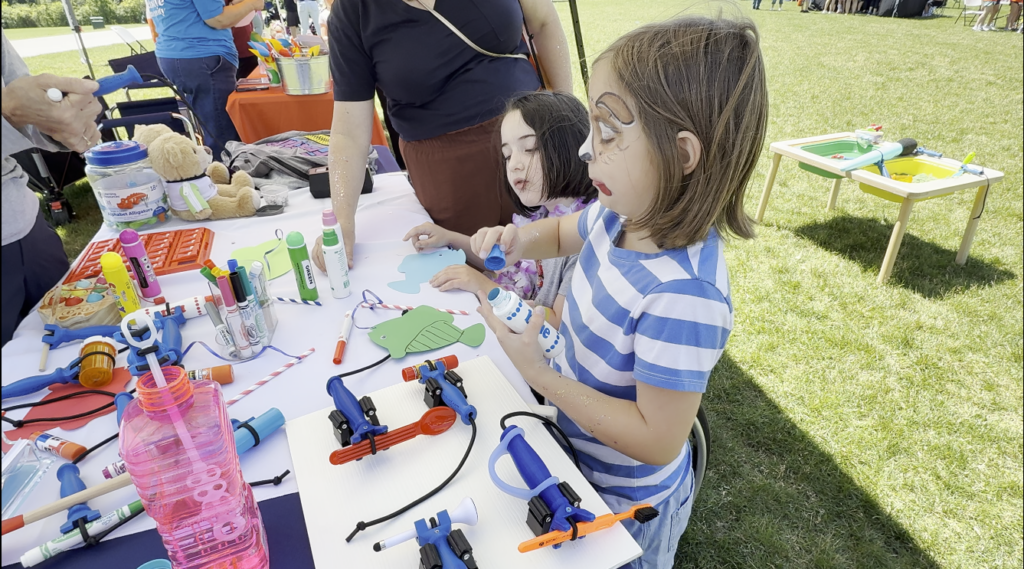
A few ways to make the most of that connection, and to carry your child’s therapy goals into outdoor time:
At your next session, ask: “What is one outdoor activity that would support what we are working on right now?” You will almost always get a specific, actionable answer.
- Take short videos of your child playing outside and share them with their therapist. What looks like ordinary play to you often contains exactly the information an OT needs to see.
- Learn a little of your therapist’s language. If they mention “lateral pinch” (gripping between the thumb and the side of the index finger) or “bilateral coordination” (using both hands together), you can start noticing when those skills show up naturally during play.
- Let your child choose the activity whenever you can. When kids are genuinely excited about what they are doing, they will repeat the movements that build their skills without either of you thinking about it.
Frequently Asked Questions
What outdoor activities are best for children with cerebral palsy?
Water play, bubble blowing, and sandbox play tend to be the most accessible starting points because they work across a wide range of seating positions and upper extremity function levels (how much strength and control your child has in their arms and hands). For activities like painting, chalk drawing, or gardening, adaptive tools such as universal cuffs can open up participation without changing the activity itself. Your child’s occupational or physical therapist can help you match specific activities to your child’s type and level of motor involvement.
Can outdoor play replace occupational or physical therapy sessions?
It cannot replace therapy, but it is one of the most valuable things you can do between sessions. Therapy identifies what skills your child is building and sets the right progression. Outdoor play is where those skills get the repetition and real-world context they need to stick. The two are most powerful together, and the outdoor time you offer your child at home is not separate from the therapeutic work. It is a continuation of it.
How do I make outdoor activities inclusive for a child who uses a wheelchair?
Height and reach are the main considerations. Water tables, sensory bins, art stations, and bubble play can all be positioned so your child can access them fully from a seated position. Activities like nature scavenger hunts, garden observation, and rock painting need only that materials are within reach. If you are unsure about positioning, your child’s OT, PT, or a seating specialist can give you specific guidance.
How early can outdoor play support my child’s development?
From very early on. Tummy time on a backyard blanket, reaching toward grass and leaves, and exploring different outdoor textures are all meaningful sensory and motor experiences for infants and toddlers. The specific activities will shift as your child grows, but the principle holds at every stage: outdoor play that matches where your child is developmentally supports the skills they are working toward, whatever those happen to be.
What if my child has touch sensitivity or is tactile defensive and avoids grass or sand?
That is more common than you might think, and it is worth working with rather than around. Start with activities your child can engage with visually or auditorily without having to touch anything, like watching bubbles float, blowing a pinwheel, or doing chalk drawing while sitting on a blanket. We never force a child to touch something they are uncomfortable with, so any new texture is introduced only when your child is ready and always on their terms, starting with something small like a tray of sand or a bowl of water rather than the full environment. An occupational therapist with sensory experience can help you map a gradual, play-based path if that is the right approach for your child.
Order Your functionalhand® Today
If you’re interested in purchasing a universal cuff for yourself or someone you care about, we hope you’ll consider investing in the functionalhand® universal cuff.
You won’t just be purchasing a product; you’ll be investing in a person’s ability to lead a more independent and fulfilling life.
“Just want to say thank you so much for making these! As someone who’s lost a lot of movement in my hands and can no longer write, it’s allowed me to not only write for the first time in ages but also draw! Along with using a knife to spread jam! Thank you so much”
Recommended reads:
- Accessible Wellness Guide with Tips, and Education on the Importance of Supporting Healthy Independence and Daily Routines with the functionalhand®
- Adaptive Summer Activities: Making Recreation Accessible for All Abilities with the functionalhand®
- Best Adaptive Equipment & Teaching Tools for Students with Disabilities
- Adaptive Equipment for Students with Disabilities: A Guide by Diagnosis and Daily Need