Pediatric Occupational Therapy Tools: A Guide by Use Case
The most useful pediatric occupational therapy tools are not the ones with the longest feature lists. They are the ones that match what a child is actually trying to do. Whether the goal is forming a first letter, scooping with a spoon, or staying regulated enough to join circle time, the right adaptive equipment removes the barrier between a child and the task in front of them.
As an occupational therapist and a physical therapist with more than 40 years of clinical experience each, we built our work around one idea: fun, functional, and flexible. This guide gathers the adaptive devices and assistive technology we trust for kids, grouped the way a pediatric therapy session actually flows, from handwriting and fine motor work to grip, play, and sensory regulation.
Every tool here was created by a clinician or inventor who saw a real gap in how children learn and grow, and several were designed by pediatric occupational therapists themselves. We have organized them by use case rather than by brand, so you can start from the task and work toward the tool.
What makes a tool worth adding to your pediatric OT toolkit?
According to the American Occupational Therapy Association, occupational therapy helps people take part in everyday activities and often recommends adaptive equipment to make tasks such as dressing, eating, and learning easier (AOTA). For a child, a good adaptive tool either restores a function or compensates for one. And the best ones promote functional postural alignment while they do it. A few traits separate a tool worth keeping from one that ends up in a drawer.
- Versatility: one device that adapts to many objects beats a drawer of single-purpose adapters — and travels with the child across home, school, and clinic.
- Developmental fit: a tool should meet the child where they are now and still make sense as their skills grow.
- Biomechanical alignment: support the hand’s natural arches and the object’s orientation rather than forcing compensation patterns that can harden over years.
- A clinical basis: tools designed by pediatric therapists tend to reflect how children’s skills actually develop, not just how a product demos.
Which pediatric occupational therapy tools help with handwriting and fine motor skills?
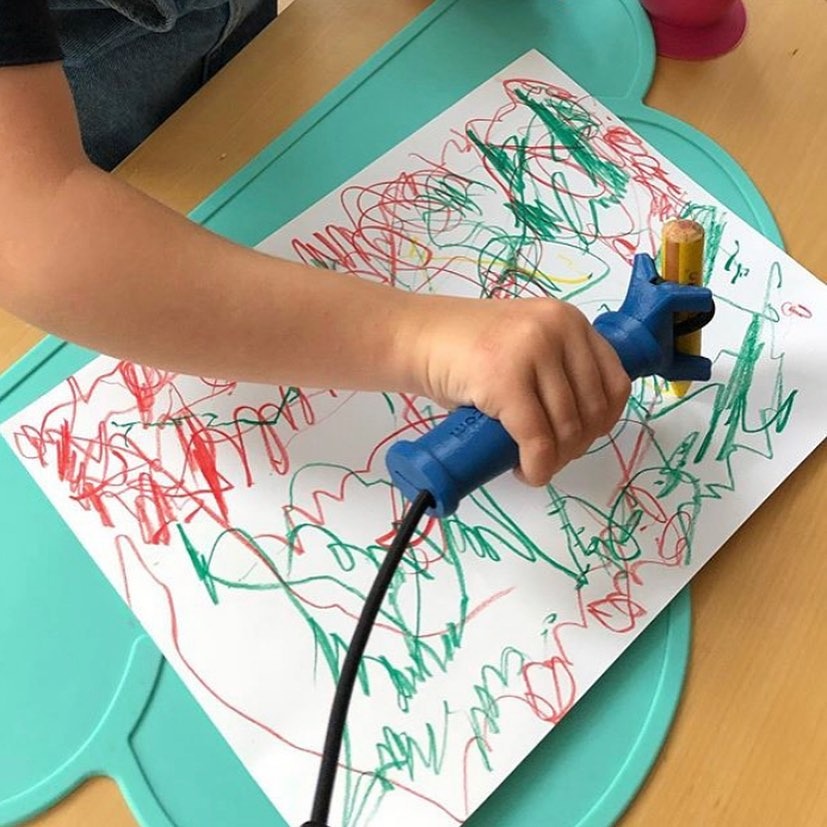
Handwriting is where many children struggle, and it is one of the most researched areas in pediatric occupational therapy. A systematic review and meta-analysis found that occupational therapy interventions can improve gross motor function and independence in activities of daily living for children with cerebral palsy (systematic review). The tools below build, support, or work around the fine motor demands of writing.
- Squiggle Squad teaches letter formation through playful, stroke-by-stroke characters built for PreK through 2nd grade. Its developmentally sequenced approach makes early writing feel natural and intrinsically rewarding — which matters most for the young students likeliest to disengage.
- Handwriting Heroes is a multi-sensory program that pairs letter stories, animations, and songs so children remember stroke sequences. Designed by an occupational therapist, it can move young learners to lowercase mastery in roughly five weeks and carries an ESSA Level 3 evidence badge.
- LegiLiner is a refillable, self-inking roller stamp that lays down handwriting lines, boxes, and graphs in seconds. For pediatric therapists and teachers, it turns any blank page into graded practice without the prep time.
- BlackBack presents letters, numbers, and pre-writing strokes in white on a high-contrast black background, one image per page. Reducing visual clutter helps children with low vision, attention challenges, or sensory sensitivities focus on a single stroke at a time.
For a closer look at supporting young writers in the classroom, see our guide to adaptive equipment for students with disabilities.
| Pro Tip: Pair a line-and-letter tool with grip support. A child who can finally see where the letter goes still needs a stable way to hold the pencil — which is where a universal cuff earns its place. |
What are the best grip and universal cuff tools for a child with a weak grasp?
When low muscle tone, cerebral palsy, or a fine motor delay gets in the way, a universal cuff can hold the object so the child can focus on the activity — writing, feeding, or play. Two tools cover most needs here, and they are often used together.
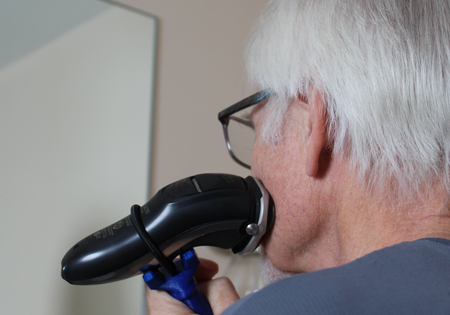
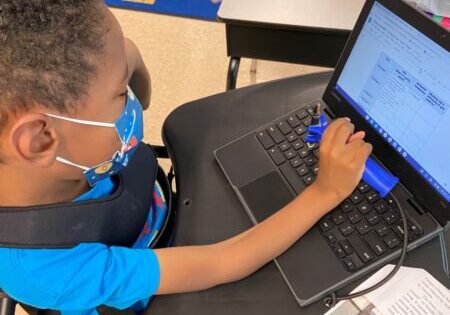
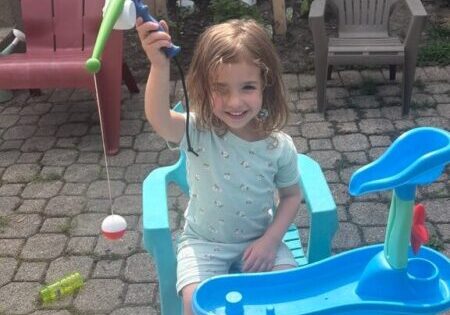
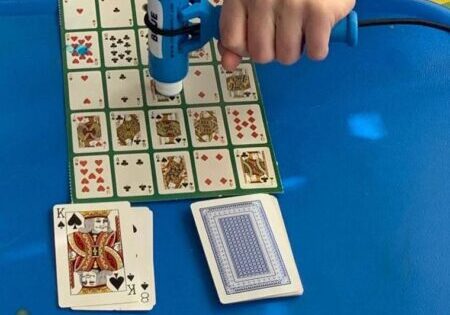
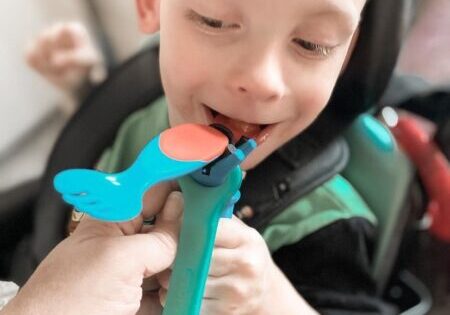
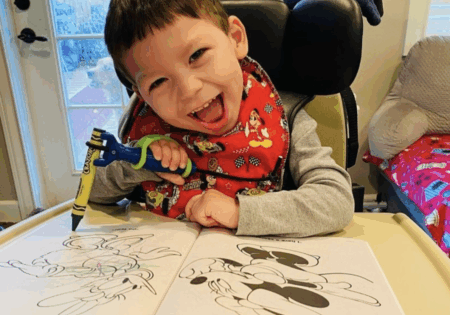
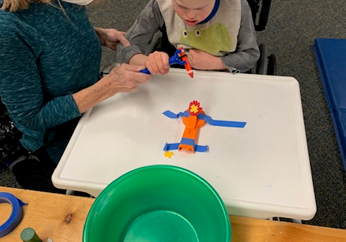
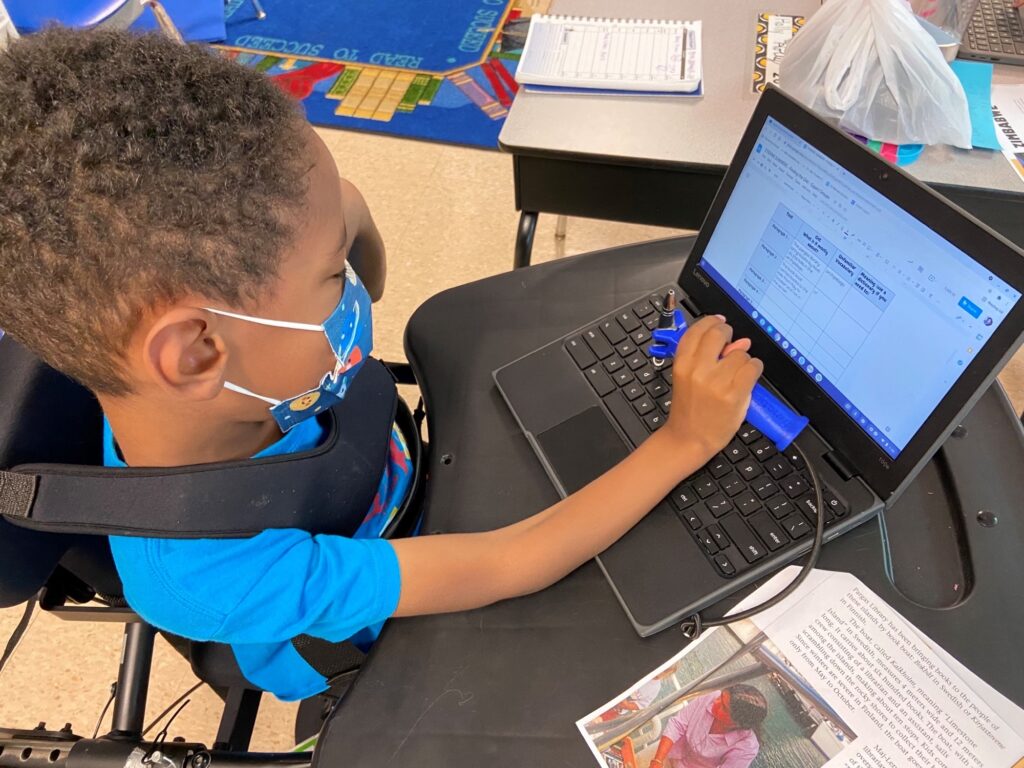
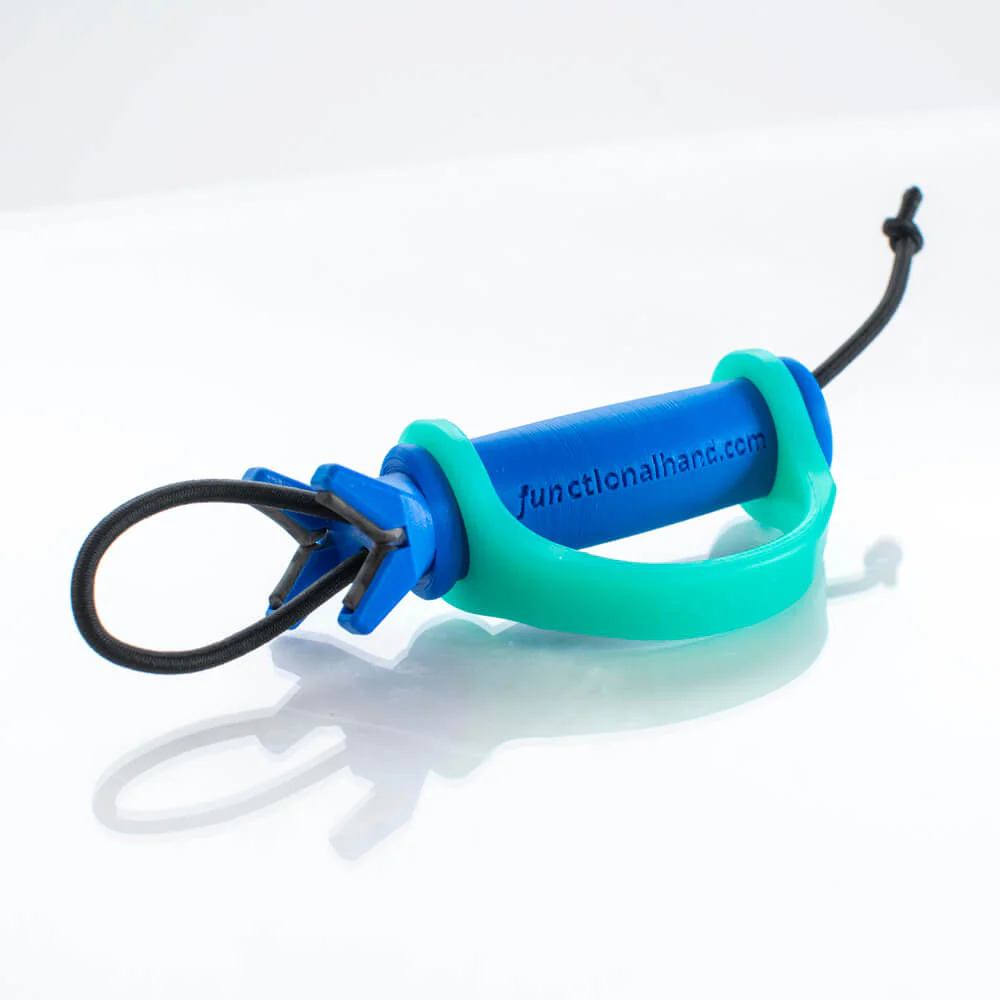
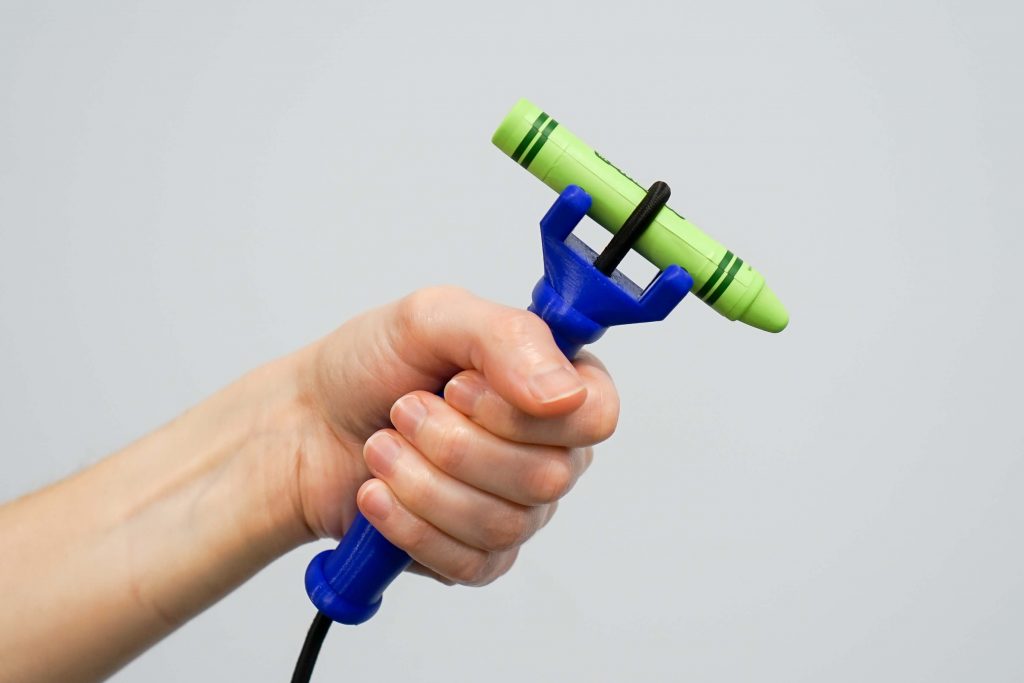
- The functionalhand® is an adaptive aid invented by an occupational therapist and a physical therapist to secure objects from a crayon to a child’s water bottle in both vertical and horizontal orientation. Unlike traditional cuffs that strap an item flat against the palm, it supports the hand’s natural arches to encourage biomechanical alignment and guard against the compensation patterns that, in a growing child, can harden over time. It fits from age 2, with a functionalhand® mini for the smallest hands, and it is built to replace a pile of single-purpose adapters. A single cuff can move with a child from a marker at school to a fork at lunch — the functionalhand® 2-pack keeps one in the classroom and one at home.
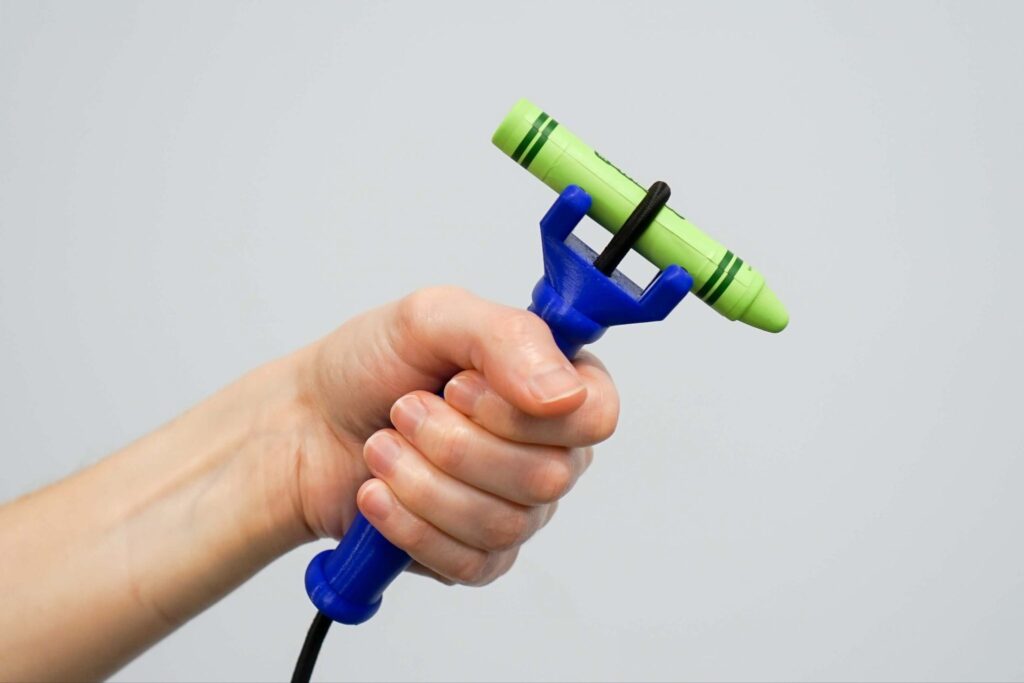
“We didn’t create just another universal cuff. We created a versatile, affordable tool that supports natural hand function and protects long-term hand health.”
— Celine Skertich, PT & Linda Merry, OT, co-inventors of the functionalhand®
- EazyHold is a soft silicone universal cuff that warms to skin temperature and grips without needing to be tight, which adds helpful sensory feedback for little hands. It is complementary to the functionalhand® , the two are even sold together as a combined kit, so many pediatric therapists keep both on hand for different objects and sensory preferences.
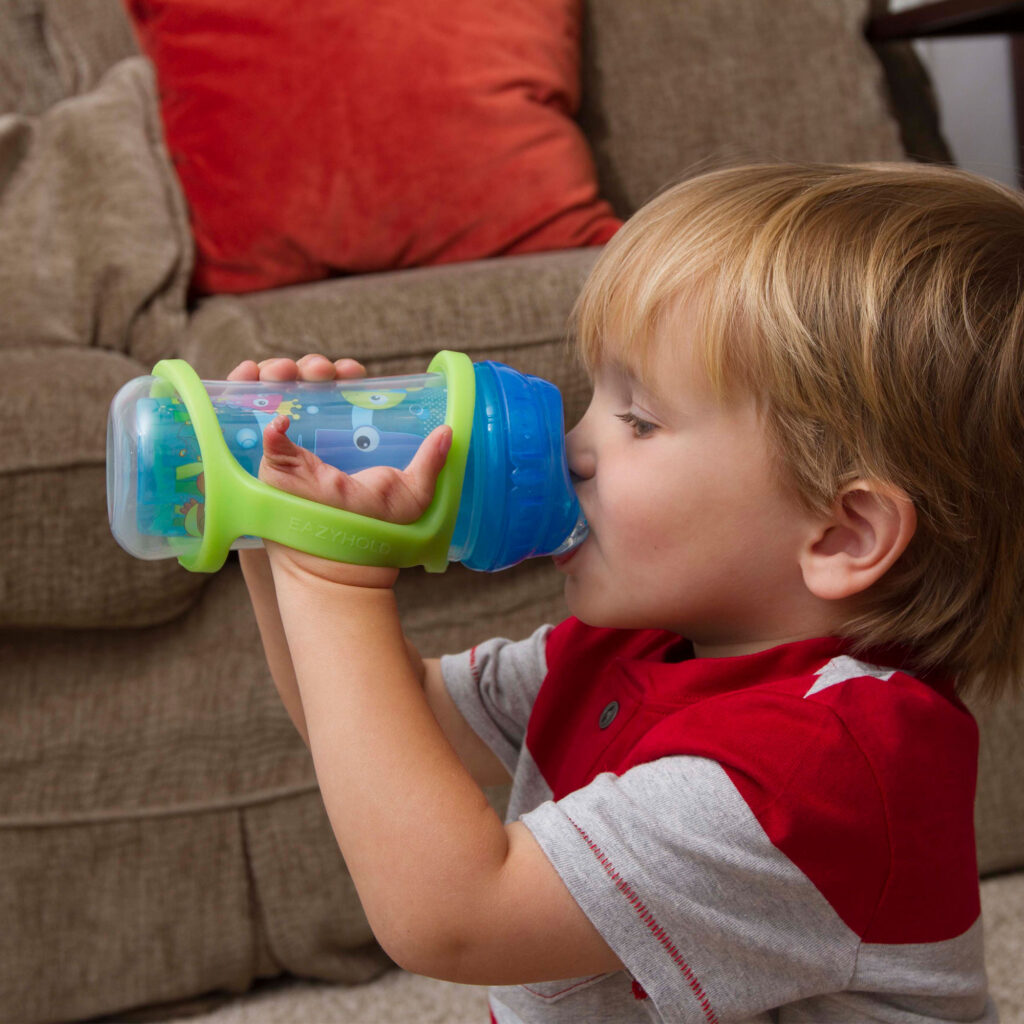
Photo courtesy of EazyHold, eazyhold.com
What tools help with a child’s oral-sensory and self-regulation needs?
Regulation comes before participation, and for many children that starts with the mouth. Eversafe Sensory makes Chomp-Champ, a vibrating oral sensory chewy molded from medical-grade silicone with no accessible internal parts. Created by a pediatric occupational therapist and an engineer, it adapts to hyposensitive or hypersensitive profiles to support safe chewing, attention, and self-regulation in the classroom and at home.
| Pro Tip: Match sensory input to the child, not the label. The same chewy that calms one hypersensitive child can overstimulate another — start low, watch the response, and adjust. |
Pediatric occupational therapy tools at a glance
Use this table to move quickly from a use case to a starting point. Confirm sizing and specifics against each maker’s current product page before recommending.
| Tool | Use case | Best for | Format |
| Squiggle Squad | Handwriting | Early writers, PreK–2 | Curriculum |
| Handwriting Heroes | Handwriting | Multisensory learners, PreK–3 | App + curriculum |
| LegiLiner | Writing-line prep | Therapists and teachers | Roller stamp |
| BlackBack | Pre-writing & letters | Low vision, attention, sensory | High-contrast cards |
| functionalhand® (& mini) | Grip / universal cuff | Weak grasp, low tone, CP; ages 3+ | Universal cuff |
| EazyHold | Grip / universal cuff | Absent grip Limb different infants & kids | Silicone cuff |
| Eversafe Chomp-Champ | Oral-sensory / regulation | Hypo- or hypersensitive kids | Oral chewy |
Frequently asked questions about pediatric occupational therapy tools
What are pediatric occupational therapy tools?
Pediatric occupational therapy tools are the adaptive devices, assistive technology, and instructional materials therapists use to help children take part in everyday activities. They range from handwriting curricula and roller stamps to universal cuffs and oral-sensory chewies — each chosen to restore a function or compensate for one as a child grows.
How do I choose the right tool for my child?
Start from the task, not the diagnosis. Identify the specific activity that is hard — holding a pencil, lifting a spoon, staying regulated in class — then match a tool that supports the child’s natural movement rather than forcing it. An occupational therapist can help you trial options before you commit.
Can one tool be used for more than one activity?
Yes, and versatility is often what makes a tool worth owning for a child. A universal cuff such as the functionalhand® can hold a crayon, a fork, a toothbrush, or a stylus, so one device can travel across home, school, and therapy instead of a separate adapter for every object.
At what age can a child start using adaptive tools?
Many tools serve children from toddlerhood onward. The functionalhand® fits from age 3, with a mini for the smallest hands, and oral-sensory and handwriting tools span the early years. An occupational therapist can help judge the right timing for a particular child.
Are these tools only for children with a diagnosis?
No. Any child working through a fine motor, grip, or sensory challenge can benefit, with or without a formal diagnosis. A teacher or occupational therapist can help identify where a tool would make a daily task easier.
Building a toolkit that grows with the child
The right pediatric occupational therapy tools do more than complete a task. They restore dignity, participation, and the confidence to try again. Start with one priority area, choose a tool that supports natural movement, and build on early wins. For classrooms where grasp difficulties are present, a well-stocked toolkit is not optional. It is how a child keeps pace, participates independently, and stays in the moment with their peers. The functionalhand® belongs in that toolkit (alongside pencil grips, slant boards, and sensory supports) because versatility matters when every child’s needs look different. Fun, functional, and flexible is not just a tagline. It is how a good toolkit should feel to the child using it.
Order Your functionalhand® Today
If you’re interested in purchasing a universal cuff for yourself or someone you care about, we hope you’ll consider investing in the functionalhand® universal cuff.
You won’t just be purchasing a product; you’ll be investing in a person’s ability to lead a more independent and fulfilling life.
“Just want to say thank you so much for making these! As someone who’s lost a lot of movement in my hands and can no longer write, it’s allowed me to not only write for the first time in ages but also draw! Along with using a knife to spread jam! Thank you so much”
Recommended reads:
- Accessible Wellness Guide with Tips, and Education on the Importance of Supporting Healthy Independence and Daily Routines with the functionalhand®
- Adaptive Summer Activities: Making Recreation Accessible for All Abilities with the functionalhand®
- Best Adaptive Equipment & Teaching Tools for Students with Disabilities
- Adaptive Equipment for Students with Disabilities: A Guide by Diagnosis and Daily Need