Occupational Therapy Activities for Kids: A Clinical Guide
The most effective occupational therapy activities for kids share a quality that has little to do with the activity itself: they change how a child moves, not just what a child does. The activities below are pediatric OT staples — coloring, tracing, games, music, self-feeding — shown in real sessions with children who have hand disabilities. What makes each one therapeutic is the setup: the child is aligned and supported, the tool is held in good orientation, and the grasp demand is low enough that energy goes into the movement you are actually targeting.
What makes an occupational therapy activity for kids effective?
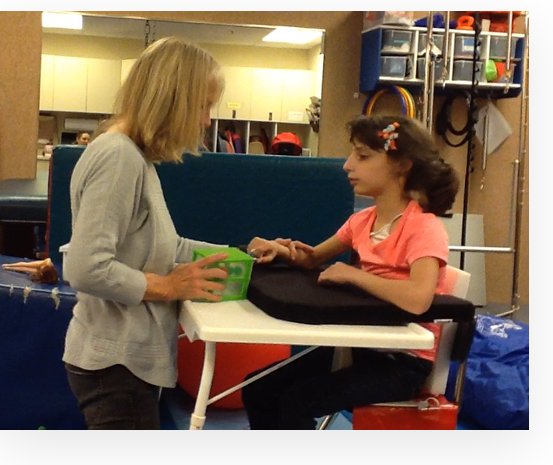
Three things separate a high-yield activity from busywork. First, alignment and support: set the base — pelvis over the hips, trunk upright, arms forward — so the child isn’t borrowing stability from the trunk or a hiked shoulder. Second, the right demand: the task should require the target movement rather than allow a compensation. When grasp itself is the obstacle, reduce that demand so the child can work the shoulder, forearm, and wrist instead of fighting to hold the tool. Third, salience and repetition: the brain reorganizes around what a child repeatedly and willingly does (Kleim & Jones, 2008), so the activity has to be fun enough to earn the reps — and how the child moves during those reps is what gets consolidated.
The table below maps the activities in this guide to the skills they build. Each one follows in detail, with photos from real therapy sessions.
| Activity | Primary skill target | Why it works |
|---|---|---|
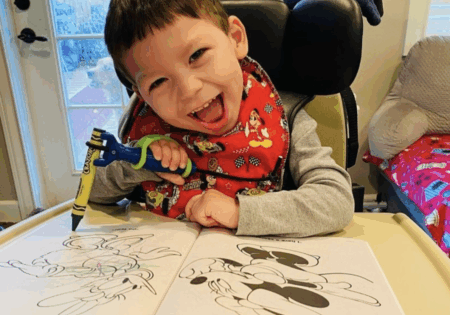
| Coloring & painting | Visual-motor integration; graded wrist/forearm control | Upright tool orientation keeps the wrist neutral and builds proximal endurance |
| Pre-writing & tracing | Grasp pattern; line control; motor planning | External guides lower motor planning load while the child rehearses letter forms |
| Card & memory games | Bilateral coordination; stabilizer-vs-manipulator roles | One hand stabilizes while the other selects; engages using both arms; engages both sides of the brain |
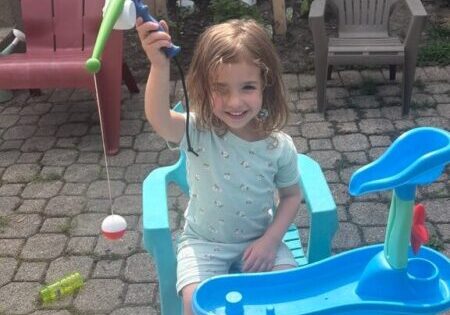
| Board games (Guess Who) | Reach, grasp-release; bimanual coordination | Reaching to act works the arm even when grasp is limited |
| Music & visual-motor play | Eye-hand coordination; sustained engagement | High salience drives the repetitions that plasticity rewards |
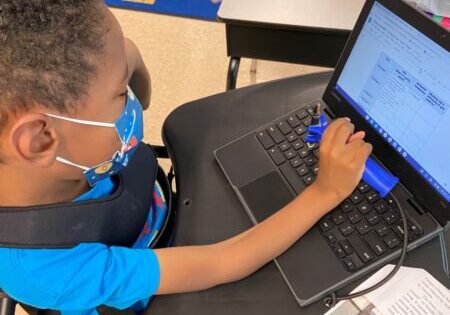
| Stylus / tablet use | Fine motor control; technology and AAC access | Maintains neutral wrist alignment during sustained screen tasks |
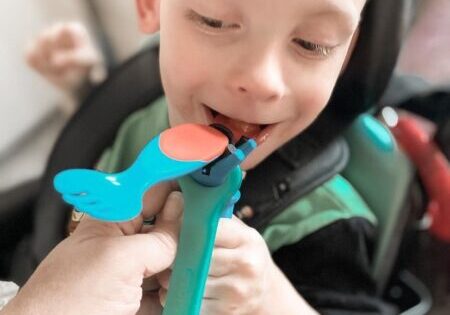
| Self-feeding & ADLs | Functional independence | One setup transfers across the day; reduces hand-over-hand assistance |
Occupational therapy activities for kids, in practice
Coloring and painting
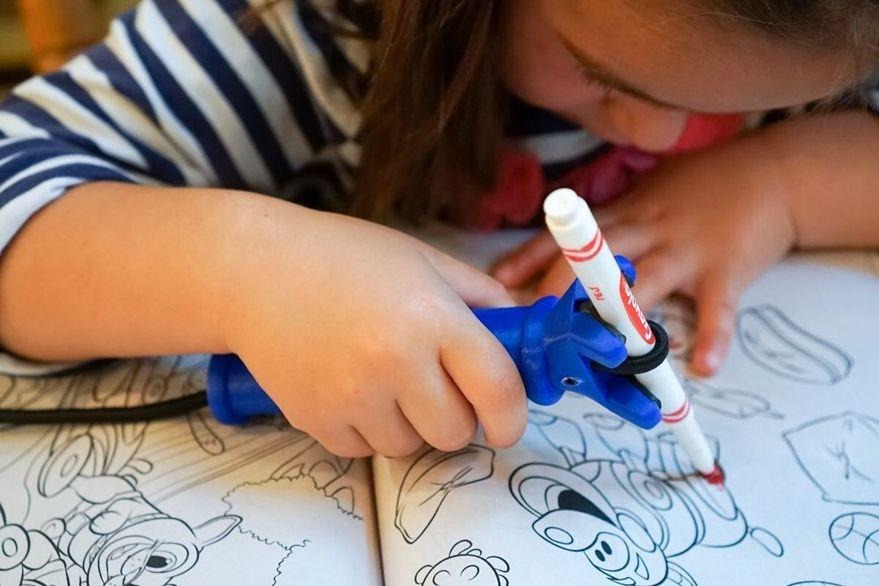
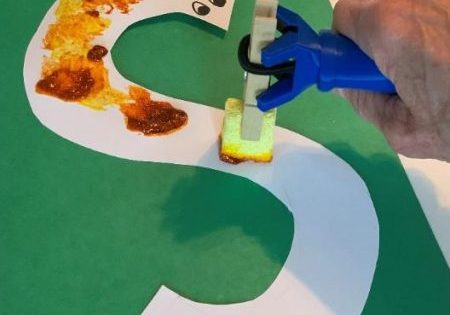
Coloring and painting builds visual-motor integration and the forearm and wrist endurance handwriting later depends on. The clinical value lives in tool orientation: held upright, the marker keeps the wrist neutral and the shoulder aligned, while a tool that forces the wrist into flexion and ulnar deviation quietly trains the opposite pattern.
Pro Tip: Judge the activity by the movement, not the product. A neatly colored page completed with a flexed, ulnarly deviated wrist is reinforcing the pattern you are working to change. Reposition the tool — or the child — before you add repetitions.
Pre-writing and letter formation
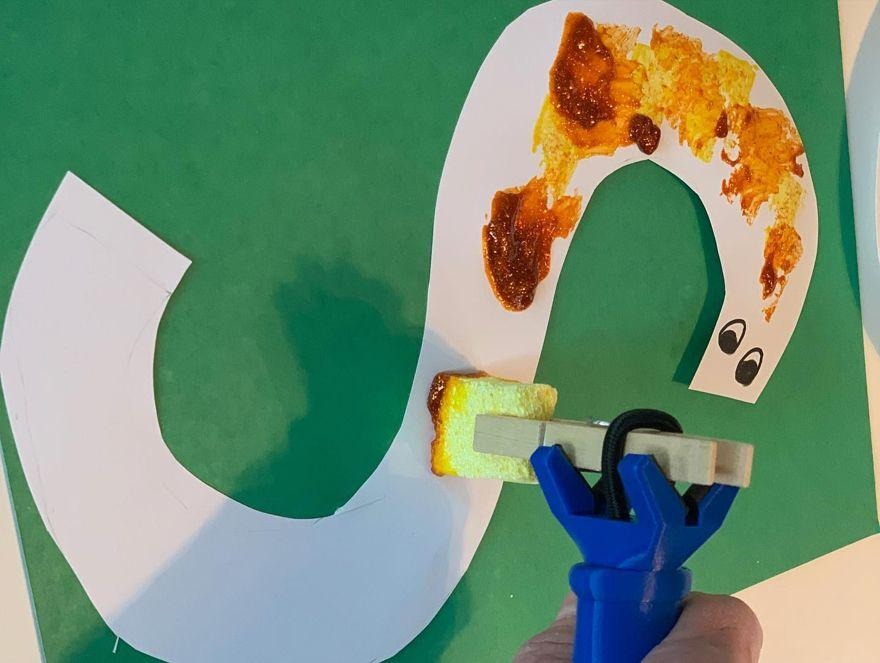
Pre-writing strokes build the grasp pattern, line control, and motor planning that handwriting requires. Working at a vertical surface — painting or forming letters on an easel or wall — promotes wrist extension and recruits the shoulder, so the child practices the proximal control that makes distal precision possible. Securing the brush removes grasp as the limiting factor so the focus stays on the stroke.
Tracing
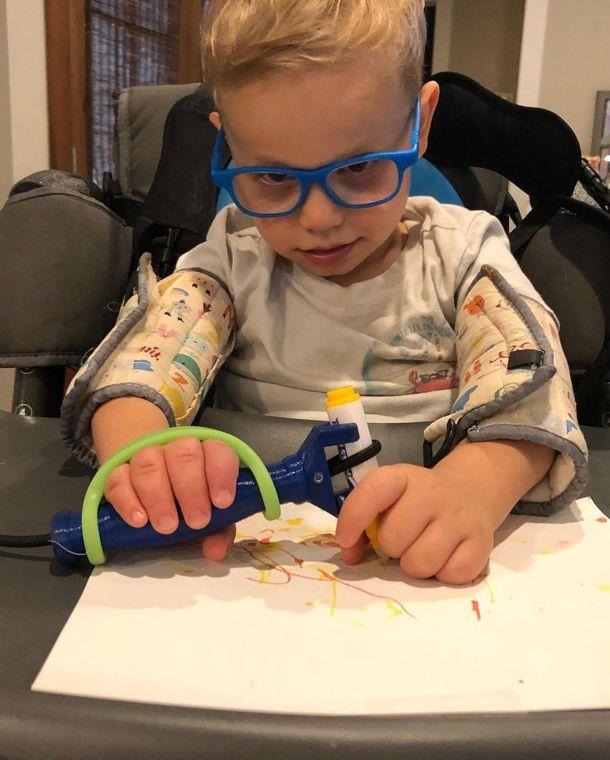
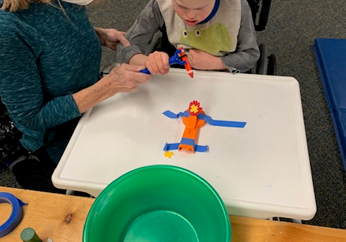
Tracing scaffolds pre-writing: the external guide lowers the motor-planning load so the child can rehearse letter and line forms before producing them on their own. With the writing tool stabilized, you can cue posture and stroke direction instead of troubleshooting grip mid-task.
Bilateral coordination: card and memory games
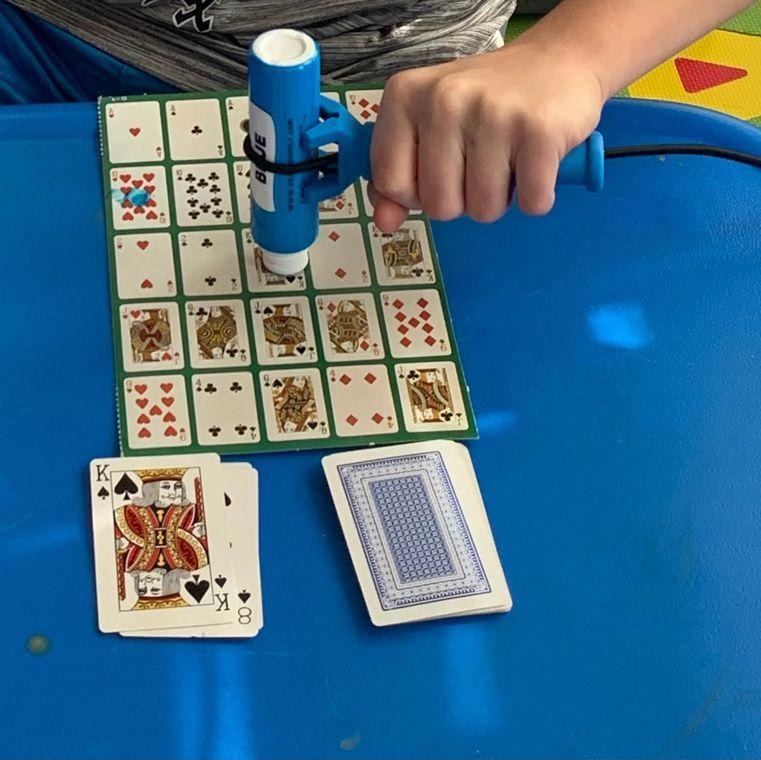
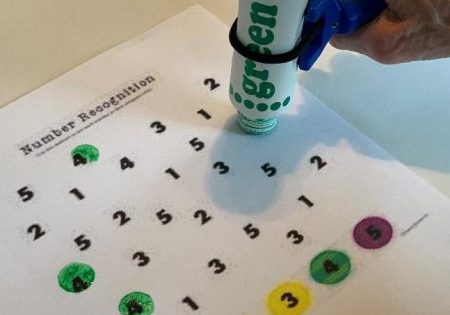
Bilateral skill is easy to neglect, because children default to the stronger hand. Card and memory games build in a reason to use both: one hand stabilizes or holds the cards while the other selects the card. A dot marker attached with functionalhand® lets a child with a weak grasp participate fully — engaging both sides of the brain in a single, motivating task.
Board games like Guess Who
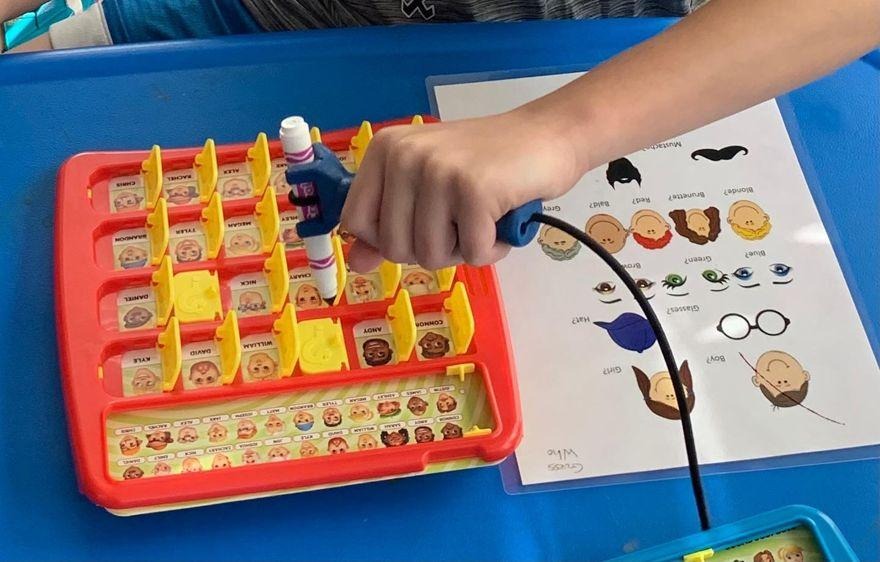
Familiar board games turn reach, grasp, and release into play. For constraint-induced approaches (CIMT), the first goal with an affected hand is simply to get it into the game. Reaching to flip a Guess Who panel or move a piece works the arm and shoulder; reducing the grasp demand lets the child take more repetitions with less effort, which is exactly what drives change.
Music and visual-motor play
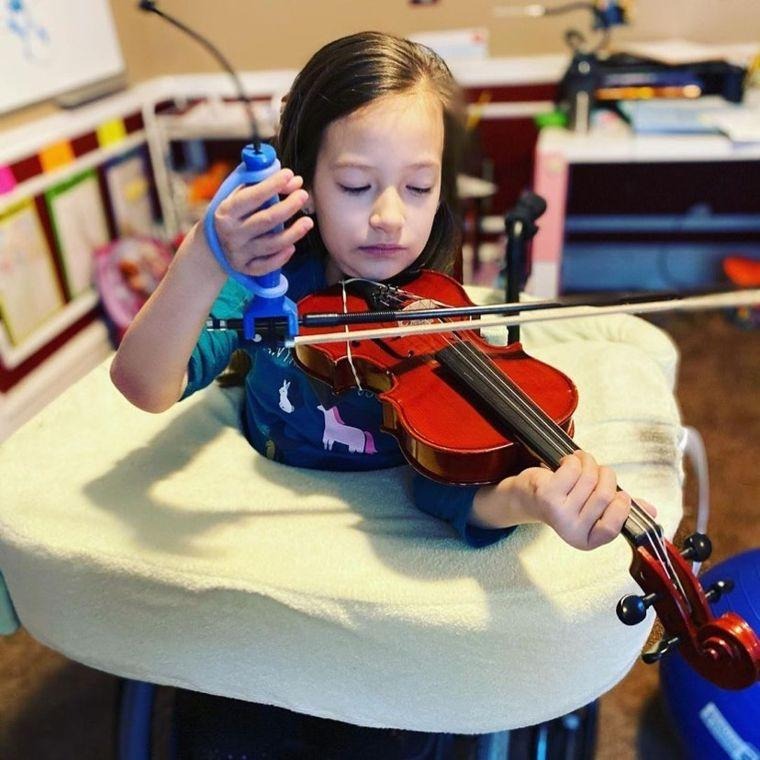
Music is one of the highest-salience activities in the toolbox — and salience is a neuroplasticity principle, not a nice-to-have concept. Playing an instrument layers eye-hand coordination, bilateral timing, and sustained engagement, and the enjoyment is what produces the volume of repetition that change requires. For a child who is nonverbal or has limited upper-extremity function, an activity they genuinely want to do is often the difference between two reps and twenty.
Technology and stylus access
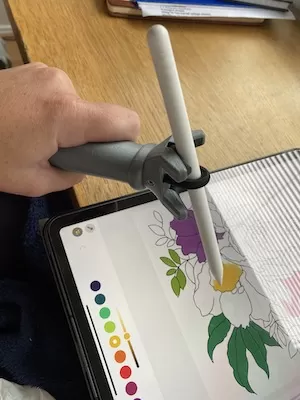
Holding a stylus in a stable, upright orientation opens up the possibility to engage with tablets, drawing apps, and augmentative and alternative communication (AAC) devices. The setup maintains neutral wrist alignment through sustained screen time, so technology access doesn’t come at the cost of a collapsed wrist or a fatiguing grip.
Self-feeding and daily living
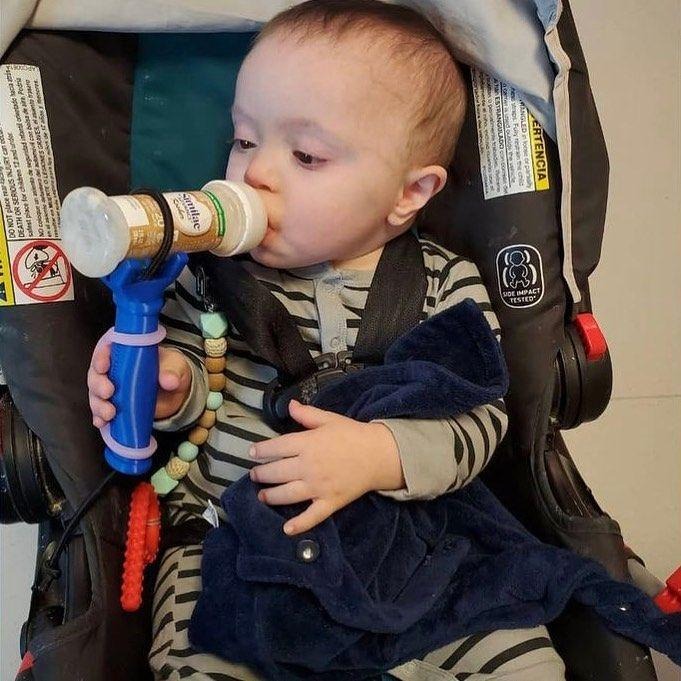
The same logic carries straight into activities of daily living (ADLs) — holding a bottle, a spoon, a toothbrush, or a cup. A portable, versatile tool means one setup transfers across the whole day and reduces the hand-over-hand assistance that can foster dependence. For classroom applications, see our guide to adaptive equipment for students with disabilities.
Engagement & Play
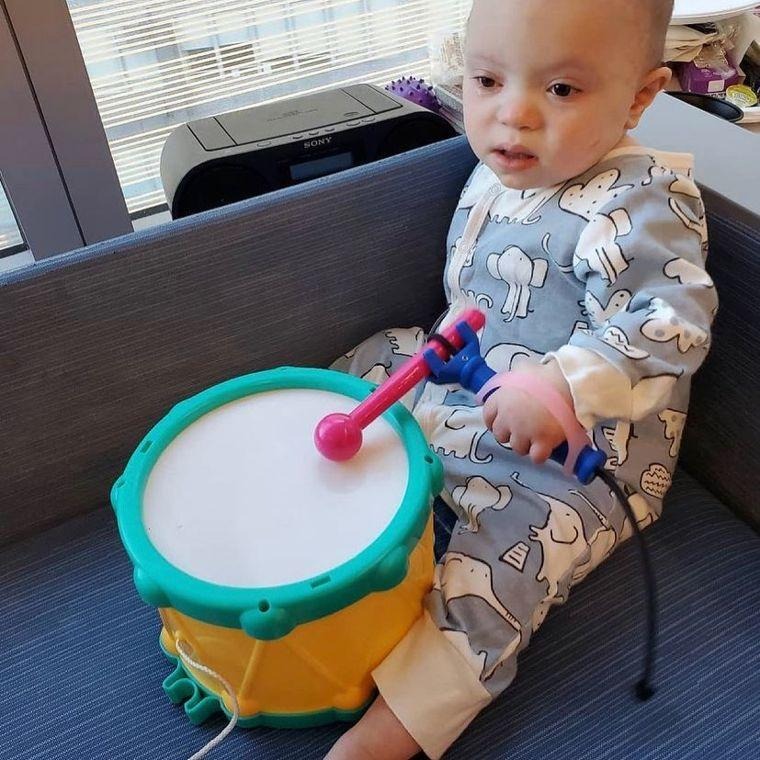
Play is the occupation of childhood, and the profession’s own evidence base treats it as a primary therapeutic medium rather than a reward for finishing the “real” work (AOTA, Play as Occupation). When grasp is removed as a barrier, a child can drum, shake, build, and explore — spending energy on participation and joy instead of on holding on.
Pro Tip: Match intensity to motivation. An activity so hard the child won’t engage produces no repetitions and no change. When grasp is the obstacle, reduce that demand first — then add challenge back into the movement you are actually targeting.
Why grasp support changes the activity
Consider Ryan, a child who paints. Before, orienting the brush meant turning his whole shoulder and forearm — internal rotation and pronation — then flexing and ulnarly deviating the wrist to make contact. He couldn’t maintain his grasp, shifted in his chair, and showed overflow (involuntary tightening) into the opposite arm. With the brush secured upright in a functionalhand® universal cuff, the tool held its biomechanical alignment, his hand stayed supported, and his arm and shoulder settled into better position. He painted longer, with less overflow and less wasted energy — on his first time using it. Reducing the distal grasp demand freed him to work the proximal muscles that actually needed the practice.
“It’s not about holding a tool. It’s about unlocking participation.”
Frequently asked questions
At what age can kids start these occupational therapy activities?
Most of these activities scale from early childhood through the teen years — the activity stays the same while the grading changes. The right starting point is the child’s postural and motor readiness rather than a specific number, and tool-based supports can be introduced early when grasp is the barrier to participation.
How do you adapt an activity for a child with a weak grip or spasticity?
Start by reducing the grasp demand (weight, size, shape, texture can all be modified) so the child can participate without fixing or overflowing, then layer challenges back into the target movement. A grip aid that holds the tool in the correct orientation lets you work shoulder, forearm, and wrist alignment without grasp being the limiting factor.
Can these activities be used in a home program?
Yes — many translate directly into the home and classroom, which multiplies repetitions in meaningful contexts. Share the postural setup and tool positioning with families so practice at home reinforces, rather than interferes with, the pattern you are building in the clinic. Individual home programs should always be set by the child’s treating therapist.
Why does reducing grasp demand improve motor learning?
When a child no longer has to pour effort into holding an object, that effort becomes available for the movement you are targeting and for more repetitions overall. More repetitions of a better-aligned movement is precisely what experience-dependent plasticity rewards.
Built by therapists, for participation
The functionalhand® was created by Linda Merry, OT, and Celine Skertich, PT — clinicians with more than 35 years of experience each — after decades of hand-making custom tool holders for the children they treated. That origin is the through-line of every activity here: the goal was never a better way to hold a tool, but a way to unlock participation.
Order Your functionalhand® Today
If you’re interested in purchasing a universal cuff for yourself or someone you care about, we hope you’ll consider investing in the functionalhand® universal cuff.
You won’t just be purchasing a product; you’ll be investing in a person’s ability to lead a more independent and fulfilling life.
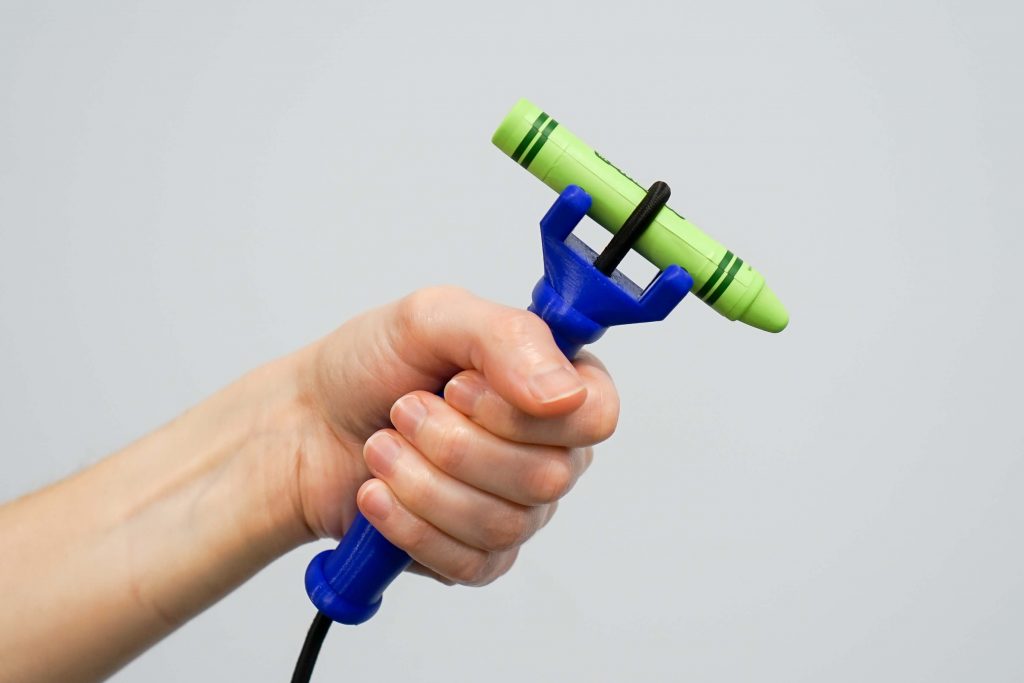
“Just want to say thank you so much for making these! As someone who’s lost a lot of movement in my hands and can no longer write, it’s allowed me to not only write for the first time in ages but also draw! Along with using a knife to spread jam! Thank you so much”
Recommended reads:
- Accessible Wellness Guide with Tips, and Education on the Importance of Supporting Healthy Independence and Daily Routines with the functionalhand®
- Adaptive Summer Activities: Making Recreation Accessible for All Abilities with the functionalhand®
- Best Adaptive Equipment & Teaching Tools for Students with Disabilities
- Adaptive Equipment for Students with Disabilities: A Guide by Diagnosis and Daily Need