Support Literacy with Assistive Technology for Writing Disabilities
Distributor Resource
This version of our blog post is designed for use by our distributors. Feel free to copy and share this content with your audience.
Here’s how you can use this content:
- Copy the full text and images from this blog post
- Paste into your blog, website, or email
- Please keep the “this blog post was originally published…” notification with a link to the original blog post.
- We have included a “Buy Now” section at the bottom of this post, which you can update to include your “Buy Now” link. If you prefer not to have a buy now link in your post, you may delete this section.
- Delete these Distributor Resource instructions before publishing the content to your blog, website, or email.
This blog post was originally published on the functionalhand® website.
Every child deserves to express their thoughts, dreams, and ideas through writing. But for students with writing disabilities, the simple act of holding a pencil can feel like an insurmountable barrier to literacy.
As occupational and physical therapists with over 35 years of experience each, we’ve witnessed countless moments when the right assistive technology for writing transforms a child’s entire relationship with literacy. We’ve seen tears of frustration turn into smiles of accomplishment when students discover they can write independently.
Literacy is foundational to lifelong learning, and for children with special needs, accessing reading and writing skills often requires creativity, adaptations, and the right tools.
That’s why understanding assistive technology for writing isn’t just about tools—it’s about unlocking potential and opening doors to a lifetime of learning and self-expression.
Why Literacy Matters for Every Child with Writing Disabilities
Picture a bright, curious child sitting at their desk, watching classmates effortlessly move their pencils across paper while they struggle to hold theirs. For students who struggle with handwriting due to a weak grip or hand deformity, this scenario plays out every day in classrooms worldwide.
Writing disabilities affect far more than just penmanship. When children struggle to hold a pencil correctly or have difficulty with the physical act of writing, it impacts their entire literacy development. These challenges create ripple effects that touch reading comprehension, spelling, grammar, and most importantly, their confidence in expressing their thoughts and ideas.
The emotional toll is the hardest part. Children who experience trouble writing often begin to see themselves as “not smart enough” or “different from everyone else.” They may start avoiding writing activities altogether, which further impacts their ability to develop reading and writing skills.
But here’s what we want every parent, teacher, and caregiver to know: writing difficulties are not a reflection of intelligence or potential. They’re simply challenges that require the right type of support and adaptive equipment to overcome.
Every child learns differently, and some need specialized tools to access the same literacy opportunities as their peers. With proper support, children with weak grips and other hand limitations can develop strong written communication skills and discover the joy of expressing themselves through words.
Understanding Different Types of Writing Disabilities
Common Writing Challenges That Affect Literacy
Writing disabilities come in many forms, each presenting unique challenges for developing literacy skills. Understanding these differences helps us choose the most effective solutions for writing support.
Learning Disabilities:
Dyslexia affects how the brain processes written language, making it challenging to associate letters with their corresponding sounds. Children with dyslexia may struggle with spelling, reading fluency, and translating their thoughts into written text. While they often have brilliant ideas, getting those thoughts onto paper can be a daunting task.
Dysgraphia specifically impacts writing abilities, affecting handwriting, spelling, and the ability to organize thoughts on paper. Students with dysgraphia may possess excellent verbal skills but struggle to express themselves effectively in written form.
ADHD (Attention Deficit Hyperactivity Disorder) affects writing through challenges with focus, organization, and executive function. Children with ADHD may struggle to organize their thoughts on paper, stay focused during writing tasks, manage the multi-step process of writing, or sit still long enough to complete assignments.
Physical Disabilities:
Fine motor difficulties make the physical act of writing much harder than it should be. When children struggle to hold a marker, pencil, crayon, or other writing tool correctly and are not able to maintain the grip strength required for extended writing, every writing task becomes exhausting. This affects their writing speed, legibility, and willingness to participate in writing activities.
Hand deformities and structural challenges can significantly impact a child’s ability to grasp writing tools effectively. Students with conditions like cerebral palsy, arthrogryposis, juvenile rheumatoid arthritis, or congenital hand differences may have difficulty positioning their hands and fingers in traditional pencil grips.
Tremors and movement disorders present unique challenges for writing activities. Children with conditions like juvenile Parkinson’s disease (JPD), essential tremor, or neurological conditions may struggle with the motor control needed for legible handwriting.
Progressive conditions such as muscular dystrophy or multiple sclerosis may cause changes in writing abilities over time, requiring adaptive solutions that can accommodate evolving needs while maintaining independence in written communication.
Many children experience combinations of these challenges, which is why reading and writing disabilities often occur together. The key is recognizing that these are neurological differences, not deficits in a student’s intelligence or ability.
Signs Your Child May Need Assistive Technology for Writing
As therapists, we encourage parents and teachers to watch for these signs that indicate a child might benefit from writing tools:
- Persistent difficulty holding writing utensils in a functional grip
- Unusual fatigue during writing tasks compared to other activities
- Consistent avoidance of writing activities or homework
- Slow writing speed that significantly impacts academic performance
- Strong emotional responses, such as frustration or anxiety, when asked to write
- Poor handwriting despite repeated practice and instruction
When we see these signs, it’s time to explore how using assistive technology can help bridge the gap between a child’s ideas and their ability to share them through writing.

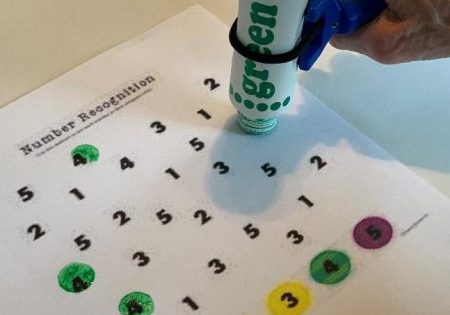
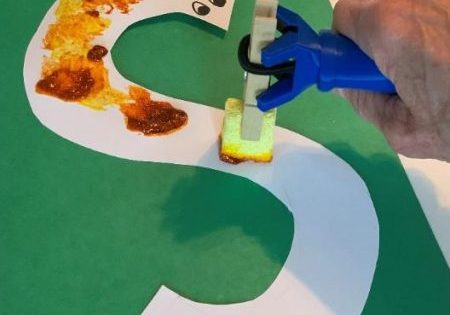
”We recently added a @functionalhand (blue) to our toolbox! This is an amazing tool that has been used to assist in a variety of different activities, such as eating, painting, playing music, typing on a keyboard, and more!
We are having a blast introducing these to our patients and their families and finding new ways to use them to add more independence!”
– Pediatric Therapy Clinic
How Assistive Technology Tools Transform Writing for Students with Disabilities
Digital Writing Solutions That Build Confidence 📲
Modern technology offers incredible solutions for students who struggle with traditional writing methods. These digital tools help level the playing field, allowing children to focus on expressing their ideas rather than struggling with the mechanics of writing.
Text-to-speech (TTS) tools read text out loud, supporting students who have difficulty with reading disabilities alongside their writing challenges. When students can hear words as they type, it helps them catch errors and improves their understanding of spelling and grammar patterns.
Speech-to-text and voice recognition software enable students to express their ideas verbally, rather than writing them manually. This technology has become remarkably sophisticated, helping children with severe writing difficulties to produce complex written work by simply talking to their computer or mobile device.
Word prediction software helps students who struggle with spelling by suggesting words as they type. This reduces the cognitive load of remembering correct spelling while allowing students to focus on developing their ideas and written communication skills.
Mobile devices, tablets, and smartphones now offer built-in accessibility features that make writing more accessible. Many students find typing on these devices easier than traditional handwriting, and word processors often include helpful features such as spelling and grammar checkers.
The Role of Assistive Technology to Make the Physical Act of Writing Easier ✍
While digital solutions are powerful, many students still require additional support with either access, developing their handwriting skills, and/or utilizing physical writing aids in classroom settings.
This is where adaptive equipment becomes crucial. For students who cannot isolate finger movements to type or hold a stylus independently, the functionalhand® enables stylus use, which opens up the possibility to access keyboards, iPads, and phones—making it a true game-changer for digital literacy and communication.
Traditional pencil grips have been used for decades, but they often fall short for students with neuro-muscular difficulties, hand deformities and weak grip challenges. Most basic grips don’t address the underlying biomechanical issues that make handwriting difficult for children with disabilities.
Universal cuffs represent a step forward from basic grips, but many traditional designs have limitations. They typically work for only one type of tool or one grip position, and they don’t always support the natural arches of the hand that are crucial for healthy hand function.
Handwriting tools that aid in fine motor control should do more than hold a pen in place—they need to support proper hand positioning, reduce fatigue, and facilitate natural movement patterns that prevent repetitive strain injuries.
The right physical writing tools can also improve writing speed and reduce the physical effort required for writing by hand, allowing students to focus their energy on the content and creativity of their writing rather than the mechanics.
The functionalhand® Revolution: Making Literacy Dreams Come True
Beyond Traditional Writing Aids—A Therapist-Designed Solution
After decades of working with children and adults who struggle with writing, we grew frustrated with the limitations of existing assistive technology tools. We saw too many students whose brilliant minds were trapped behind inadequate writing solutions.
Traditional pencil grips and universal cuffs often created new problems while attempting to solve others. Many of these devices forced the hand into unnatural positions, failed to accommodate different types of writing utensils, or couldn’t provide the secure grip that students needed for confidence in their writing.
That’s when we decided to design something different—something that would truly support the complex biomechanics of the hand while providing the versatility our patients needed.
Our mission, when we designed the functionalhand®, was to create a device that supported natural hand arches and promoted healthy movement patterns essential for long-term success. Unlike other devices that may inadvertently reinforce poor positioning, our universal cuff actively supports proper ergonomics.

Here’s a review from @equipmentot on why they say the functionalhand® is a must-have for every OT’s toolbox.
Real Success Stories: Children Discovering Their Writing Voice
Nothing brings us more joy than hearing how the functionalhand® has transformed a child’s relationship with writing and literacy.
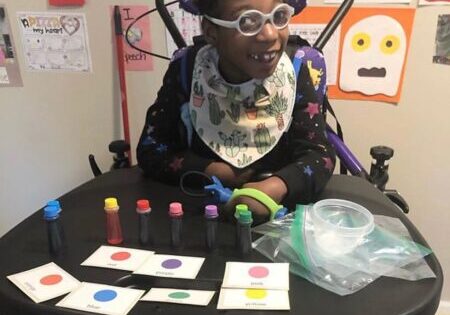
🎨 Silas’s Art Class Breakthrough:
Silas, a student with cerebral palsy, struggled to participate in creative classroom activities before discovering the functionalhand®. His mother, Melly Brown, shared: “Silas uses his functionalhand® to paint, write, glue, and draw. He’s even used it to hold his lollipop, dye Easter eggs, and hold onto action figures and toys for imaginative play! The possibilities are endless.”
This story perfectly captures what we mean when we say literacy goes beyond just writing. When children can hold art supplies, writing tools, and even play items independently, it builds the confidence and fine motor skills that support all aspects of learning.
📝 Homework Success Story:
Another parent, Maritza S., told us simply but powerfully: “My son can do his homework now because of the functionalhand®.” Those few words represent a transformation that goes far beyond handwriting—they represent independence, confidence, and access to education.
🎻 Musical Expression:
We’ve also had the privilege of helping a young violinist with a progressive muscle disease regain her ability to bow her violin using the functionalhand®. Music and writing share many of the same fine motor skills, and when children can express themselves creatively in one area, it often translates to confidence in others.

The functionalhand® Advantage for Building Writing Skills
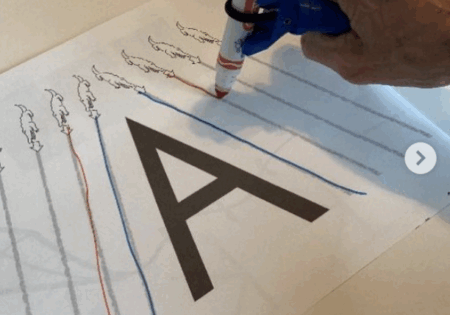
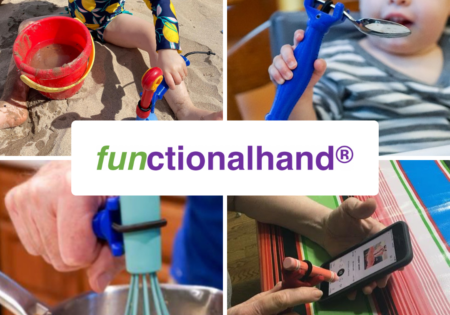
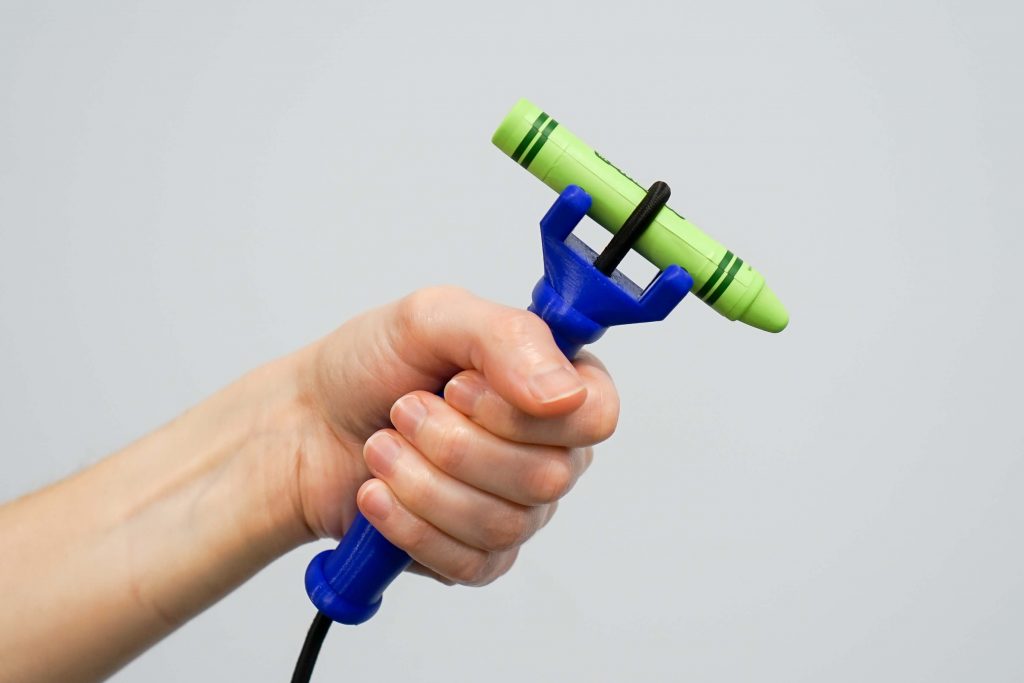
What makes the functionalhand® revolutionary for literacy development is its incredible versatility. Unlike traditional writing aids that work with only one type of implement, our universal cuff accommodates everything from tiny pencils to large markers, as well as delicate paintbrushes and styluses for using a tablet or typing on a keyboard.
This versatility means students can use the same tool for handwriting practice, creative art projects, and digital devices. They don’t need to learn how to use multiple aids or carry different tools for different activities—the functionalhand® adapts to their needs.
The functionalhand® supports both horizontal and vertical gripping positions, which is crucial for proper ergonomics. Whether a student is writing in a notebook, drawing on an easel, or using a stylus on a tablet, the functionalhand® maintains healthy hand positioning.
Perhaps most importantly, the functionalhand® grows with the child. As their literacy skills develop from simple letter formation to complex essay writing, the same tool continues to provide the support they need for success.
Choosing the Right Tools for Writing for Your Child’s Literacy Journey
Working with Your Team of Professionals
Selecting the best assistive technology for writing disabilities should always involve professional guidance. Occupational therapists are specially trained to evaluate hand function and recommend tools that will support healthy development while addressing immediate needs.
Special education teachers bring valuable insights about how different tools work in classroom settings and what accommodations will be most helpful for academic success. They can also help you understand what assistive technology solutions are available through your school district.
The key is finding professionals who understand that the goal isn’t just to help a child write—it’s to help them develop confidence, independence, and a love of literacy that will serve them throughout their lives.
Building a Complete Literacy Support System
The most successful literacy interventions combine multiple types of support. The functionalhand® works beautifully alongside other types of assistive technology, creating a comprehensive system that addresses all aspects of writing and reading development.
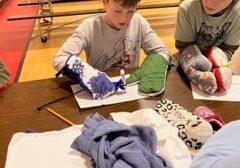
Students might use the functionalhand® for completing worksheets and art projects while also utilizing speech-to-text software for longer writing assignments. They might combine traditional pencil-and-paper activities with tablet-based learning apps.
The beauty of this approach is that it enables children to develop multiple pathways to literacy success. They’re not limited to one method or dependent on one type of technology. Instead, they build a toolkit of skills and strategies that adapts to any writing situation they encounter.
This comprehensive support also builds confidence. When children know they have reliable tools that help them succeed, they’re more willing to take on challenging assignments and express their ideas freely.
Unlocking Every Child’s Literacy Potential
Every child deserves to experience the joy of expressing themselves through writing. Literacy isn’t just about academic success—it’s about having a voice, sharing ideas, and connecting with the world through written communication.
With the right assistive technology, these dreams become a reality. Whether through digital solutions like text-to-speech software, physical tools like the functionalhand® universal cuff, or comprehensive support systems that combine multiple approaches, we can ensure that writing disabilities don’t become barriers to literacy.
As therapists, we’ve dedicated our careers to helping people overcome physical challenges and achieve their full potential. The functionalhand® represents everything we’ve learned about supporting hand function, promoting healthy movement patterns, and creating tools that truly work for people with disabilities.
But beyond the technical aspects, it represents our belief that every person, regardless of their physical challenges, deserves access to the fundamental human experience of expressing themselves through writing.
If you’re ready to transform your child’s relationship with writing and literacy, we invite you to discover how the functionalhand® can unlock their potential. It’s a small investment to deliver big returns in independence, confidence, and lifelong learning success.
With the right tools — and the right heart — anything is possible.
❤️ — Celine and Linda
One adaptive tool.
Countless applications.
Real savings for schools.
Buy the functionalhand® for the classrooms in your school today and give children and teens a feeling of greater independence, confidence, and inclusion!
BUY NOW
The functionalhand® universal cuff is not intended to diagnose, treat, cure, or prevent any disease. Always consult with a licensed healthcare professional before making changes to your adaptive equipment routine.
About the Authors, Owners, and Inventors of the functionalhand®
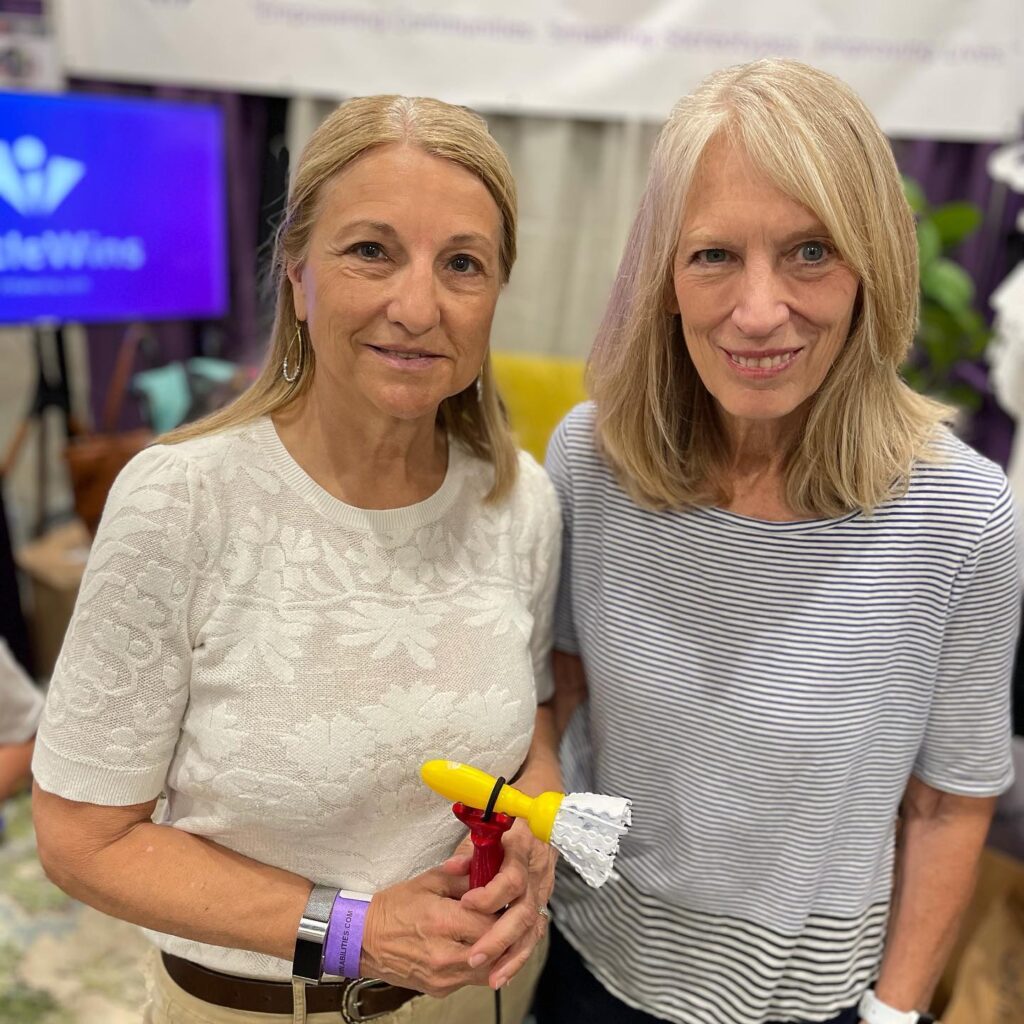
Celine Rosati Skertich, PT, and Linda Merry, OT, each have over 35 years of experience empowering individuals with motor impairments improve postural control and functional independence. Linda specializes in creating custom tools for grasp deficits, inspiring their collaboration on the functionalhand®, an adaptive tool designed to support diverse grasp needs. Follow them for therapeutic tips on YouTube, Instagram, and Facebook.